
Pan-to-soup cook
You cook the vegetables in a pan and want to blend the sweet potato in there too, without transferring the soup to another container.


For cooked sweet potato soup that you want to blend in the pan, a stick blender is the most straightforward choice. The Netherlands Nutrition Centre uses this method in one of its recipes, and the Dutch Consumers’ Association lists blending in the pan as an advantage, although the result may be a little less smooth. A jug blender is a good option if you also want to make other liquid recipes, but check the temperature guidance for the exact model. A soup maker is worth considering if you want to combine cooking and blending in one appliance and its capacity suits the portions you make.
You cook the vegetables in a pan and want to blend the sweet potato in there too, without transferring the soup to another container.
You want to make cold drinks as well as soup, so you’re looking at jug capacity, temperature suitability and ease of cleaning.
You want one appliance to cook and blend the ingredients, and you’ll check that its programmes and capacity suit your recipe.
First decide whether you want to blend the soup in the pan, in a jug or in an appliance that cooks and blends in one. Then compare the temperature guidance, capacity and cleaning requirements of models that suit your choice.
| What to consider | What should you check? | Who is this for? |
|---|---|---|
| Blending in the pan | Check that the blending foot is removable and comfortable to use. Keep it below the surface of the soup while blending. | I want to blend the cooked soup in the same pan rather than transfer it. That’s why around 36% of consumers put blending in the pan first. |
| Soup temperature | Check the manual for the exact model. Philips advises cooling ingredients to below 60 °C for the HR2512/90, HR2511/90 and HR2510/90. | If I want to blend soup in a jug, I need to know whether it can handle the temperature of my ingredients. Around 29% of consumers prioritise being able to transfer ingredients at the right temperature. |
| Cooking and blending in one | Compare usable capacity, soup programmes and cleaning instructions. Philips lists a 1.2-litre jug and six programmes for the HR2204/80R1. | I want to cook and blend ingredients in the same appliance, and choose a portion size that suits its capacity. Around 21% of consumers put this combination first. |
| Cleaning | Check which blending feet, blades and other parts can be removed, and which parts the manufacturer says are dishwasher-safe. | If I want to clean as few parts as possible after cooking, ease of cleaning matters more to me than extra features. Around 14% of consumers prioritise less cleaning. |
The permitted temperature varies by model. Instructions for one jug don’t automatically apply to another jug or blender.
Before pouring, check the temperature limit and usage instructions in the manual for the exact model.
Capacity varies by model. Tefal lists a usable capacity of 1.5 litres for the BL871D31, while Philips states 1.2 litres for the HR2204/80R1.
Compare the usable capacity with the amount of soup you actually make.
With a smaller capacity, you may need to blend the soup in several batches.
A heating function is most useful if you also want the appliance to cook. If the soup is already cooked in a pan, your main considerations are blending and cleaning.
First decide whether you only want to blend, want to chop as well, or want the appliance to cook the soup.
Extra accessories may take up more storage space and mean more cleaning.
The ErgoMixx MS6CB6110 is a stick blender option for anyone looking for a removable metal blending foot and several speed settings.
The MultiQuick 1 MQ 100 Curry is a compact stick blender for soup that’s already been cooked.
The PerfectMix+ BL871D31 is a jug blender, while Tefal says the Perfectmix Cook BL83SD30 has hot and cold programmes.
The SoupMaker HR2204/80R1 is a heated option if its capacity and programmes suit the portions you make.
The products below are aimed at blending soup with a stick blender, with a blender also included for hot and cold preparations.
 No image available
Suitable for blending cooked soup with a stick blender, as well as tackling other kitchen tasks with the accessories included.
The product name lists a maximum of 1200 W, 15,000 rpm, a 700 ml measuring beaker, a 500 ml chopper and a whisk.
The stated usage limit is a maximum of 1 minute at a time, followed by 1 minute of rest.
 No image available
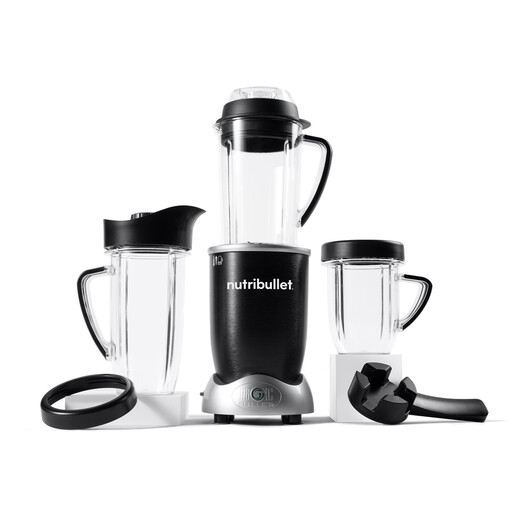
An option to compare if you want to blend hot ingredients as well as make cold preparations.
The product name lists 1700 W, a 10-piece set, heat-resistant cups and use for hot and cold preparations. Check which parts are suitable for soup.
 No image available
A stick blender option for anyone who wants to blend cooked soup and is considering a model with a stainless steel housing.
The product name lists 800 W and stainless steel.
 No image available
A set for blending soup, with a chopper and whisk for other preparations too.
The product name lists a Black/Stainless Steel finish. For hot ingredients, the product information recommends using a heat-resistant bowl and working in small batches.
 No image available
A stick blender to consider if you want to blend cooked soup and remove the blending foot after use.
The product information warns against blending boiling liquids with this model. Follow the instructions for the exact model.
Yes, for this recipe: the Netherlands Nutrition Centre cooks the sweet potato and other vegetables before blending the soup with a stick blender. The Dutch Consumers’ Association notes that hard vegetables are easier to blend once cooked.
No, it depends on the jug and the exact model. Philips advises cooling ingredients to below 60 °C for the HR2512/90, HR2511/90 and HR2510/90. This isn’t a general temperature limit for all blenders.
Check for each model which blending feet, blades or jugs can be removed, and which parts the manufacturer says are dishwasher-safe. For the BL871D31, Tefal lists removable blades and a dishwasher-safe glass jug, among other features.
Report the problem to the seller. According to the Dutch government, there is no fixed statutory guarantee period in the Netherlands; you’re entitled to a product that meets what you can reasonably expect from it. Any manufacturer’s guarantee is in addition to this.
Online purchases generally come with a statutory cooling-off period. ACM ConsuWijzer says this lasts up to 14 days after delivery. Exceptions and conditions apply, so check what applies to your order.