What should you look for when choosing?
First choose the type of oven that suits your kitchen, then check that its trays and cooking settings are right for the portion size. The Consumers’ Association recommends checking the internal dimensions; for ovens covered by energy labelling, the kWh per cycle is relevant when comparing energy use.
Spacious built-in fan oven
A good fit if: you have a suitable built-in space and often want to use several trays when cooking for a group.
Consider: check the housing and trays; a larger oven may use more energy for smaller portions.
Freestanding fan oven
A good fit if: you don’t have a suitable built-in space, but do have a suitable spot for a freestanding appliance.
Consider: allow for the space it needs and check how many compatible baking trays are included.
Combination oven or microwave oven
A good fit if: you want a microwave function as well as the ability to roast.
Consider: compare the internal dimensions and oven settings of the specific model. The Consumers’ Association describes differences between combination ovens and microwave ovens in the emphasis placed on oven functions and internal space.
When choosing an oven for a family gathering, the main factors are how much you can cook per batch, the space available, ease of use and how you’ll use the oven on other occasions.
| What to consider |
What should you look for? |
Who should pay particular attention? |
| Amount per batch |
Measure your trays and dishes, then check the usable internal dimensions and how many trays are included. |
For a family gathering, I want to roast as much as possible at once on trays that fit; around 33% of consumers prioritise having enough baking space. |
| Where it will go in the kitchen |
For a built-in model, measure the housing. For a freestanding model, measure the available space as well as the appliance’s external and internal dimensions. |
If there are few suitable spots in your kitchen, the appliance needs to fit where you plan to put it; around 27% of consumers start by considering where it will go. |
| Cooking settings and controls |
Check the fan setting, temperature control, controls and included baking tray or rails. |
If you mainly want a practical oven, the right cooking setting and easy-to-use controls matter more than extra features; around 20% of consumers prioritise these practical considerations. |
| Energy use for everyday cooking |
For ovens covered by energy labelling, compare the energy used per cycle for the setting you use. |
If you’ll also use the oven for everyday portions, I want to choose a size and energy use that suit those needs; around 20% of consumers put this everyday consideration first. |
Ovens at Joybuy
These Joybuy options are built-in ovens, including models with a microwave function. Before you buy, check the housing dimensions, internal space and included trays for the specific model.
 No image available
Bosch HMG7361B1 Double Oven
Could suit you if you’re looking for a built-in model with a microwave function and several shelf levels.
71 litres; five levels; the product information lists 4D hot air, a baking tray and a universal pan.
View at Joybuy
 No image available
Bosch HBG536EB4
Could suit you if you’re looking for a built-in oven with fan cooking for use on several levels.
71 litres; 3D hot air for up to three levels; the product information lists an Air Fry baking tray and telescopic rail.
View at Joybuy
 No image available
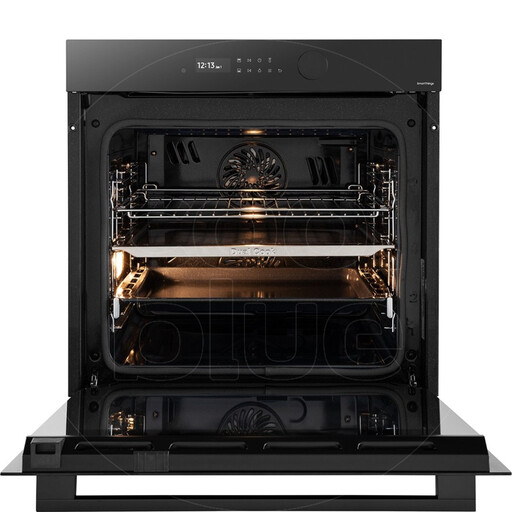
Samsung NV7B5655SCK/U1
Could suit you if you’re looking for a spacious built-in oven and want to use two oven compartments at once.
76 litres; Dual Cook with two oven compartments and a divider; the product information also lists AirFry and pyrolytic cleaning.
View at Joybuy
 No image available
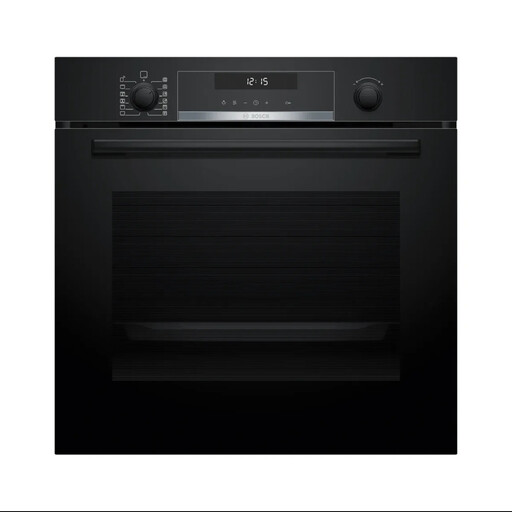
Bosch HBG578EB7
Could suit you if you’re looking for a built-in oven with fan cooking for use on several levels.
71 litres; 3D hot air for up to three levels; the product information lists an Air Fry baking tray, telescopic rails and pyrolytic cleaning.
View at Joybuy
 No image available
Bosch HBG537EB4 Serie 6
Could suit you if you’re looking for a built-in oven with several shelf levels and a range of cooking methods.
71 litres; 3D hot air for up to three levels; the product information lists an Air Fry baking tray, combination rack and universal baking tray.
View at Joybuy
Frequently asked questions
How can you tell whether all the sweet potatoes will roast at once?
Measure the trays or dishes you plan to use and compare them with the usable internal dimensions; also check how many trays are included. A Voedingscentrum recipe spreads slices of sweet potato across a baking tray and turns them while roasting. So don’t work out how many batches you’ll need based on the capacity in litres alone.
What temperature and cooking time can you use as a guide?
For a recipe using sweet potato slices about 1 cm thick and pumpkin, the Voedingscentrum recommends 200 °C for 20–25 minutes, turning the ingredients after 10 minutes. This is a guide for that recipe, not a guaranteed cooking time for whole potatoes, different slice thicknesses or full trays on several levels.
What should you check when it comes to installation and cleaning?
For a built-in oven, measure the housing and check the exact appliance dimensions and installation manual. Also check whether the trays and any rails will fit, and find out which cleaning method the model uses; an extra cleaning function doesn’t replace checking the installation space.
Do all ovens in the Netherlands need to have the same EU energy label?
No. The European Commission includes household electric and gas ovens in its energy labelling scheme, but some appliances, including small and portable ovens, are excluded. So the absence of such a label on a portable model doesn’t in itself mean the product is faulty; assess the product information that applies to that model.
Should you buy an extra warranty?
Not automatically. According to the Dutch government, the seller must provide a solution if there’s a problem, and your legal right to a product that works properly may still apply after a manufacturer’s or purchased warranty has expired. Compare an extra warranty based on the cover it actually provides beyond your existing rights.


