
Several baking trays at once
You regularly prepare plenty of portions and want to know whether your baking trays will fit on the oven’s supported levels. Bosch states that the HBA534BB3 supports fan-assisted cooking on up to three levels.


If you often roast several baking trays at once, check their dimensions and look for a fan-assisted setting that explicitly supports cooking on multiple levels; the number of litres alone won’t tell you whether your trays will fit. If you don’t have a suitable built-in space, a freestanding oven could be the answer. A combination microwave is worth considering if you’re preparing smaller portions that you’d also like to reheat.
You regularly prepare plenty of portions and want to know whether your baking trays will fit on the oven’s supported levels. Bosch states that the HBA534BB3 supports fan-assisted cooking on up to three levels.
You want to roast sweet potatoes on a baking tray but need a freestanding appliance that fits in your kitchen. Inventum states that the OV607B comes with a baking tray.
You prepare smaller portions and want to be able to reheat cooked meals using a microwave function, too. The Consumentenbond describes a combination microwave as a microwave with an oven function; Panasonic lists both for the NN-CD88.
Choose this if: you have a suitable built-in space and regularly want to use several baking trays.
Bear in mind: the dimensions of the space and trays; also check the energy label for consumption per cycle.
Choose this if: you don’t have a built-in space but still want to roast food on a baking tray.
Bear in mind: the available worktop space, the required clearance, and the dimensions of the oven cavity and baking tray.
Choose this if: you mainly prepare smaller portions and also use the same appliance to reheat meals.
Bear in mind: whether there’s enough room for your dish or baking tray; the Consumentenbond describes this type as more focused on microwave functions than a combination oven.
| What to consider | What should you check? | Which consumers does this matter more to? |
|---|---|---|
| Baking surface and oven levels | Compare the internal and tray dimensions; check which levels can be used at the same time. | If I roast enough for several days at once, I want to know whether my trays will fit and how many batches I’ll need. Baking capacity is the top priority for around 36% of consumers. |
| Placement | For a built-in oven, check the dimensions of the space; for a freestanding model, check its external dimensions and the required clearance. | If you first need to work out whether an oven will fit in a built-in space or on the worktop, the available kitchen space comes first; this applies to around 29% of consumers. |
| Energy use when baking repeatedly | Compare the stated consumption in kWh per cycle and allow for the number of batches required. | If I roast food regularly, I want to weigh up energy use against the number of batches. Energy consumption is the main concern for around 21% of consumers. |
| Cooking and reheating | Check whether the model combines convection and microwave functions, and whether your dish or portion will fit. | If you roast smaller portions and want to reheat them in the same appliance later, this combination takes priority; around 14% of consumers do so. |
The Consumentenbond notes that the usable oven space may be smaller than the stated capacity. So the capacity figure won’t necessarily tell you whether your baking trays will fit.
Compare the internal and tray dimensions. If you plan to use several trays, check which oven levels the model supports.
The label rating is relative to the size of the oven. Consumption per cycle is a standardised figure, not a measurement of your sweet potato recipe.
Compare the stated consumption per cycle as well as the number of batches your trays require. Energielabel.nl recommends comparing ovens by their consumption per cycle.
Safe storage is a separate step in meal prep, whatever type of oven you choose.
Let portions cool promptly, refrigerate them within two hours and keep cooked food in the fridge for no more than two days. Freeze portions for later use in line with the advice from the Voedingscentrum.
A built-in option for anyone looking for fan-assisted cooking that is explicitly supported on multiple levels.
A freestanding option for anyone without a built-in space.
A built-in option to consider when weighing up oven functions and included baking trays.
A combination microwave option for roasting smaller portions and reheating.
The models below are freestanding ovens and combination microwaves for anyone without a built-in space or looking to cook and reheat smaller portions. For each model, check that the stated oven space and accessories suit your baking tray and batch size.
 No image available
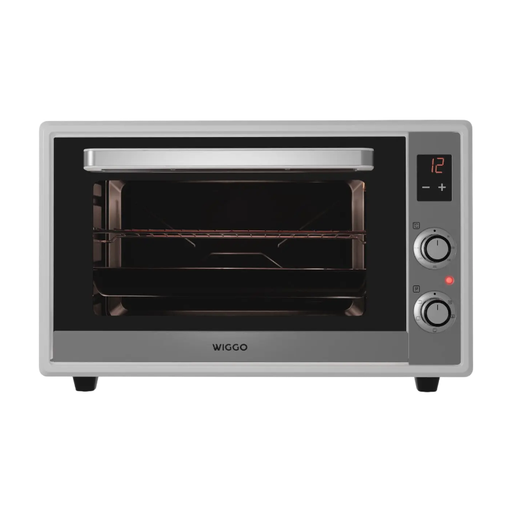
This freestanding convection oven is worth considering if you want to cook several dishes in a worktop oven.
Capacity: 35 l. Four-tier baking rack, LED display and thermometer, according to the product name and description.
 No image available
The combination of convection and microwave functions could suit you if you want to roast and reheat smaller portions.
Capacity: 25 l. Turntable: 270 mm. Convection, grill and microwave functions; baking tray included according to the product description.
 No image available
This freestanding oven is worth comparing if you want to bake or roast without a built-in space.
Capacity: 65 l; power: 2000 W according to the product name. The description lists six cooking functions and an optional turbo fan.
 No image available
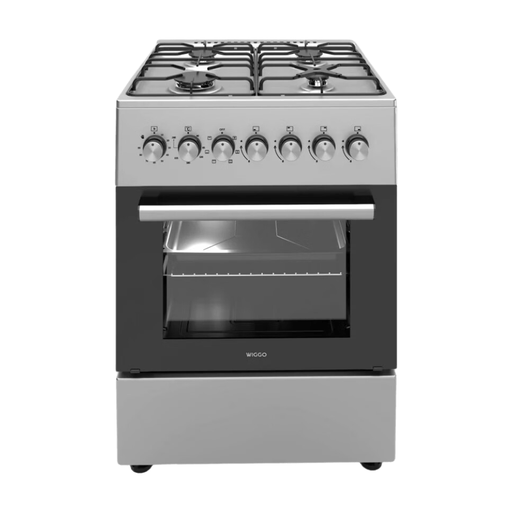
This freestanding gas oven combines oven cooking with a gas hob; check whether this setup suits your kitchen.
The description lists an oven capacity of 66 litres, four gas burners and a grill function. Have it installed and connected to the gas supply by a professional technician.
 No image available
This combination microwave could suit you if you want to prepare smaller portions and reheat cooked meals, too.
Capacity: 20 litres. Turntable: 270 mm. The description lists microwave, grill and convection functions; bear in mind the available space if you’re preparing larger portions.
Start with the dimensions of your baking tray or largest oven dish, not the litre capacity. The Consumentenbond notes that the usable space may be smaller than the stated capacity; if you’re using several trays, also check which oven levels the model supports.
A combination microwave with convection could be an option, especially if you also want to reheat portions. Check in advance that the oven space, turntable and included or required baking tray are large enough for your portion.
A Voedingscentrum recipe uses 1 cm slices, 200 °C and 20–25 minutes, turning them once after 10 minutes. This is a recipe example, not a fixed setting for whole potatoes, thicker pieces or full baking trays; check that the pieces are cooked through and golden.
Compare the stated consumption in kWh per cycle and take the oven’s size into account. Energielabel.nl lists consumption per cycle as a point of comparison; this standardised figure isn’t the same as the measured consumption for your recipe or number of batches.