What should you consider when choosing?
Spacious built-in fan oven
A good fit if: you have a suitable housing unit and want to make use of several large baking trays or shelf positions.
Bear in mind: you’ll need a suitable housing unit, and having several shelf positions does not in itself guarantee a crisp result.
Freestanding fan oven
A good fit if: the workshop venue doesn’t have a suitable built-in housing unit and there’s space for a freestanding appliance.
Bear in mind: the size of the baking tray, the clearance around the appliance and the power connection.
Compact mini oven
A good fit if: saving worktop space matters more than baking large batches at once.
Bear in mind: larger workshop groups may need several baking rounds with a small tray.
Combination microwave with oven function
A good fit if: the workshop venue already has one and its oven function proves suitable.
Bear in mind: check the specific model’s oven functions, tray and shelf positions.
Work out how many portions you want to bake per round, then check the tray, set-up and cooking method. The percentages in the table show the top priority for consumers in this workshop context for each row.
| What to consider |
What to check before buying |
Which consumers care most? |
| Baking area per round |
Count the portions you want to make and measure the internal space and suitable trays. Allow for the space slices take up when arranged in a single layer. |
If I want lots of participants to bake at once, tray space matters more than capacity in litres alone. Around 36% of consumers give having enough baking space per round top priority. |
| Even baking |
Check the fan function, suitable trays or racks, and whether you can monitor the cooking process. Try a test batch using your chosen recipe. |
If I want to serve thin slices, I need to be able to check on them and leave enough space between each slice. Around 29% of consumers prioritise even baking. |
| Positioning at the venue |
Compare the appliance or built-in dimensions, the required clearance, the power connection and access to hot parts. |
If I work at different workshop venues, the oven needs to be practical to position there and set up according to the manual. Around 21% of consumers give positioning at the workspace top priority. |
| Energy use, cleaning and service |
For ovens with an energy label, compare energy use in kWh per cycle for the function you’ll use. Also check how to clean the trays and remove crumbs, and what service terms apply. |
If the oven is used regularly for workshops, I want to know in advance whether its energy use and cleaning requirements suit the way I’ll use it. Around 14% of consumers prioritise running costs and maintenance. |
Joybuy products for this workshop
This selection includes Bosch built-in ovens, including models with a microwave function or Air Fry features. Before buying, check that the model, housing unit and included baking tray are suitable for your workshop.
 No image available
Bosch HMG7361B1 built-in oven with microwave function, 71 l
A built-in model with a microwave function to consider if the venue has a suitable housing unit.
The product information lists a capacity of 71 l, five shelf positions and 4D Hotair.
The description mentions an Air Fry and grill tray for thinly sliced potatoes or vegetables.
Joybuy
 No image available
Bosch HBG536EB4 built-in oven with Air Fry, 71 l
A built-in oven to consider if the workshop venue has a suitable housing unit.
The product information lists 3D Hotair on up to three levels.
The description mentions an Air Fry function with a baking tray; check the required housing-unit dimensions for your kitchen.
Joybuy
 No image available
Bosch HBA534BB3 Serie 4 built-in oven, 71 l
This built-in oven is an option if the venue has a suitable housing unit and you want to use several shelf levels.
The product information lists 3D Hotair on up to three shelf levels.
Check the dimensions of the housing unit and baking tray; several shelf levels don’t guarantee a particular result.
Joybuy
 No image available
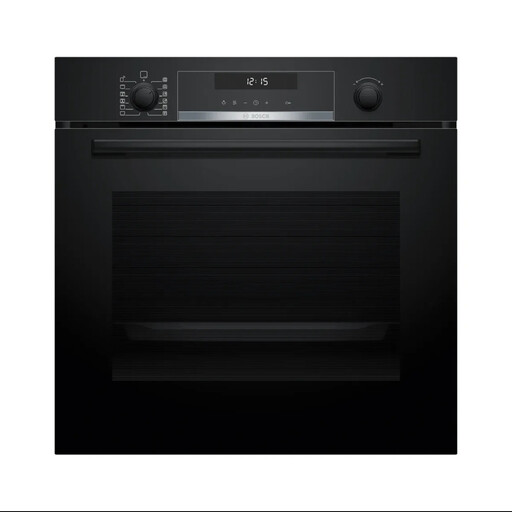
Bosch HBG578EB7 built-in oven with Air Fry, 71 l
A built-in model to consider if you have a suitable housing unit.
The product information lists an Air Fry function, an Air Fry and grill tray, and 3D Hotair on up to three levels.
Measure the baking tray and check the required clearance for installation.
Joybuy
 No image available
Bosch HBG537EB4 Serie 6 built-in oven with Air Fry, 71 l
This built-in oven is an option if the workshop venue has a suitable housing unit.
The product information lists Air Fry and 3D Hotair on up to three levels.
The description mentions an Air Fry baking tray included; check that its surface area is suitable for the portions you plan to make.
Joybuy
Frequently asked questions
How do I work out how many crisps I can bake at once?
Arrange a test batch in a single layer on a suitable baking tray and compare the tray with the oven’s internal dimensions. Then work out how many usable trays you need; the capacity in litres or the number of shelf positions alone won’t tell you.
Does an oven for sweet potato crisps need a special Air Fry setting?
Not necessarily: the recipes from Feel Good Foodie and Taste of Home use a conventional oven and emphasise arranging thin slices in a single layer. An Air Fry label on its own doesn’t guarantee a particular result; follow the manual and try your chosen cooking method first.
What should I consider when connecting and cleaning the oven at the workshop venue?
Follow the manual for your chosen model for clearance and cleaning. The Fire Service recommends leaving enough room around ovens for heat to escape and plugging high-power appliances directly into a socket wherever possible. For the Severin TO 2068, the manual says to unplug the appliance and let it cool before cleaning; check the instructions for other models separately.
How do I compare energy use and the manufacturer’s warranty?
For ovens with an energy label, focus on energy use in kWh per cycle for the function you’ll use, and take the oven’s size into account. Energielabel.nl states that small or portable ovens don’t have an energy label. When you buy as a consumer, your statutory rights if a product is faulty apply alongside any manufacturer’s warranty; ACM ConsuWijzer points out that the retailer is your point of contact. For business purchases, check the applicable contract terms.
What rules apply if I sell crisps during a workshop?
If you sell food or drink to customers, the NVWA requires you to work safely and hygienically with food; according to the NVWA, this also applies to individuals who sell food occasionally. A baking workshop doesn’t automatically mean that food is being sold. First check what actually takes place during your activity.
Is the CE marking on an electric oven an independent safety test?
No. For equipment covered by the applicable harmonised EU rules, the manufacturer uses the CE marking to indicate that the product complies with those rules. According to the European Union, the EU does not routinely issue CE certificates itself. Check the product information and documentation for the specific model; a CE marking is not an independent comparative oven test.


