
Vandaag of morgen in huis

Kwaliteit gegarandeerd

Welkomstaanbiedingen ontgrendelen: GRATIS bezorging | Tot 80% korting | Gratis 30 dagen JoyPlus-proefperiode
Download de app
Making sushi at home isn’t just about fresh fish, nori and a good rolling mat. The rice is what keeps maki neatly together, helps nigiri hold its shape and stops onigiri from falling apart. Yet not every bag labelled “sushi” is automatically right for the way you cook.
Pay particular attention to the grain type, cooking instructions and pack size. That way, you’ll avoid buying rice that’s too dry, being left with an awkwardly large bag, or confusing ordinary sticky rice with proper Japanese sushi rice.
Sushi rice is usually short-grain rice, also described as round-grain rice or Japonica rice. After cooking, this rice holds together well, but the grains should still remain recognisable.
The term sticky rice can also refer to glutinous rice, a variety with a much stickier texture. It’s often used for desserts and Asian snacks, but it isn’t automatically suitable for maki or nigiri. So check the ingredients and look for terms like short grain, round grain or Japonica.
Sushi rice in 10 kg, 20 kg or even 5 kg bags is practical for restaurants, caterers and families who cook rice regularly. For someone who only makes sushi a few times a year, a 1 kg or 500 g bag is probably a wiser choice.
Rice needs to be stored dry, sealed and away from heat and moisture. An opened 20 kg bag also takes up a lot of space. So don’t just look at the price per kilo – consider how much you’ll use and how much storage room you have.
A label like “premium” doesn’t automatically tell you about the cooking properties. Instead, look for concrete details: origin, rice type, net weight, water ratio and cooking time. Brand descriptions about texture or flavour are product claims; judge them alongside the actual specifications and the information on the pack.
For sushi rice, short, round grains are generally more practical than long grains. They absorb the flavour of rice vinegar well and can be shaped after cooling. For nigiri rice, you need a grain that holds together without turning mushy. For maki rice, an even grain helps with spreading over the nori sheet.
This structure also works well for onigiri, donburi and poke bowls. A brown rice variety will have a different texture and cooking time. YUMENISHIKI Yume Nishiki Super Premium Brown Rice is therefore a choice for those specifically looking for brown rice, not the most obvious option for classic sushi.
The recommended ratio varies by product. For the different options, a ratio of roughly 1 part rice to 1.1 to 1.2 parts water is given. Taiyori Sushi Rice, for example, advises 1 cup of rice with 1.2 cups of water. Hanako recommends about 1:1.1 to 1:1.2.
Rinse the rice two to three times until the water runs clearer. Then leave the cooked rice to rest, covered. This resting time helps the moisture distribute evenly. Always follow the label, because the rice cooker, pan, quantity and desired texture all affect the result.
When your rice arrives, check the packaging, best-before information and storage instructions. Keep the bag cool and dry, seal it well after opening, and don’t use any product in damaged packaging.
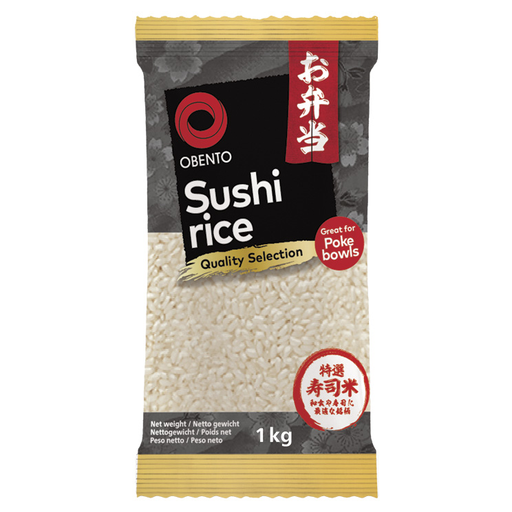
Why this fits the profile: The 1 kg bag gives you enough rice for several cooking sessions without committing to a large bulk pack. The product information states 100% short-grain white rice.
The grain type and ingredients are clearly stated, so you don’t have to rely solely on the marketing term “sushi”.
1 kg pack; suitable for sushi rolls, nigiri and other Japanese dishes; 0 g salt per 100 g according to the product information.
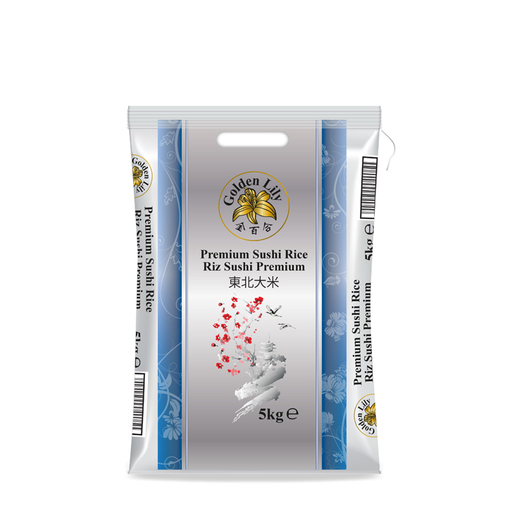
Why this fits the profile: This 5 kg pack is ideal for home cooks who regularly make sushi, rice bowls or onigiri and want a product with stated Japanese origin.
The product details state 100% refined short-grain rice and a net weight of 5 kg, making the choice verifiable.
Short grain; stated country of origin Japan; 5 kg for regular use.
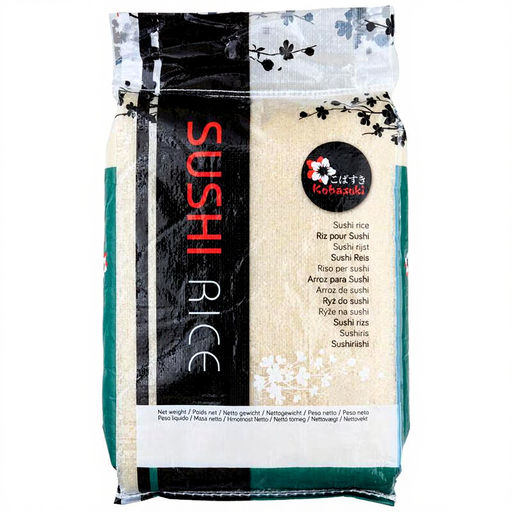
Why this fits the profile: The bulk pack is ideal for restaurants, caterers and home cooks who frequently prepare sushi, nigiri or other Japanese rice dishes.
The packaging explicitly states 20 kg and lists sushi rolls and nigiri as uses, so the stock choice is matched to heavy use.
20 kg bulk pack; suitable for professional use; product information states a sticky texture and an energy content of 351 kcal per 100 g.
We’ve put together a full, up-to-date list of products that fully meet these strict selection criteria and comply with current European safety regulations.
Choose a short-grain or round-grain rice that holds together after cooking. Also check the preparation instructions. Rice for maki needs to be easy to shape; for nigiri, an even, not-too-wet texture is important.
This varies by brand and cooking method. Many product instructions use roughly 1 part rice to 1.1 to 1.2 parts water. Rinse the rice first and leave it to rest, covered, after cooking. Use the ratio on the pack as your starting point.
Store sushi rice in a cool, dry place away from direct sunlight. Seal the pack well after each use and protect the rice from moisture and heat. For bulk packs, it’s practical to keep some in an airtight container and store the rest sealed. Always check the best-before information on the pack.
