
Vandaag of morgen in huis

Kwaliteit gegarandeerd

Welkomstaanbiedingen ontgrendelen: GRATIS bezorging | Tot 80% korting | Gratis 30 dagen JoyPlus-proefperiode
Download de app
Making sushi at home takes more than fresh fish, nori and a good sushi mat. The rice determines whether maki stays neatly together, nigiri holds its shape and onigiri does not fall apart. However, not every bag labelled sushi rice is automatically suitable for your kitchen.
Pay particular attention to the type of grain, cooking instructions and pack size. This helps you avoid paying too much for marketing terms or being left with an impractical bag.
Long grains such as basmati and pandan rice remain relatively separate after cooking. That is useful for many hot dishes, but less suitable when you want to roll or shape your rice. For sushi, you will usually want short-grain rice, round-grain rice or Japonica rice.
Please note: the term ‘sticky rice’ can be confusing. Genuine sticky rice, such as that used for certain desserts, is not the same as Japanese sushi rice. Sushi rice becomes sticky through a combination of variety, washing, the water ratio and cooking method. Always check the ingredients list and stated use.
A 1 kg bag of sushi rice is practical for a family that makes sushi occasionally. For a restaurant, caterer or large family, a 5 kg, 10 kg or 20 kg pack may offer better value per portion. On the other hand, a large bag requires more storage space and must be properly sealed after opening.
Also check the net contents on the product page and packaging. In some listings, the product name may suggest a different weight from the specification. For example, the product name Golden Lily Premium Sushi Rice 20kg states 20 kg, while the accompanying product information gives a net weight of 5 kg. This is exactly the kind of detail you should check before placing your order.
Words such as ‘premium’, ‘authentic’ or ‘super premium’ often appear in product names. On their own, they say little about how suitable the rice is or how it should be prepared. Instead, look for verifiable information: rice type, country of origin, net weight, ingredients and cooking instructions.
When a brand claims that a rice is particularly sticky, fresh or consistent when cooked, treat this as a claim made by the seller. The product information may describe the type and characteristics, but the final result also depends on washing, water, the pan, rice cooker and resting time.
For sushi, onigiri and many poke bowl recipes, you need a grain that holds together after cooking. Packaging may use terms such as short grain, short-grain Japonica, round grain or Japanese sushi rice.
Short, round grains generally contain more surface starch than long-grain rice. This allows the cooked rice to stick together more effectively. That does not mean the rice should become hard and gluey: for sushi, you want grains that hold together while remaining recognisable.
Start by following the product instructions. Many varieties require the rice to be rinsed two or three times and then cooked with approximately 1.1 to 1.2 parts water. For example, Taiyori states a ratio of one cup of rice to 1.2 cups of water, followed by approximately 15 minutes of resting time.
The resting time is not just a minor detail. While the rice stands covered, the moisture continues to distribute throughout the grains. Then gently loosen it with a spatula, taking care not to squash the grains.
Ideally, choose a product with a clear ingredients list, such as 100% rice or 100% Japonica rice. If you are looking for gluten-free sushi rice, you should also check the allergen information. Some products state that they contain no declarable allergens, while Hanako Short Grain Japonica Rice 10 kg indicates that it may contain traces of cereals containing gluten.
An allergen statement is different from a general health claim. If you have an allergy, always check the current packaging and the seller’s information.
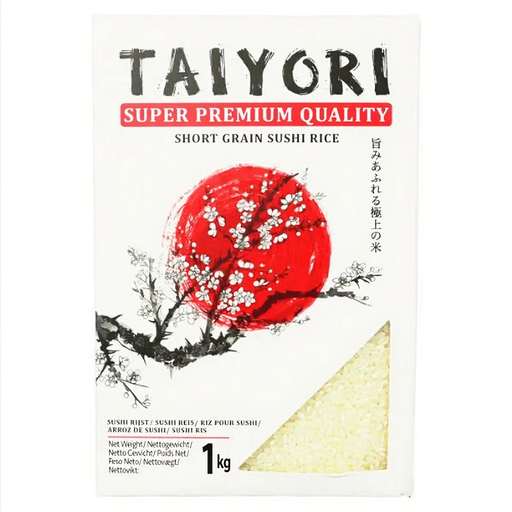
Why it suits this profile: The 1 kg pack is a manageable size for home use and is suitable for trying out sushi, onigiri and other Japanese dishes.
The product information describes short, round grains and gives a specific water ratio. This means you do not have to rely solely on general marketing terms.
1 kg contents; suitable for sushi and onigiri; according to the product information, no declarable allergens.
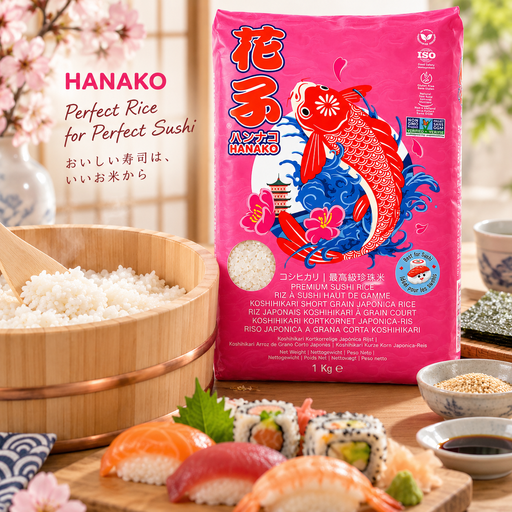
Why it suits this profile: This 1 kg pack explicitly contains short-grain Japonica rice and is suitable for sushi, onigiri, donburi and rice bowls.
The ingredients list states 100% Japonica rice, while the preparation method covers rinsing, the water ratio and resting time.
Short-grain Japonica; 100% rice; according to the product information, gluten-free.
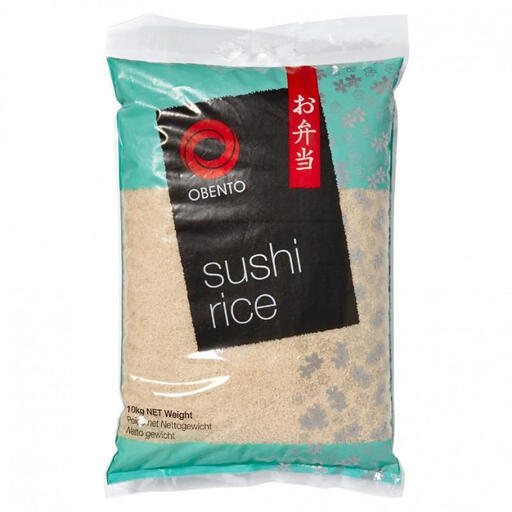
Why it suits this profile: The 10 kg bag is aimed at restaurants, caterers and families who regularly prepare sushi or rice balls.
The product is described as round-grain rice with a sticky texture for sushi and rice balls. The storage instructions call for a cool, dry place and a tightly sealed bag.
10 kg contents; short, round grain; according to the product information, no added preservatives and gluten-free.
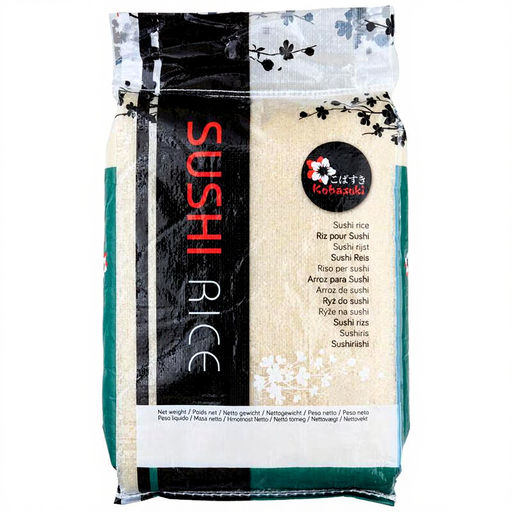
Why it suits this profile: A 20 kg pack is suitable for professional kitchens and high-volume users who frequently prepare the same type of rice.
The product description explicitly mentions use for sushi rolls, nigiri and professional applications. With such a large bag, check your storage space and consumption in advance.
20 kg bulk pack; intended for sushi and nigiri; the product information mentions a cohesive texture.
We have put together a complete, up-to-date list of products that fully meet these strict selection criteria and the applicable European safety regulations.
Not always. Sushi rice is usually short-grain or round-grain rice with properties that make it suitable for shaping and rolling. Check whether the packaging mentions sushi, Japonica or short grain. ‘Round grain’ on its own does not provide complete information about the variety or the result after cooking.
Yes, the same rice can be used for several dishes. Its sticky texture is useful for rice for onigiri. Sushi rice can also be suitable for poke bowl rice, particularly when you want a cohesive base. Adjust the amount of sushi vinegar to suit the dish.
This depends on the packaging, storage conditions and the date on the label. Store the rice in a cool, dry place away from direct sunlight and moisture. Seal an opened bag airtight and do not use a product if its packaging is damaged. With larger packs, it is sensible to divide the rice between smaller, tightly sealed storage containers.
