
Survival gamer balancing graphics settings
Wants to play on a large screen and compares the exact GPU configuration with their chosen game, resolution and settings. A screen specification alone doesn’t tell you how well the game will run.


Choose a laptop with a built-in 18-inch screen if you want to play on a large display in different places without a separate monitor. A 16-inch model may suit you if you mainly need a large display at home. Then compare the exact GPU, screen resolution, RAM and SSD in the configuration, and look up performance for your game and settings separately: a GPU name or screen refresh rate does not guarantee a particular frame rate. The configurations mentioned are based on product specifications, not independent tests of survival games.
Wants to play on a large screen and compares the exact GPU configuration with their chosen game, resolution and settings. A screen specification alone doesn’t tell you how well the game will run.
Plays in different places without a separate monitor, so is considering a built-in 18-inch screen. Compare WUXGA and WQXGA configurations: ASUS and Acer specifications show that the same screen size doesn’t automatically mean the same resolution or configuration.
Wants to be able to move the laptop around and is happy with a 16-inch screen when away from home. Check in advance that the exact laptop variant works with your preferred external display setup.
Choose this if: you want to play on a large, sharp laptop screen wherever you are.
Bear in mind: a larger device is less convenient to carry around, and 240 or 250 Hz doesn’t prove that a game can reach that frame rate.
Choose this if: you’re happy with a smaller laptop screen when you’re out and want to play on a large display at home.
Bear in mind: you’ll need a separate monitor for a large display at home. Check the ports and display support of the exact laptop variant.
Choose this if: physical screen size is your main priority and you don’t necessarily need the higher resolution of WQXGA.
Bear in mind: the WUXGA configuration reviewed has a resolution of 1920 × 1200, compared with 2560 × 1600 for the WQXGA models reviewed; performance in the games you have in mind has not been tested.
| What to consider | What to look for | Who should prioritise this? |
|---|---|---|
| Performance in your game | Compare the full laptop GPU configuration and video memory with tests for your game and resolution. | If I want to play my survival game at my preferred resolution and settings, I’ll look at performance in that game first. Around 36% of consumers put performance in their chosen game first. |
| Screen size and resolution | Check the screen size, resolution and full model number; the 18-inch variants reviewed range from 1920 × 1200 to 2560 × 1600. | If I want to play on a large screen without an external monitor, the built-in display matters most. Around 29% of consumers prioritise screen space. |
| Portability and setup | Decide whether you need a large screen everywhere or only at home. If you’re using an external monitor, check the connections and supported display mode. | If I move my laptop around often, I may be happy with a smaller screen and use a monitor at home. Around 21% of consumers prioritise a portable setup. |
| RAM and SSD | Check the memory, SSD capacity, whether upgrades are possible and what’s included with the exact configuration. | If I care more about space for games and enough memory than the other factors, I’ll compare the complete configuration. Around 14% of consumers prioritise RAM and storage. |
The stated Hz value describes the screen panel, not the frame rate a specific survival game will reach on this laptop.
First, choose your game, resolution and preferred settings. Then look up tests for that combination and use the screen and GPU specifications to help narrow down your options.
Configurations can differ in GPU, resolution, RAM and SSD. A model name without its full suffix can hide these differences.
Compare the full model number and specifications of the exact configuration you’re considering. Also check in advance that the configuration and included components suit your setup.
The Dutch government distinguishes between a manufacturer’s warranty and statutory rights. A manufacturer’s warranty is therefore not the same as your full statutory protection.
Check exactly what any additional warranty offers before choosing it; your statutory rights apply separately from any extra warranty product.
The ASUS configurations reviewed show that an 18-inch screen can be either WUXGA or WQXGA. ASUS ROG Netherlands and ASUS eShop Netherlands product specifications describe specific models and configurations.
The Acer Predator Helios 18 AI PH18-73, configuration NH.QVYEH.00B, is listed with an 18-inch WQXGA screen, RTX 5080, 64 GB RAM and a 1 TB SSD.
The HP HyperX OMEN MAX 16-ak1691nd reviewed is a 16-inch alternative with RTX 5070 Ti, 32 GB RAM and a 1 TB SSD, according to HP Netherlands product specifications.
For the Legion 9i Gen 10 configuration 83EYCTO1WWNL2, Lenovo lists an 18-inch screen with a resolution of 3840 × 2400, RTX 5090, 64 GB RAM and a 2 TB SSD. The Legion Pro 7i range also includes 16-inch configurations.
This selection includes gaming laptops with built-in screens from 17 to 18 inches, for anyone who wants to play on a spacious laptop display without a separate monitor.
 No image available
Suits anyone looking for a built-in 18-inch screen to play without a separate monitor.
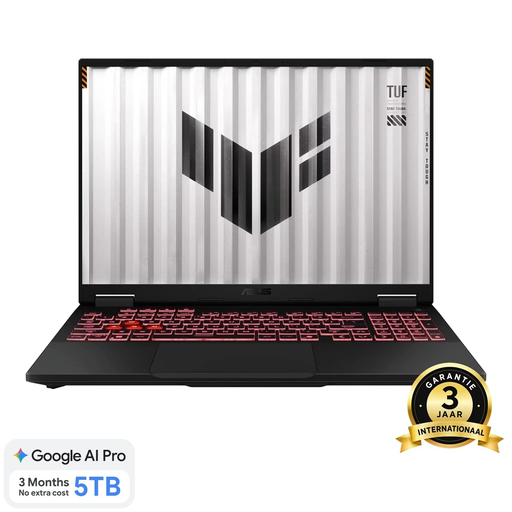 No image available
Suits anyone looking for a built-in 18-inch WUXGA screen who wants to see how this configuration’s resolution works for their game.
 No image available
Suits anyone looking for a built-in 18-inch UHD+ Mini LED screen who wants to compare the stated storage configuration with their gaming needs.
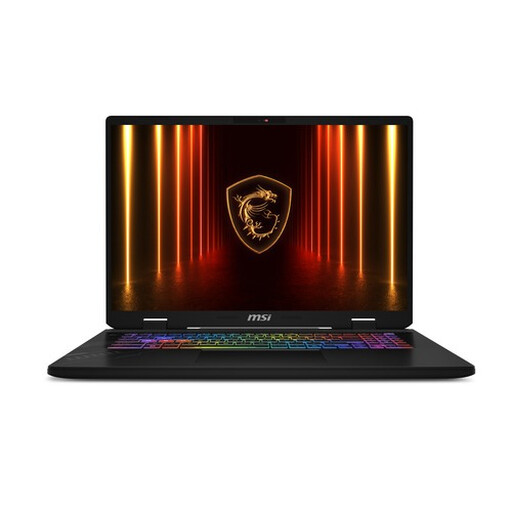 No image available
Suits anyone looking for a spacious built-in 17-inch QHD+ screen who wants to compare the configuration with their chosen game.
 No image available
Suits anyone looking for a built-in 17.3-inch QHD screen who wants to take the stated refresh rate and configuration into account.
No. A built-in 18-inch screen is a good fit if you want to play on a large display in different places without a monitor; a 16-inch laptop may suit you if you mainly need a large display at home. If you’re using an external monitor, check the connections and display support of the exact configuration. Screen size alone tells you nothing about frame rate.
No. The Hz value describes the screen’s refresh rate, not the frame rate a particular game will reach on the laptop. Look up performance for your game, resolution and settings.
Compare the resolution of the exact configuration with the game and settings you want to use. The ASUS TUF A18 reviewed has WUXGA at 1920 × 1200; the WQXGA configurations reviewed have 2560 × 1600. These specifications alone don’t tell you how well games will perform.
For qualifying distance purchases, you generally have a 14-day cooling-off period, according to the Dutch government; exceptions may apply. The Dutch government also states that consumers are entitled to a product that works properly, and that there is no fixed statutory warranty period for all products in the Netherlands. The cooling-off period and your rights if a product is faulty are separate matters.