
Vandaag of morgen in huis

Kwaliteit gegarandeerd

Welkomstaanbiedingen ontgrendelen: GRATIS bezorging | Tot 80% korting | Gratis 30 dagen JoyPlus-proefperiode
Download de app
A sunscreen spray is handy for your back, legs and other hard-to-reach areas. However, a spray isn’t automatically the right choice for every situation. A fine mist may feel quick to apply, but it can lead people to use too little product. Words such as “waterproof”, “transparent” and “hydrating” can also give the wrong impression.
Before you buy, check the SPF, the level of UVA and UVB protection, your skin type and how you plan to use the spray. Below, we’ve outlined the key points to consider and matched them with a few specific product options.
SPF mainly refers to protection against UVB rays, which can cause redness and sunburn. UVA rays penetrate deeper into the skin and contribute to premature skin ageing. So check that the packaging mentions both UVA and UVB protection.
An SPF 30 sunscreen spray may suit many everyday outdoor activities, while an SPF 50 or SPF 50+ sunscreen spray offers a greater margin of protection if you have fair skin, are in strong sunshine, are on holiday or will be outdoors for a long time. No SPF makes spending a long time in the sun without taking precautions a good idea.
A waterproof sunscreen spray is designed to stay on the skin better after contact with water or sweat. However, swimming, towel-drying and vigorous exercise can still reduce the layer you’ve applied. Reapply after swimming, towel-drying and heavy sweating. Always follow the instructions on the label.
According to the product description, a transparent sunscreen spray doesn’t leave a white cast or streaks. This can be useful on different skin tones and with sportswear, but an invisible layer is harder to check. Apply plenty and rub the product in well. If you’re using an aerosol, bear in mind that the wind can blow some of the mist away from your skin.
Choose your SPF based on your skin type, the strength of the sun and what you’ll be doing. SPF 30 offers a different level of protection from SPF 50. Product information for several variants recommends a higher SPF for children, very fair skin and intense sun exposure. For example, Vision recommends SPF 50 for young children.
Apply sunscreen generously, ideally 15 to 20 minutes before going out in the sun, unless the packaging gives different instructions. Vision’s product information recommends around 35 ml per application for an adult. That’s considerably more than a few short sprays.
A water- and sweat-resistant formula can be useful for swimming, cycling, walking or running. According to the brand descriptions, NIVEA SUN Protect & Dry Touch Mist SPF 30 and SPF 50 are water- and sweat-resistant and suitable for sport. This doesn’t provide permanent protection, so reapply regularly.
If you’re looking for a sunscreen spray for sensitive skin, check whether it has a fragrance-free formula, read the full ingredients list and consider any sensitivities you know you have. According to the product description, NIVEA SUN Sensitive Immediate Protect SPF 50+ is fragrance-free and contains ingredients including Bio Aloe Vera and jojoba oil. A fragrance-free formula doesn’t rule out irritation completely; stop using it if you have an unwanted reaction and follow the safety information on the packaging.
For a hydrating sunscreen, look for ingredients such as glycerine, hyaluronic acid or vitamin E. Claims about long-lasting hydration are made by the brands. NIVEA says the results mentioned for its products are based on its own research or instrumental tests; they aren’t guaranteed for every user.
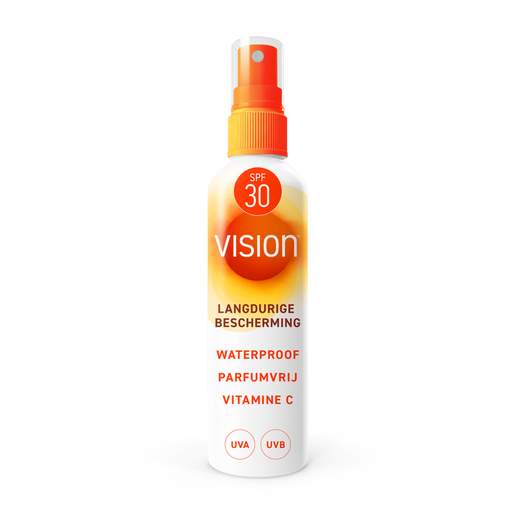
Why it suits this profile: A straightforward SPF 30 spray for adults looking for simple sun protection for everyday use.
The instructions recommend applying plenty, waiting 15–20 minutes and reapplying after swimming, sweating or towel-drying.
180 ml, UVA and UVB protection according to the product information, and clear safety instructions.
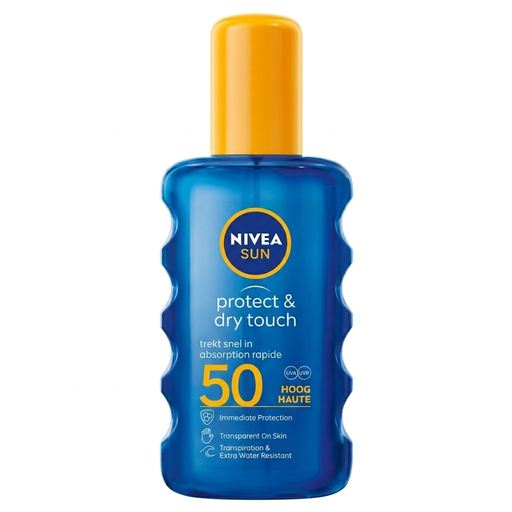
Why it suits this profile: A good choice if SPF 50, quick absorption and a transparent formula for face and body are important to you.
The transparent formula makes missed white patches less noticeable when you apply the spray carefully and use enough.
SPF 50, a water-resistant formula, 200 ml and, according to the product description, no white residue.
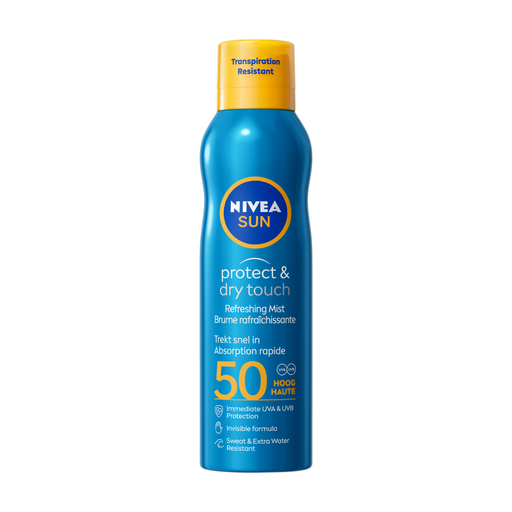
Why it suits this profile: A practical choice for sport, the beach and activities where water and perspiration are a factor.
The product description says it is water- and sweat-resistant, but you still need to reapply after swimming or towel-drying.
SPF 50, a fine mist, transparent application and a stated suitability for sport.
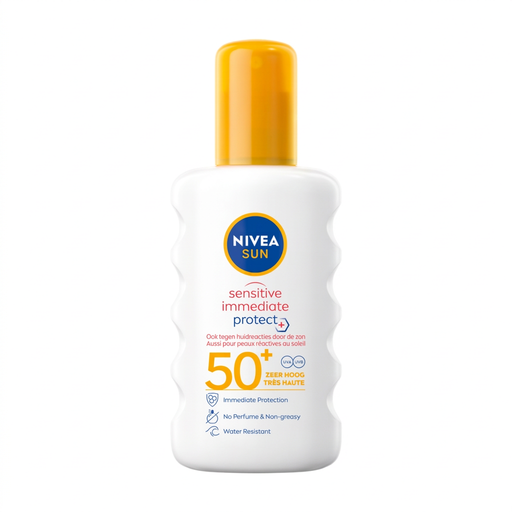
Why it suits this profile: Designed for people looking for a fragrance-free sunscreen spray for sensitive skin with high protection.
The product information says it is fragrance-free, but always check the ingredients list yourself and, if in doubt, try it on a small area of skin first.
SPF 50+, 200 ml, a fragrance-free formula according to the product description, and water resistance.
When it comes to children, the spray isn’t the only thing to consider. Keep young children out of direct sunlight, dress them in protective clothing and avoid the strongest sun. According to the product information, Vision SPF50 Colored Kids Spray 180 ml has a tinted formula, which can make the areas you’ve covered easier to see. This may help you apply it evenly, but always check the age guidance and safety instructions on the packaging.
An after-sun spray is not a substitute for sunscreen. NIVEA Sun Hydrating Soothing After Sun Spray 200 ml is designed for use after sun exposure. According to information from NIVEA, the spray contains ingredients including Bio Aloe Vera, vitamin E and hyaluron, and the formula provides up to 48 hours of hydration based on an instrumental test. Think of it as an extra step in your skincare routine, not as protection while you’re in the sun.
Want to compare a transparent, non-greasy spray or an option for another use? Browse the non-greasy spray category.
We’ve put together a complete, up-to-date list of products that meet these strict selection criteria and the applicable European safety requirements.
Some product instructions recommend around 35 ml per application for an adult’s body. That’s a generous amount. Don’t just give your skin a quick spray; spread the product carefully. For your face, you can spray it into your hands first to avoid your eyes and mouth.
Reapply according to the label, and always after swimming, sweating or towel-drying. Even with a waterproof sunscreen spray, friction and water reduce the level of protection. If you’re spending a long time outdoors, reapplying regularly is an essential part of using it correctly.
It depends on the product information. Some sprays are designed for the face and body, while others advise you to avoid the face. Check the label, don’t spray directly around your eyes or mouth, and, ideally, choose a product that clearly states it can be used on the face.
