
Vandaag of morgen in huis

Kwaliteit gegarandeerd

Welkomstaanbiedingen ontgrendelen: GRATIS bezorging | Tot 80% korting | Gratis 30 dagen JoyPlus-proefperiode
Download de app
The shelves are filled with sunscreens that promise the world, from "all-day coverage" to "100% waterproof." But which claims are genuine, and which lead to unprotected skin and wasted money? As a Product Recommendation Officer at Joybuy, I see the challenges consumers face every day. Let's break down the most common pitfalls of buying sunscreen and look at what you really need to pay attention to.
Before you put a bottle in your basket, it's wise to understand these common misconceptions.
To make an informed choice, focus on the facts. These are the three most important specifications to check on the packaging.
The SPF value indicates how much longer the sunscreen protects your skin from burning due to UVB rays, compared to unprotected skin.
The percentage increase in protection between SPF 30 and SPF 50 may seem small, but for sensitive skin, it can make all the difference.
A good sunscreen protects against both UVB and UVA rays. Look for the UVA logo (the letters 'UVA' in a circle) on the packaging. This is an EU requirement that guarantees the UVA protection is at least one-third of the stated SPF value. This ensures a balanced defence against both sunburn and skin ageing.
The texture of a sunscreen product determines its ease of use and how it feels on the skin.
fast-absorbing sunscreen is often a spray with a 'dry touch' formula.Based on objective specifications and various use cases, we have selected a number of products that fit specific profiles.
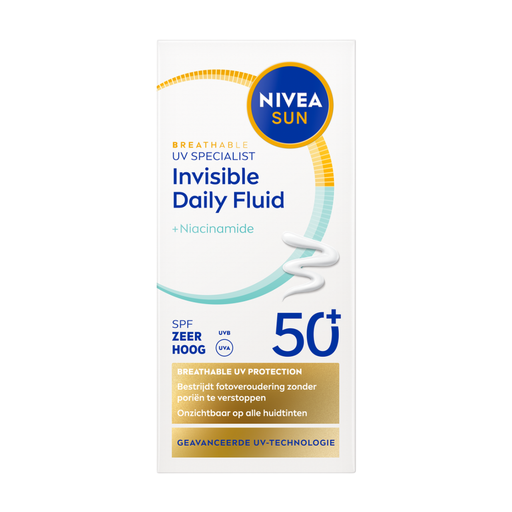
Why This Fits Their Persona: Ideal for those seeking a lightweight, invisible daily facial sunscreen that isn't sticky and works well under makeup.
This product tackles the 'fixating on SPF' trap by explicitly offering broad protection against UVA/UVB and blue light. Its ultra-light formula encourages frequent, daily use.
The formula is designed to leave no white cast and, according to Nivea, has an 8-hour mattifying effect. Suitable for use under makeup.
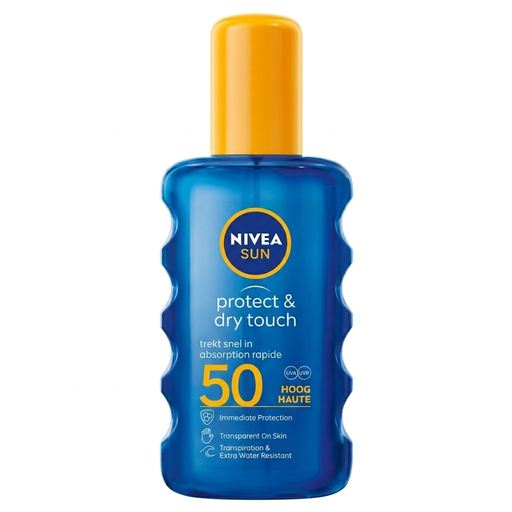
Why This Fits Their Persona: Perfect for those who want a non-sticky, water-resistant sunscreen that is easy to reapply during a day of beach activities, swimming, or sports.
This product bypasses the 'waterproof' myth by clearly stating it is 'extra water-resistant' and 'sweat-resistant', which implies that reapplication is necessary after swimming or sweating. The spray format makes this simple.
The transparent formula absorbs quickly and leaves no white streaks. The spray is convenient for covering the entire body, including the back.
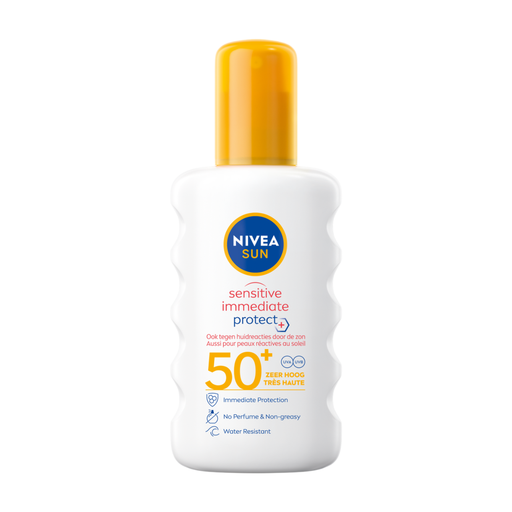
Why This Fits Their Persona: Specially developed for those who need a sunscreen for sensitive skin. The formula is focused on minimising irritation while providing high protection.
This product provides high, broad-spectrum protection (SPF 50+ and UVA) and is fragrance-free. This prevents users with sensitive skin from under-applying out of fear of irritation.
The formula is fragrance-free and, according to Nivea, contains soothing ingredients like Bio-Aloe Vera and Jojoba Oil. Its skin compatibility is dermatologically tested.
We've compiled a complete, up-to-date list of products that fully meet these strict selection criteria and regulations.
The general recommendation is to reapply every two hours. You should also reapply immediately after swimming, heavy sweating, or towel-drying, even if you are using a water-resistant sunscreen.
Mineral sunscreen (with zinc oxide or titanium dioxide) forms a layer on the skin that physically blocks UV rays. It works immediately upon application and is often recommended for sensitive skin. Chemical sunscreen contains filters that are absorbed into the skin and convert UV radiation into harmless heat. These formulas are often lighter and absorb more quickly.
Check the packaging for an open jar symbol with a number inside (e.g., "12M"). This number indicates how many months the product remains effective after opening. If the sunscreen smells strange, has changed colour, or has a different texture, it's time to replace it. Its protective efficacy may have diminished.
