
Vandaag of morgen in huis

Kwaliteit gegarandeerd

Welkomstaanbiedingen ontgrendelen: GRATIS bezorging | Tot 80% korting | Gratis 30 dagen JoyPlus-proefperiode
Download de app
Buying sunglasses seems simple until you have to choose between sports sunglasses, oversized sunglasses, cycling glasses or a foldable model. Marketing terms such as “HD”, “anti-glare” and “photochromic” only mean something when you know which specifications go with them.
For everyday use in the Netherlands, three things are particularly important: protection against UV radiation, reduced glare and a fit that remains comfortable even after several hours. Below, you can find out what to look for and which models suit different situations.
A dark lens does not automatically block UV radiation. Look for an explicit mention of UV400 protection in the product information. According to the descriptions of the models mentioned, UV400 refers to protection against UV radiation up to 400 nanometres. Always check that this information is clearly stated for the product before buying.
Dark sunglasses without the right protection can also be less comfortable in changing light conditions. The colour of the lens is therefore no substitute for a technical specification.
Polarised sunglasses can reduce reflections from wet tarmac, water and metal surfaces, for example. This is useful when cycling, walking or travelling. However, polarisation is not always suitable for every application. Contrast can appear differently on some displays, while for driving, good light transmission and clear vision are particularly important.
Also check whether a model is suitable for use behind a windscreen. Photochromic sunglasses may not become dark enough in a car because the windscreen blocks some UV radiation.
Oversized sunglasses or cat-eye sunglasses may suit your style, but their dimensions also affect how the frame sits on your face. Glasses that are too wide can slip, while a narrow nose bridge can cause pressure. Pay attention to the frame width, nose bridge, temple length and weight.
Lightweight sunglasses made from TR90 may be worth considering for long days, but also check whether the nose pads and temples provide enough grip. With foldable sunglasses, sturdy hinges and a protective case are particularly important.
Look for a clear mention of UV400 and check that this information forms part of the official product description. For the models below, percentages and certifications are stated by the brands or sellers. They should therefore be presented as product information, not as independently verified results.
Also take note of any warnings. None of these sunglasses is intended for looking directly at the sun, observing eclipses, welding or high-impact work, unless specifically suitable eye protection is stated.
Polarisation is particularly useful for reducing distracting reflections. For cyclists, this can be helpful on roads, cycle paths and near water. According to the product description, a sports model with visible light transmission of around 15.2% is designed for bright, sunny weather. In overcast conditions or at dusk, a lighter or interchangeable lens may be more practical.
For sunglasses for driving, it is sensible to choose good visibility, a secure fit and a lens that is not too dark. Never assess a new pair of glasses on style alone; also check that road signs, mirrors and the dashboard remain clearly visible.
TR90 is a thermoplastic material used in various models because it combines low weight with flexibility. This does not mean that every TR90 frame offers the same quality or fit. Look at the overall weight, adjustable nose pads, non-slip sections and dimensions.
For cycling and running, cycling glasses should stay securely in place while you move. Sports sunglasses with a curved lens can also provide greater protection at the sides, but check that the frame does not touch your eyelashes or cheeks.
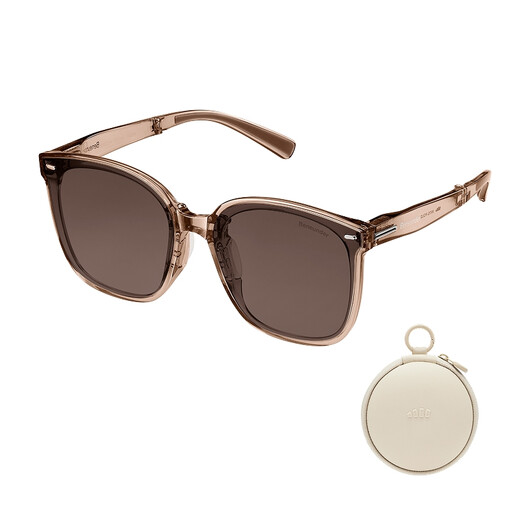
Why it suits this profile: This model combines a striking oversized frame with a foldable design. According to the product description, the sunglasses weigh 26 grams and fold down to approximately 35 mm thick, making them convenient to carry in a bag or suitcase.
The product information mentions UV400 and an anti-reflective coating, so you do not have to rely solely on the dark lens or the appearance.
TR90 frame, 26 grams according to the specifications, foldable design and several frame colours.
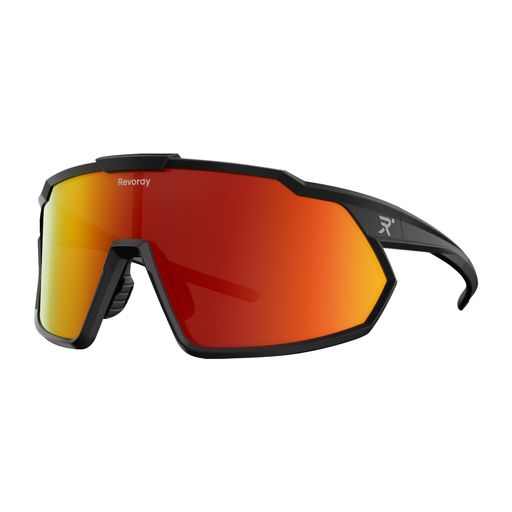
Why it suits this profile: Designed for cycling and other outdoor sports, with HD TAC polarised lenses, adjustable silicone nose pads and a TR90 frame. According to the product information, the model weighs approximately 33 grams.
The specifications mention both UV400 and polarisation, rather than relying solely on general terms such as “sporty” or “HD”.
Approximately 33 grams, water- and oil-repellent coating according to the product description, and the manufacturer’s mention of ANSI Z87.1.

Why it suits this profile: According to the product description, these cycling glasses combine photochromic and polarised lenses. The tint adjusts to the light intensity according to the manufacturer, while adjustable nose pads and a TR90 frame are designed for active use.
The product information specifically states the weight of approximately 26 to 29 grams, the lens material and the limitations of use behind a windscreen.
Photochromic and polarised polycarbonate lenses, UV400 stated, adjustable nose pads and an included inner frame for prescription lenses.
We have put together a complete, up-to-date list of products that fully meet these strict selection criteria and the applicable European safety regulations.
UV400 is an important specification to check when you are looking for UV protection. Also consider the product information, fit, lens colour and usage restrictions. Sunglasses are not automatically suitable for observing eclipses, welding or heavy-impact work.
They can be useful for reflections on tarmac, water and metal surfaces. Check that the glasses stay securely in place and that you maintain sufficient contrast in changing light conditions. For cycling at dusk, a lighter lens may be more suitable.
Their lifespan depends on use, hinges, coatings and storage. Keep the glasses in a hard case, clean the lenses with water and a soft cloth, and avoid harsh cleaning products. Replace the sunglasses when the lenses are deeply scratched or damaged; damage can impair your vision.
