
Vandaag of morgen in huis

Kwaliteit gegarandeerd

Welkomstaanbiedingen ontgrendelen: GRATIS bezorging | Tot 80% korting | Gratis 30 dagen JoyPlus-proefperiode
Download de app
For parents, choosing suncream for children can seem straightforward: pick SPF 50, choose a fun-looking bottle and you’re done. In practice, there are more differences to consider. A cream might be water-resistant, for example, but still need reapplying after swimming, towel-drying or sweating heavily. And a product for everyday use isn’t automatically suitable for a baby’s skin.
As a Joybuy Product Recommendation Officer, I check product information against verifiable criteria. This helps you quickly find child-friendly suncream that suits everyday outdoor play, a day at the beach or sensitive skin.
A high SPF is important, but it doesn’t mean you only need to apply suncream once. How long it protects you depends on how much you apply, as well as friction, water, sweat and towel-drying. Instructions from various brands advise reapplying regularly.
Also, be aware of the difference between SPF 50 and SPF 50+. Both offer a high level of protection against UVB rays, but the claim on the packaging should match the official product information. For young children, also seek shade and use covering clothing and a sun hat. Babies and young children should be kept out of direct sunlight.
Water-resistant suncream is handy for swimming and outdoor play, but it doesn’t create an invisible, waterproof layer. Swimming, towel-drying and sand can all remove some of the product. So reapply after swimming, sweating or towel-drying, even if the manufacturer describes the lotion as extra water-resistant.
A baby cream such as Zwitsal Baby Soft Cream is intended to care for and hydrate the skin, not protect it from UV rays. The same applies to nappy balm. These products can be part of your daily skincare routine for sensitive baby skin, but they don’t replace suncream with a stated SPF and UVA/UVB protection.
Many parents choose SPF 50 suncream for children or SPF 50+. As well as checking the SPF, make sure the label also states that it offers UVA protection. When choosing suncream for a baby, check the age guidance. According to the product information, NIVEA SUN Babies & Kids Sensitive Sunscreen Spray is suitable for babies and children from 6 months. This does not mean that babies should be exposed to direct sunlight.
“Mild” is no guarantee when it comes to sensitive skin. Check the ingredients list and look out for perfume, alcohol and known allergens. Test a new product on a small area of skin first, and stop using it if redness, itching, swelling or a burning sensation occurs.
A lotion or milk is suitable for larger areas of the body. A suncream spray for children can be quicker to apply, but don’t spray it directly onto the face. Spray it into your hands first, then spread it over the skin. A compact 50 or 60 ml bottle is handy for a bag; a 150 or 200 ml bottle is more practical for several children or everyday use.
Always read the full instructions for use. “Extra water-resistant” or “very water-resistant” comes from the brand’s product description, and protection still depends on applying the product correctly and generously. A non-water-resistant formula, such as Anua Heartleaf Silky Moisture Suncream according to the information provided, is better suited to everyday use without swimming.
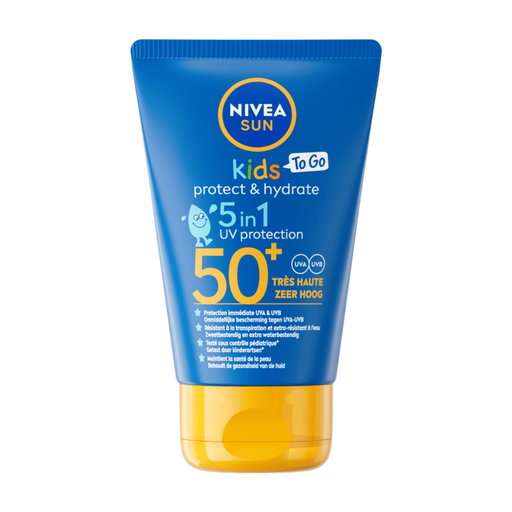
Why it suits this profile: The 50 ml bottle is easy to take along to school, to the playground or on holiday. The product description states that it offers SPF 50+, extra water resistance and a formula with panthenol and vitamins C and E.
Its compact size makes it easier to reapply when you’re out and about. Water resistance isn’t mistaken for permanent protection: you still need to reapply after swimming or towel-drying.
50 ml, SPF 50+, a milky texture and, according to the product information, extra water resistance.
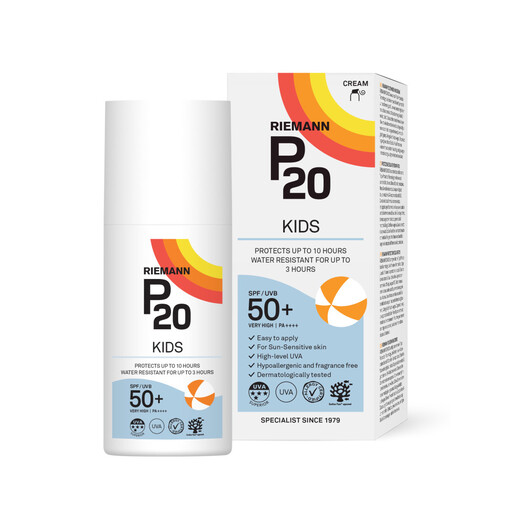
Why it suits this profile: The 200 ml bottle is suitable for families who regularly play outdoors or need to cover larger areas of skin for several children on holiday.
The instructions emphasise applying generously, taking extra care around the ears, nose, shoulders and feet, and reapplying if the product has been rubbed off.
SPF 50+, 200 ml and usage advice with practical tips for achieving full coverage.
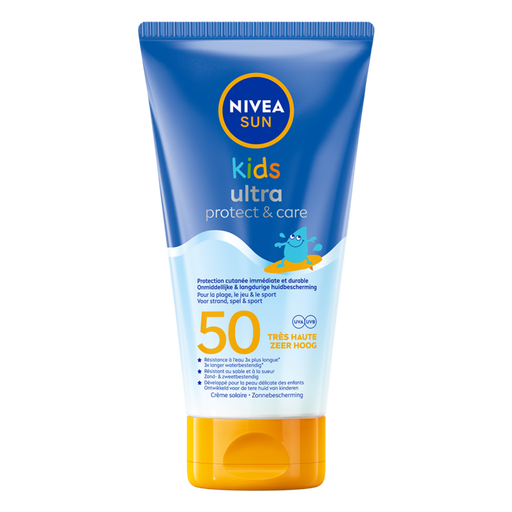
Why it suits this profile: A 150 ml lotion is practical for days at the beach, sports and active play. According to the product description, the formula resists water, sweat and sand.
According to NIVEA’s own information, the claim that this product stays water-resistant for longer than a standard water-resistant suncream comes from the brand. You still need to reapply after towel-drying or friction.
150 ml, SPF 50+, a lotion for face and body, and product information stating that it resists sweat and sand.
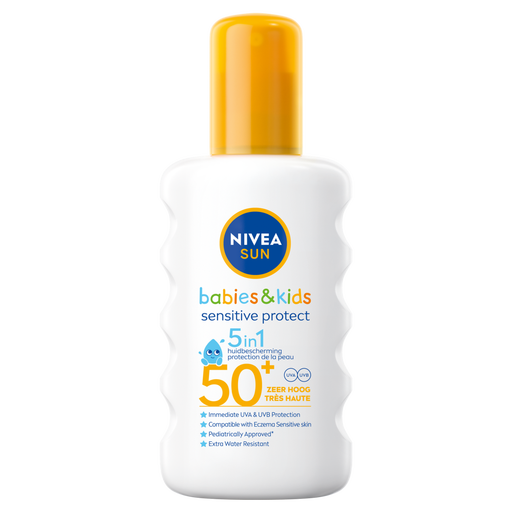
Why it suits this profile: According to the product information, this 200 ml spray is suitable for babies and children from 6 months. The formula is fragrance-free and extra water-resistant.
The packaging says not to spray directly onto the face. Spraying into your hands first helps avoid unnecessary exposure around the eyes and mouth.
SPF 50+, a fragrance-free formula, 200 ml and an age recommendation from 6 months according to the product information.
We’ve put together a complete, up-to-date list of products that meet these strict selection criteria and current European safety regulations.
First, check the age guidance on the packaging. Keep babies and young children out of direct sunlight, and use clothing, a sun hat and shade as the first line of protection. The product information for NIVEA SUN Babies & Kids Sensitive Spray states that it can be used from 6 months. If your baby has very sensitive skin or an existing skin condition, it’s best to speak to a doctor or pharmacist.
Apply generously before going out in the sun and reapply regularly. Reapply after swimming, sweating, towel-drying or energetic play. Even water-resistant products can lose some of their protective layer through friction. Don’t forget the ears, neck, shoulders, hands, feet and areas around the edges of clothing.
Check the expiry date, batch information and period-after-opening symbol on the packaging. Store suncream in a cool, dry place, away from direct sunlight and heat. If its smell, colour or texture has changed, stop using it. At the start of each new season, check the packaging before using any leftover suncream.
