
Vandaag of morgen in huis

Kwaliteit gegarandeerd

Welkomstaanbiedingen ontgrendelen: GRATIS bezorging | Tot 80% korting | Gratis 30 dagen JoyPlus-proefperiode
Download de app
A sun-protection umbrella may seem straightforward to choose at first glance. However, models vary considerably in terms of protection, portability and performance in the rain. For example, a compact UV umbrella for the train requires different features from a large umbrella for a walk or a patio parasol.
The biggest purchasing mistakes usually stem from three misunderstandings:
Below are the key points to help you compare umbrellas for sun and rain effectively.
Look at the combination of material, coating and stated UV classification. Many models use polyester with a black coating. According to the product description, this layer can help reduce light and heat. However, that does not mean that every black umbrella offers the same level of protection.
For models with a claim such as UPF 50+, the following applies: according to information provided by the Beneunder brand, the fabric is designed to block more than 99% of UV radiation. Treat this as a manufacturer’s product specification, not as a universal guarantee for every situation. Actual protection may depend on factors including wear and tear, holes, fabric tension and how the umbrella is used.
A sun umbrella with a double canopy can provide extra shade. A large canopy of approximately 99 cm offers more coverage for your body and shoulders than an ultra-compact model of around 83 cm. The trade-off is that a large umbrella is less likely to fit easily into a small bag.
For British weather, a water-repellent umbrella is practical, particularly when you are expecting a mixture of sunshine and a short shower. According to the product description, products with a lotus-leaf-inspired finish or water-repellent coating are designed to help droplets run off more quickly.
When comparing models, look out for:
An umbrella must be allowed to dry completely after use. Shake off excess water, leave the fabric open to air and only then store it away. Storing it while damp can place unnecessary strain on the fabric and coating.
A folding umbrella is useful for commuters, travellers and festival-goers. Five-fold models are often particularly compact, while a three-fold model will generally offer a larger canopy when opened.
Always check both sets of measurements:
A lightweight model weighing around 150 grams is appealing for everyday travel. A larger version weighing approximately 370 grams may provide more coverage, but will feel heavier during longer walks. Even a so-called wind-resistant umbrella has its limits. According to the product descriptions of various Beneunder models, fibreglass-aluminium frames and reinforced ribs provide additional stability. Always exercise caution in strong winds and close the umbrella when conditions become unsafe.
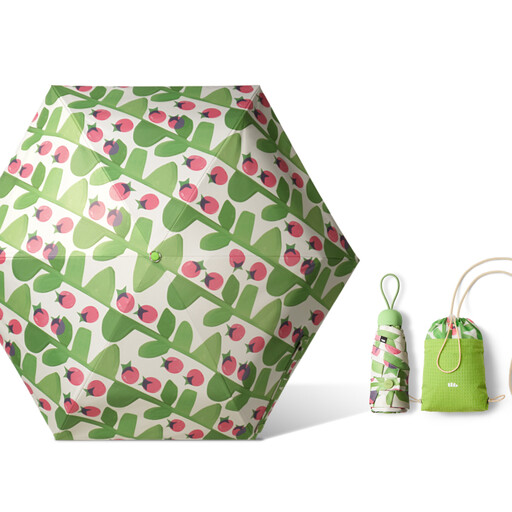
Why it suits this profile: A practical choice for everyday use on the go, with a five-fold mechanism and a cover that can be carried by hand or cross-body.
The product description states both UPF 50+ and a water-repellent finish, so you do not have to rely solely on the dark colour.
Open diameter of 37.2 inches, six reinforced ribs and a fibreglass-aluminium frame according to the product specifications.

Why it suits this profile: Designed for anyone looking for a slim, lightweight travel umbrella for their bag, commute and city trips.
The dimensions and weight are clearly stated: approximately 150 grams and an especially slim profile. This makes it easier to assess portability in advance.
20D polyester, carbon-fibre-aluminium frame, UPF 50+ according to Beneunder’s own information and a multifunctional carrying cord.
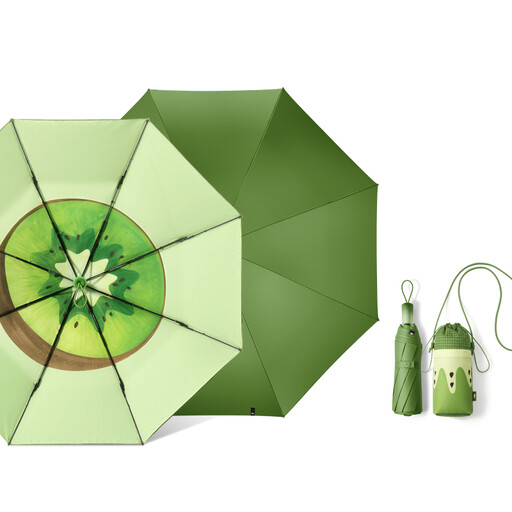
Why it suits this profile: Suitable for anyone wanting more shade and body coverage while walking, attending events or spending time outdoors.
The double canopy and 39-inch diameter are clearly specified. You are therefore not paying solely for a marketing term such as “extra large”.
Double polyester canopy, fibreglass-aluminium frame and a stated level 5 wind resistance according to the product description.
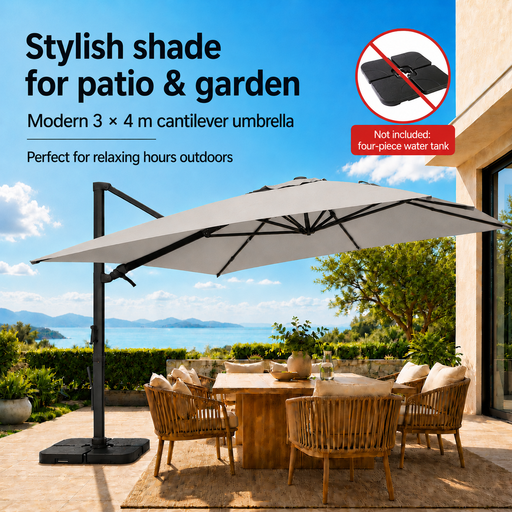
Why it suits this profile: A spacious 3 x 4 metre cantilever parasol for a patio, garden, balcony or lounge set where the central space needs to remain clear.
The package contents explicitly state that a cross base is supplied without ballast slabs or water weights. You will therefore need to provide this additional stabilisation separately.
3 × 4 metre canopy, 360° rotation, tilts left and right, aluminium frame and PA-coated fabric according to the product specifications.
We have put together a complete, up-to-date list of products that fully meet these strict selection criteria and the applicable European safety regulations.
That depends on the fabric and coating. Choose a model whose product description mentions water repellency if you also want to use it during short showers. Allow the umbrella to dry completely afterwards. No compact umbrella is intended to replace shelter during prolonged heavy rain or storms.
Its lifespan depends on usage, wind loads, folding and storage. A fibreglass-and-aluminium frame may provide additional stability according to the product specifications, but closing the umbrella incorrectly or storing it while the fabric is wet can accelerate wear. Check the ribs, hinges and coating regularly.
Yes, when portability is the priority. Pay attention to the weight, folded length and cover. A five-fold model will often fit more easily into a bag, while a three-fold model generally has a larger canopy. So first decide between maximum compactness and more generous coverage.
