
Vandaag of morgen in huis

Kwaliteit gegarandeerd

Welkomstaanbiedingen ontgrendelen: GRATIS bezorging | Tot 80% korting | Gratis 30 dagen JoyPlus-proefperiode
Download de app
A suitcase might seem easy to choose, until you’re at the airport with a handle that sticks, wheels that don’t roll smoothly or a cabin case that won’t fit in the baggage sizer. Marketing terms such as “lightweight”, “extra strong” and “suitable for every airline” don’t tell you much on their own. The dimensions, weight and construction are what determine whether a suitcase is practical.
So look out for these three common pitfalls:
For short trips and hand luggage, many travellers look for a cabin case or hand-luggage suitcase. Dimensions of around 55 × 35 × 20 cm are common, but each airline has its own limits. Always check your airline’s current baggage requirements before you travel.
A 20-inch suitcase is usually suitable for a weekend or a few days away, depending on your clothes and how compactly you can pack. A 24-inch suitcase offers more room for a trip lasting several days, but will generally need to be checked in as hold luggage. The product name isn’t the deciding factor: check the stated external dimensions and capacity.
Pay attention to the depth, too. An expandable suitcase can be useful, but once expanded it may no longer meet hand-luggage requirements.
A hard-shell suitcase made from ABS or polycarbonate protects the contents from pressure and knocks. ABS is often affordable and relatively lightweight. Polycarbonate, also known as PC, is used in hard-shell models with a textured surface.
A soft or partly fabric suitcase can be more flexible when packing. The Beneunder LC363, for example, combines PC panels with protective fabric and can be folded away. According to the product description, it is designed to take up less space when folded. If you’re considering a foldable suitcase, check that its folding design suits the way you travel and store it.
Claims about scratch resistance, load capacity or reduced weight come from the brand’s product description. Treat them as product specifications, rather than a guarantee of a particular lifespan.
A wheeled suitcase is easiest to use when the wheels turn smoothly and the telescopic handle extends securely. Four double spinner wheels let you pull a trolley suitcase upright beside you or manoeuvre it sideways. Two wheels can make for a simpler design and often offer a different experience on uneven surfaces.
A suitcase with a TSA lock can be opened by authorised personnel during airport security checks without forcing the lock in the same way. The lock doesn’t prevent theft and isn’t a substitute for taking care of your valuables. Reset the combination as soon as you receive the suitcase, and don’t store the code with it.
Also look for internal straps, zipped pockets and a divider for separating wet and dry items. These details affect how long it takes to pack and unpack.

Why it suits this type of traveller: This compact suitcase is designed for short trips and use as hand luggage. It has a capacity of 30 litres and weighs 2.5 kg.
The product page gives exact external dimensions of 34 × 22 × 52 cm and specifies a combination lock. Still, check these dimensions against your airline’s requirements.
ABS exterior, 30-litre capacity, internal compartments, extendable handle and swivel wheels.
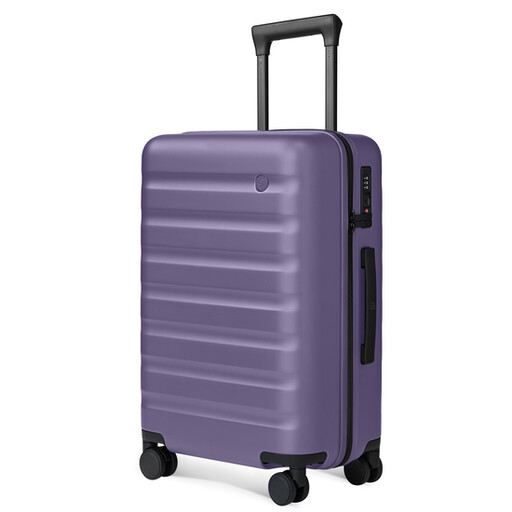
Why it suits this type of traveller: This model is designed for travellers who value a well-organised interior, a hard PC shell and four double wheels for getting around trains, terminals and hotels.
The stated dimensions are 56 × 38.5 × 23 cm. A built-in TSA lock and recessed components reduce protruding parts, but you should always check your airline’s requirements.
PC hard shell, TSA lock, compression straps, waterproof PVC pouch and 360° wheels. According to the product description, the wheels are SGS-certified.

Why it suits this type of traveller: The foldable design is handy if you have limited storage space or want a suitcase that can be adapted for both short and longer trips.
The specifications give separate dimensions for the folded and unfolded suitcase. This lets you check in advance whether it will fit your storage space and baggage allowance.
46-litre capacity, 360° spinner wheels, TSA lock and a combination of polycarbonate and fabric. The stated net weight is 6.83 lb.
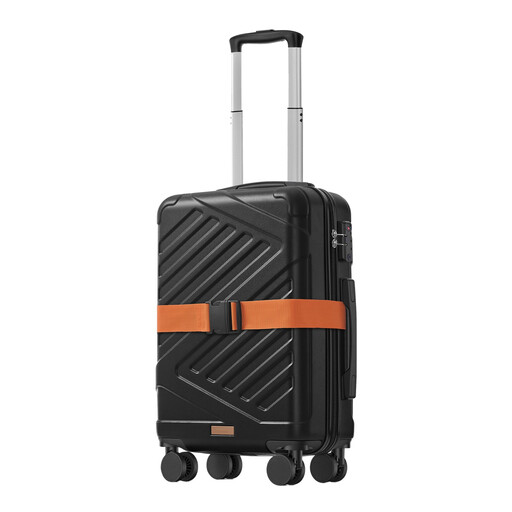
Why it suits this type of traveller: This black cabin case combines a compact size with a TSA lock, spinner wheels and compartments for wet and dry items.
The product information gives both the external dimensions of 55 × 36 × 20 cm and a maximum static load capacity of 8 kg. Don’t overpack the suitcase, and compare its dimensions with your airline’s requirements.
ABS shell, 360° spinner wheels, built-in TSA lock, expandable design and an included suitcase strap.
We’ve put together a complete, up-to-date list of products that meet these strict selection criteria and the applicable European safety requirements.
It varies by airline and sometimes by ticket type. A common size is around 55 × 35 × 20 cm, but this isn’t a universal standard. Measure the full exterior of your suitcase and check the current requirements before you travel.
Its lifespan depends on the material, load, surface and how often you use it. The wheels, zips and handles take the most mechanical strain. A suitcase will generally last longer if you don’t overpack it, keep dirt out of the wheels and avoid using the handle to lift the whole case.
No, a TSA lock isn’t required. It can be useful when travelling by air to destinations where authorised security staff may inspect your luggage. A TSA lock won’t protect against every kind of loss or theft, so keep valuables in your personal bag.
