
Vandaag of morgen in huis

Kwaliteit gegarandeerd

Welkomstaanbiedingen ontgrendelen: GRATIS bezorging | Tot 80% korting | Gratis 30 dagen JoyPlus-proefperiode
Download de app
Choosing a new suitcase seems straightforward until you have to decide between a hard-shell suitcase, cabin suitcase or large suitcase. Marketing copy often highlights “extra strong”, “lightweight” or “suitable for every airline”. These descriptions only mean something when you check the exact dimensions, weight and construction.
For travellers in the Netherlands, three pitfalls are particularly important:
Choose the size based on the length of your trip and the type of luggage you need:
Don’t just look at the number of litres. A 30-litre suitcase with a well-organised interior can be more practical than a larger model without compartments. Also check whether the stated capacity refers to the standard or expanded configuration.
An ABS suitcase generally has a hard plastic shell and is often attractively priced. The weight and flexibility vary from one model to another. For occasional holidays, ABS can be a practical choice, provided the other components are sturdy enough for your needs.
A polycarbonate suitcase uses PC in its hard shell. Product descriptions often highlight this material as lightweight and impact-resistant. According to the product specifications for the NINETYGO models mentioned, the shell is made from polycarbonate with a textured surface. Also assess the empty weight: a sturdy shell offers little benefit if the suitcase itself already takes up a significant portion of your permitted baggage allowance.
With any hard-shell suitcase, these components are at least as important:
A suitcase with spinner wheels can turn through 360 degrees. This is convenient at stations, airports and on hotel floors, as you can roll the suitcase beside you instead of pulling it along behind you at an angle. Two wheels are often simple and lightweight; four wheels offer greater freedom of movement.
A suitcase with a TSA lock is particularly relevant for air travel to destinations where luggage may be opened by authorised security staff. A TSA lock does not prevent someone from physically taking the suitcase, but it provides an integrated combination lock without the need for a separate padlock. Reset the default code as soon as you receive the suitcase and keep the new code in a safe place.
The choices below are based on verifiable details such as dimensions, capacity, material, wheel type and lock. Always check the latest product information and your airline’s conditions before buying.
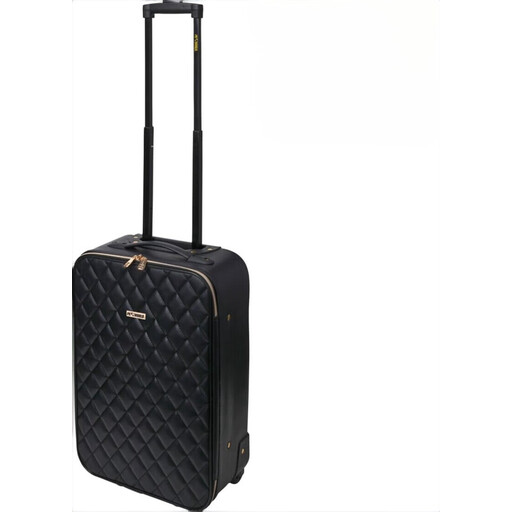
Why it suits this profile: This black suitcase has a capacity of 28 litres, weighs 2.26 kg and is suitable for short trips where a manageable size is important.
The specifications list the capacity, weight and dimensions separately. This makes it easier to compare the suitcase than by looking at its appearance alone.
28-litre capacity, telescopic handle and a compact size of 34 × 17,5 × 52 cm.
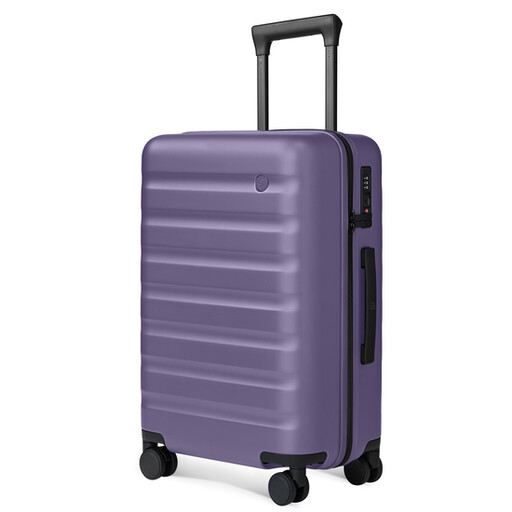
Why it suits this profile: The 56 × 38,5 × 23 cm PC hard shell and double spinner wheels are well suited to travellers who regularly fly with cabin luggage.
The handle and TSA lock are recessed, according to the product description. This reduces protruding parts when the suitcase is stored and transported.
PC shell, double spinner wheels, TSA lock and internal compression straps with a water-repellent PVC compartment.
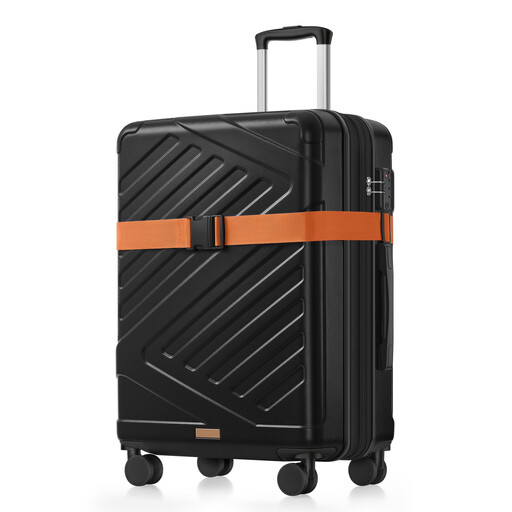
Why it suits this profile: This large black suitcase is designed for checked luggage and offers space for longer trips thanks to its expandable construction.
The product information states a maximum static load of 15 kg. This makes it clear that extra contents cannot be added without limit.
ABS material, TSA lock, 360° spinner wheels, wet-and-dry compartment and a luggage strap included.

Why it suits this profile: The suitcase folds down, making it an interesting option for anyone with limited storage space at home or who brings back extra luggage.
The product information shows both the folded and unfolded dimensions. This allows you to compare the required storage space with the travel dimensions in advance.
46-litre capacity, polycarbonate and fabric exterior, 360° spinner wheels and a TSA lock.
We’ve put together a complete, up-to-date list of products that fully meet these strict selection criteria and the applicable European safety regulations.
That depends on your clothes, shoes and the baggage rules. A medium-sized suitcase is often a practical middle ground. Light packers may find a cabin suitcase sufficient; if you are taking several pairs of shoes or extra belongings, you will probably need more capacity. Alongside the number of litres, always check the external dimensions and permitted weight.
Both materials can be used in a hard-shell suitcase. ABS is often an accessible choice for occasional trips. Product descriptions often associate polycarbonate with a lightweight, rigid shell. The right choice also depends on the empty weight, wheel construction, zip, interior layout and budget.
Its lifespan depends on how often you travel, how heavily you pack and how the suitcase is handled. The wheels, zips and telescopic handles are particularly exposed to mechanical stress. Using a suitcase within its stated load limit, not overfilling it so that pressure is put on the zip, and keeping its components clean can help prevent unnecessary wear.
