
Vandaag of morgen in huis

Kwaliteit gegarandeerd

Welkomstaanbiedingen ontgrendelen: GRATIS bezorging | Tot 80% korting | Gratis 30 dagen JoyPlus-proefperiode
Download de app
Choosing a new suitcase seems simple, until you reach the gate with one that’s just too large. Or the wheels get stuck, the zip comes under strain or the interior turns out to be smaller than you expected. Marketing terms such as “lightweight”, “extra strong” and “suitable for all airlines” don’t tell you much on their own.
The most common pitfalls are:
For a short business trip or weekend break, a cabin suitcase or carry-on suitcase is usually a better fit than a large suitcase. Don’t just look at the capacity in litres; check the maximum external dimensions too.
A few practical guidelines:
A lower empty weight leaves more room within your luggage weight allowance. However, check that a very lightweight model has enough structure for the way you travel.
A hard-shell suitcase made from ABS, polycarbonate or a combination of the two holds its shape better and can protect your clothes from pressure from other luggage. A soft-sided suitcase made from, for example, 600D polyester is often lighter and has handy external pockets for documents, a phone or a boarding pass.
Check the product description:
Durability claims come from the manufacturer’s product information. Treat them as product specifications, not as a guarantee that a suitcase will remain undamaged in every situation.
A suitcase with spinner wheels usually has four wheels that can turn 360 degrees. This is handy on smooth floors in stations and airports. Two wheels can make a suitcase more compact and easy to pull behind you, but require more effort when moving it sideways.
A suitcase with a TSA lock can be opened by authorised security staff using a special key, without forcing the lock. The lock doesn’t prevent every risk of loss or damage. Also look for a sturdy zip or a frame with closure clips.
Check the interior too. Cross straps, a mesh divider and separate compartments make it easier to organise your luggage. For clothes, bedding or camping gear, separate storage bags with zips are useful because you can sort the contents before putting them in your suitcase.
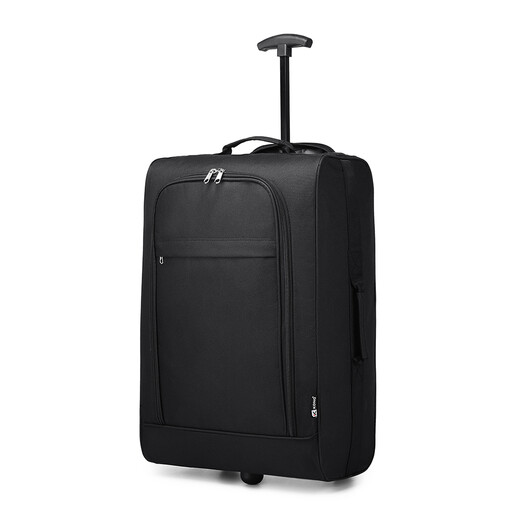
Why it suits this traveller: According to the product information, this soft-sided carry-on suitcase weighs around 1.46 to 1.7 kg and has a capacity of approximately 33 litres. That makes it suitable for weekend trips and for travellers who want to keep the suitcase’s own weight low.
The stated external dimensions are 53x36x18 cm. Still, check your airline’s baggage rules before you travel.
600D polyester, a front pocket, a fully opening front and two wheels for pulling it behind you.
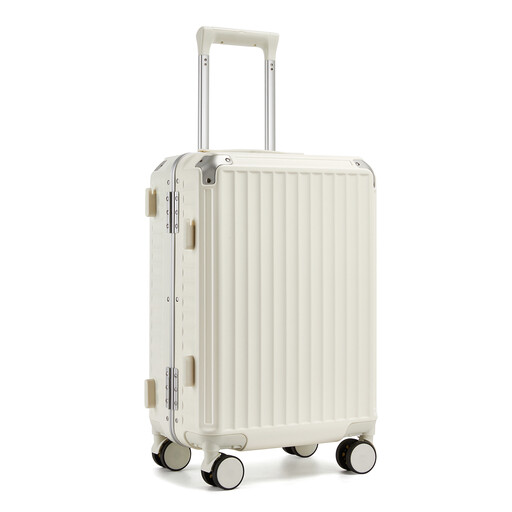
Why it suits this traveller: The PC shell, aluminium frame and closure without a traditional zip will appeal to travellers who value a structured cabin suitcase.
The dimensions are clearly stated as 55x37,5x23 cm. Its stated airline suitability still depends on the airline’s current rules.
39-litre capacity, TSA lock, four 360° spinner wheels, phone holder and concealed cup holder.
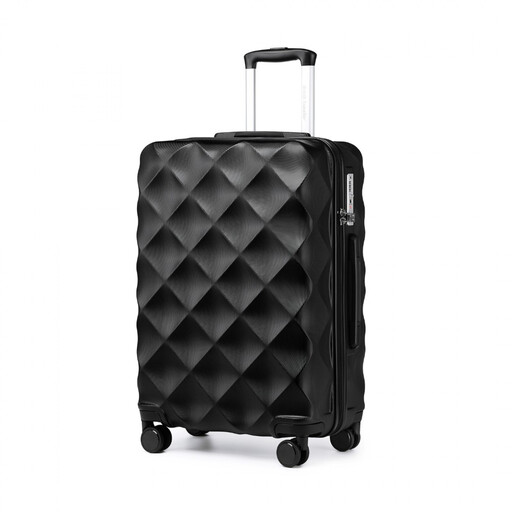
Why it suits this traveller: With a stated capacity of 91 litres and a weight of 3.81 kg, this large suitcase is designed for longer trips and family holidays.
The external dimensions, capacity and empty weight are listed separately, so you can compare the space available with your baggage allowance.
ABS+PC hard shell, four spinner wheels, adjustable aluminium handle, TSA combination lock and internal cross straps.

Why it suits this traveller: These transparent bags with zips and handles help you sort clothes, bedding and camping gear in advance, then keep everything organised.
The transparent design means you don’t have to unpack your entire suitcase every time you’re looking for something.
Four large storage bags with zips, transparent panels and handles for carrying and organising your luggage.
We’ve put together a complete, up-to-date list of products that meet these strict selection criteria and the applicable European safety regulations.
For a short flight, a cabin suitcase of around 30 to 40 litres is often practical. A medium suitcase is usually a better fit for four to six days. A large suitcase of around 90 litres or more is suitable for longer trips, but always check your airline’s permitted weight and dimensions.
A hard-shell suitcase holds its shape and has a fully enclosed exterior. A soft-sided suitcase is often lighter and more flexible, and usually has a front pocket. Choose a hard-shell model when protection is important, and a soft-sided one when easy access and low weight are your priorities.
Its lifespan depends on how you use it, how much you pack, the surfaces you travel over and how well you maintain it. The wheels, zips, handles and closures usually take the most strain. Avoid overfilling the compartments, don’t pull a spinner suitcase over rough paving for long periods, and store it somewhere dry and out of direct sunlight.
