
Vandaag of morgen in huis

Kwaliteit gegarandeerd

Welkomstaanbiedingen ontgrendelen: GRATIS bezorging | Tot 80% korting | Gratis 30 dagen JoyPlus-proefperiode
Download de app
Buying a suitcase seems straightforward, until you have to choose between a cabin suitcase, a medium 24-inch suitcase or a large case. Marketing terms such as “ultra-light”, “indestructible” and “suitable for every airline” sound appealing, but they don’t always tell you enough about how a case will perform day to day.
Look out for these three common pitfalls:
A 20-inch suitcase is often a practical choice for a short business trip or weekend away. Cases in this category typically have a capacity of around 32 to 39 litres. Always check the exact external dimensions, including the wheels and handles.
A 24-inch suitcase usually offers more space for a trip of around four to six days. The product specifications provided list capacities ranging from approximately 57 to 62 litres. This size is usually checked in as hold luggage.
Keep in mind:
A model may be described as suitable for airlines such as Ryanair, easyJet, British Airways or Jet2. This isn’t a guarantee for every flight: permitted dimensions can vary depending on the route, ticket type and baggage option.
A hard-shell suitcase made from ABS, polycarbonate or a combination of ABS and PC has a sturdy exterior and holds its shape well. This can be useful if you’re carrying fragile items or checking the case in regularly. However, a hard shell may be less flexible when you’re storing it in a full car or cupboard.
A soft-shell suitcase made from polyester often has external pockets and offers a little more flexibility. This is handy for documents, a laptop or items you need to reach quickly while travelling. With a soft-shell case, check the quality of the zips, base, seams and telescopic handle.
No material automatically prevents scratches, dents or wear and tear. Use a protective cover or pack fragile items carefully when needed.
A suitcase with a TSA lock can be opened by authorised security staff using a special key, without forcing the lock. The lock isn’t complete protection against theft. Keep your code safe and reset the default code 000 straight away.
Four 360-degree spinner wheels let you roll the case beside you or steer it around tight corners. Two wheels can be lighter and work well on straight routes, but require more tilting and pulling. Also check:
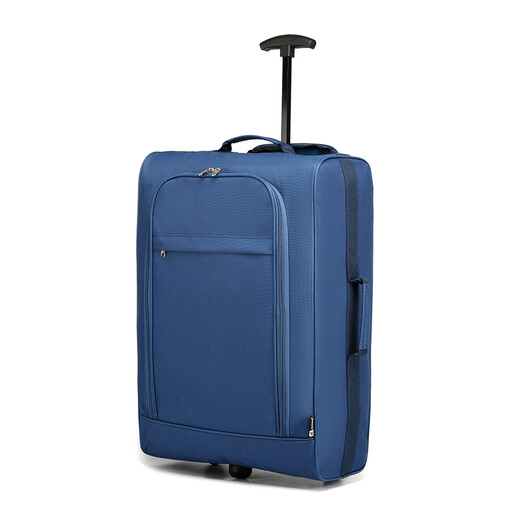
Why it suits this traveller: This soft cabin suitcase is ideal for weekend breaks, short business trips and travellers who want to keep luggage weight down. Its stated capacity is around 33 litres, and it weighs approximately 1.46 to 1.7 kg.
The external dimensions of 53 x 36 x 18 cm and the stated airline compatibility make it easier to compare. Be sure to check your flight’s rules yourself.
Lightweight polyester, a front pocket and a front panel that opens fully. This model has two wheels rather than four spinner wheels.
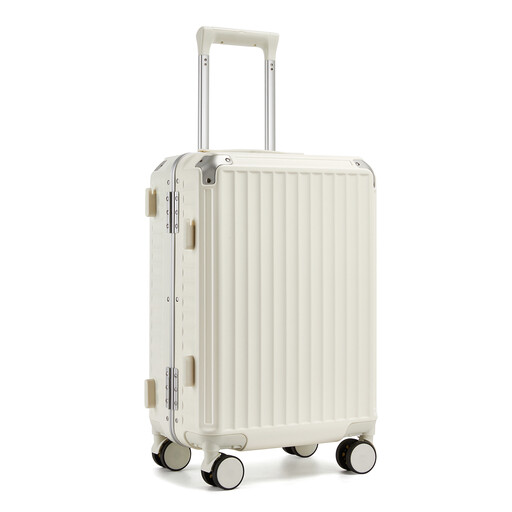
Why it suits this traveller: Business travellers who want quick access to their belongings get a PC shell, aluminium frame, TSA lock and extra features such as a phone holder and concealed cup holder.
The dimensions are clearly listed as 55 x 37,5 x 23 cm. In particular, check that the 23 cm depth meets your cabin baggage allowance.
39-litre capacity, 3,45 kg weight, 360-degree spinner wheels and a zip-free one-click closure system with a TSA lock.
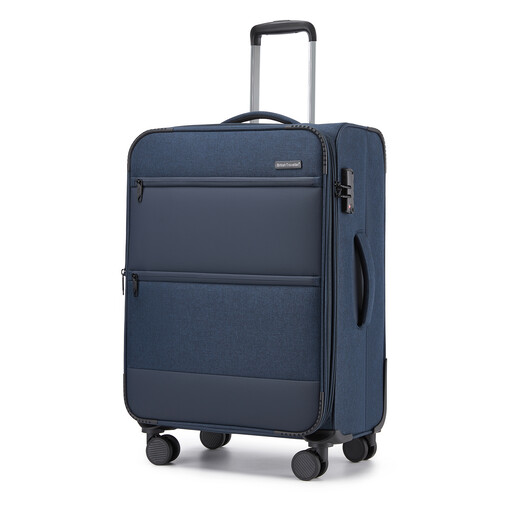
Why it suits this traveller: This model is designed for four- to six-day business trips or holidays where flexible packing space and quick access matter.
According to the product description, the expansion zip adds up to 3,5 cm of extra depth. Only use that extra space if your baggage allowance permits it.
600D polyester soft shell, 360-degree TPE spinner wheels, TSA combination lock, two front pockets and an interior divider with elasticated pockets.
We’ve put together a complete, up-to-date list of products that meet these strict selection criteria and comply with current European safety regulations.
A 20-inch cabin suitcase is often enough for a short trip, as long as its dimensions meet the requirements for your ticket. For four to six days, a 24-inch suitcase can offer more packing space. For hold luggage, always check the airline’s maximum weight and permitted dimensions.
A hard-shell suitcase has a rigid exterior and is useful when your belongings need extra structure. A soft-shell suitcase often has front pockets and can be packed more flexibly. The right choice depends on your trip, how you’ll be travelling and whether you need quick access to your belongings.
Wipe the exterior with a soft, slightly damp cloth. Avoid abrasive cleaning products. Check the wheels, zips and handle after every trip. Don’t overpack the case: too much weight can put extra strain on the seams, wheels and telescopic handle.
