
Vandaag of morgen in huis

Kwaliteit gegarandeerd

Welkomstaanbiedingen ontgrendelen: GRATIS bezorging | Tot 80% korting | Gratis 30 dagen JoyPlus-proefperiode
Download de app
You’re looking for sugar-free iced tea because you want to cut down on sugar, are seeking a low-calorie option or simply need a supply for home, the office or a gathering. Yet many varieties look very similar. The differences often come down to taste, sweeteners, packaging and serving size.
Pay particular attention to three common pitfalls:
Look at the nutritional information per 100 ml. This makes different varieties easy to compare. Many products in this selection contain 0 grams of sugar per 100 ml and approximately 0 to 1 kcal per 100 ml. Exact values may vary by product and packaging.
Also consider the amount per serving. A 330 ml can, a 500 ml bottle and a 1.5-litre bottle are designed for different uses:
A product labelled “low sugar” is not the same as a sugar-free product. For example, according to the product information, the Lipton Ice Tea Green Low Sugar mentioned contains sugar and fructose. So if you specifically want sugar-free iced tea, you should check the nutritional information rather than relying solely on the front of the pack.
Sugar-free iced tea is often sweetened with a combination of sweeteners. The Lipton varieties described include sucralose and acesulfame-K, among others. According to the product information, VITA 0 Sugar Lemon Tea and VITA 0 Sugar Sparkling Lemon Tea also contain aspartame and state that they contain a source of phenylalanine.
This is important if you want to avoid certain sweeteners or check the ingredients in advance. The taste can vary too: some people enjoy a subtle tea or fruit flavour, while others prefer a sweeter soft-drink taste. So don’t just compare “zero sugar”; check the full ingredients list as well.
Sparkling iced tea contains carbon dioxide, giving it a fresher, more lively mouthfeel. Non-carbonated green iced tea is generally smoother to drink. Cans can be practical for a barbecue, on the patio or at a party. For home or office use, 1.5-litre bottles are often easier to share.
When buying cans, check the total volume. A tray of 24 330 ml cans contains 7.92 litres. A multipack with six 310 ml cans contains 1.86 litres. A pack with six small 250 ml cartons adds up to 1.5 litres. The volume per pack helps you compare price and usage fairly.
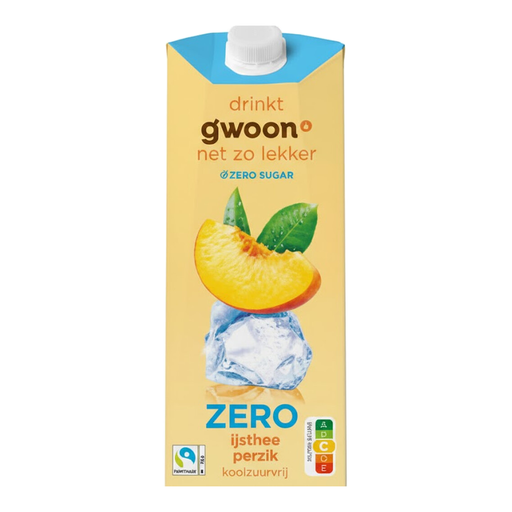
Why it suits this profile: A 1.5-litre bottle provides plenty to share at home, with guests or alongside a meal. The peach flavour is approachable for anyone trying sugar-free iced tea for the first time.
The product information states 0.1 grams of sugar and 0 kcal per 100 ml. Always check the label on the packaging delivered.
1.5 litres, peach flavour and sweeteners such as sucralose and acesulfame-K according to the listed ingredients.
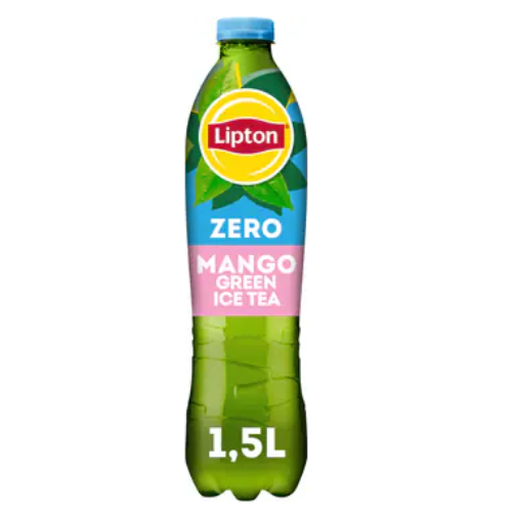
Why it suits this profile: For those looking for a distinctive combination of green iced tea and mango in a bottle designed for sharing.
The stated nutritional information lists 0 grams of sugar and 1 kcal per 100 ml. The mango content is listed separately as 0.1% juice concentrate.
0 grams of sugar per 100 ml, 1.5 litres and a combination of black tea, green tea extract and mango.
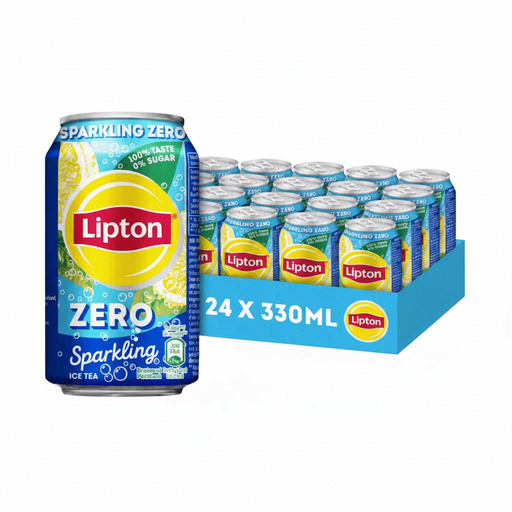
Why it suits this profile: A tray of cans is practical for offices, events and households where chilled portions need to be readily available.
The packaging and serving size are clear: 24 cans of 330 ml. This means you don’t have to keep a large bottle for several days after opening it.
0% sugar according to the product description, carbonation and 24 individual 330 ml cans.
We’ve put together a complete, up-to-date list of products that fully meet these strict selection criteria and the applicable European safety regulations.
Not always to exactly the same extent, but according to the product information, many zero-sugar varieties contain approximately 0 to 1 kcal per 100 ml. Check the nutritional information, as “zero sugar” primarily refers to the sugar content and does not automatically apply to all nutritional values.
Keep an opened bottle in the fridge, close the cap securely and follow the storage period stated on the label. Store unopened bottles in a cool, dry place away from direct sunlight. With cans and small drink cartons, it’s best to consume the contents immediately after opening.
That depends on the price per litre and how you plan to use it. A 1.5-litre bottle can be practical when serving several glasses at once. Iced tea cans are more convenient for individual servings, the office or a gathering. So compare the total volume, price per litre and the amount you’re actually likely to use. Also bear in mind that an opened large bottle must be kept refrigerated.
