
Consumers with a strict sugar-free requirement
The name taaitaai isn’t enough for you: you want to be able to check the claim and the amount of sugars per 100 g on the packaging for the exact variant.


Choose taaitaai for your gym bag only if you can check the current packaging for the exact variant and confirm that it meets your sugar-free requirement. Under the Annex to EU Regulation (EC) No 1924/2006, the claim ‘sugar-free’ may be used when a product contains no more than 0.5 g of sugars per 100 g. If you can’t confirm this, don’t rely on the product name; another type of biscuit is an option, as long as you check its label too.
The name taaitaai isn’t enough for you: you want to be able to check the claim and the amount of sugars per 100 g on the packaging for the exact variant.
You’re looking for something that’s easy to take with you or portion in advance. The pack size can help you decide, but it tells you nothing about the sugar content.
You’re mainly after taaitaai and want to know when you can consciously enjoy a regular variant as a snack, without mistaking it for a sugar-free option.
First decide whether sugar-free is a strict requirement. Then check whether taaitaai fits the bill and what pack size you’d like to take with you.
| What to consider | What to check before buying | Who it matters to |
|---|---|---|
| Verifiably sugar-free | Check the ‘sugar-free’ claim and the ‘of which sugars’ figure per 100 g on the current packaging for the exact variant. | If sugar-free is a strict requirement for me, I don’t want to rely on a promising product name. For roughly 44% of consumers, verifiably sugar-free comes first. |
| Size for taking on the go | Check the net weight and whether you can divide the contents into smaller portions yourself. | When I want a snack around a workout, I don’t want to have to take a whole bag with me every time. Around 33% of consumers give this practical size the highest priority. |
| Taaitaai flavour | Choose the exact taaitaai variant you want to eat; don’t assume the flavour or product name means it’s sugar-free. | I mainly want taaitaai and accept that its flavour and a strict sugar-free requirement don’t automatically go together. For roughly 23% of consumers, flavour matters most. |
The claims don’t mean the same thing: a product with no added sugars can still contain more than 0.5 g of sugars per 100 g.
If sugar-free is a must, check the nutritional information for the exact variant. The threshold for the ‘sugar-free’ claim is set out in the Annex to EU Regulation (EC) No 1924/2006.
A product name and pack weight don’t tell you how much sugar the taaitaai contains.
Check the current label before choosing a variant as sugar-free. If you can’t verify the figure, don’t base your choice on the shop listing.
The nutritional information for a recipe or baking mix doesn’t automatically describe the ready-made taaitaai you buy.
Compare the ingredients and nutritional information for the product you’re actually putting in your gym bag.
Albert Heijn has product listings for items including AH Taai taai and Bolletje taai taai.
Jumbo lists products including Sint Taai Taai Figuurtjes and De Originele Taai Taai, both in 500 g packs.
PLUS lists taai-taai biscuits in 250 g packs and taai-taai figures in 500 g packs, among other products.
ALDI has a product listing for 500 g of taai-taai.
Dirk’s search results include a listing for 500 g of mini taaitaai.
Lidl features mini taaitaai in its recipe inspiration.
This product is worth a look if you’re seeking a snack for your gym bag other than taaitaai. First check that it’s the type of biscuit you want and that the current label meets your sugar-free requirement.
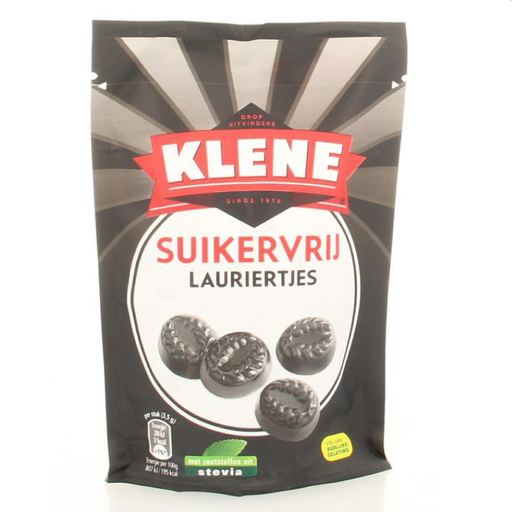 Image unavailable
A possible alternative if you’re not choosing taaitaai, provided the product and its current label suit your needs.
The product name states 110 g and describes the product as biscuits, while the description also mentions liquorice. So before you decide, check the product type, ingredients and amount of sugars per 100 g on the packaging.
For a solid food, the ‘sugar-free’ claim may be used when it contains no more than 0.5 g of sugars per 100 g, under the Annex to EU Regulation (EC) No 1924/2006. Check this figure for the exact variant you’re buying.
No. ‘No added sugars’ doesn’t rule out the presence of sugars in the product. If you have a strict sugar-free requirement, check the total ‘of which sugars’ per 100 g.
Check the product variant, ingredients, allergen information and the ‘of which sugars’ figure per 100 g on the current packaging. Also make sure the pack size suits what you want to take with you.
Not based on the name or a recipe. A baking mix is also a different product from ready-made taaitaai; assess the claim and nutritional information for the product you actually buy and eat.