
If you’re looking for something strictly sugar-free
For you, the ‘sugar-free’ label is what matters most. Don’t rely on words such as ‘zero’ or ‘less sugar’ alone; check the ‘of which sugars’ figure per 100 g too.


If sugar-free is essential, only choose a biscuit labelled as such and check the sugar content per 100 g: under EU Regulation (EC) No 1924/2006, the limit for this claim in the EU is no more than 0.5 g per 100 g. Albert Heijn lists 39 g of sugars per 100 g for AH Taai taai, so it doesn’t meet this requirement. If you’re mainly after a spiced snack, you could compare spiced breakfast cake or other biscuits, but ‘no added sugars’ and ‘less sugar’ don’t mean the same as sugar-free.
For you, the ‘sugar-free’ label is what matters most. Don’t rely on words such as ‘zero’ or ‘less sugar’ alone; check the ‘of which sugars’ figure per 100 g too.
You’re looking for a spiced biscuit and want to see whether spiced breakfast cake or another alternative might work if regular taaitaai doesn’t meet your sugar requirements.
Before stocking up on snacks, you check the latest ingredients list, allergen information and nutritional values on the packaging.
Choose this if: the familiar taaitaai shape matters more to you than choosing a sugar-free option.
The trade-off: Albert Heijn lists 39 g of sugars per 100 g for AH Taai taai.
Choose this if: you’d like a soft cake and don’t need the taaitaai shape.
The trade-off: ‘No added sugars’ on a spiced breakfast cake doesn’t automatically mean it’s sugar-free.
Choose this if: you’re after a spiced or speculoos-style flavour, but are happy with a different texture.
The trade-off: compare the sugar content per 100 g; the flavour and texture won’t be the same as taaitaai.
| What to consider | What to check when buying | Who this matters most to |
|---|---|---|
| Strictly sugar-free | Look for the ‘sugar-free’ label and check ‘of which sugars’ per 100 g. Under EU Regulation (EC) No 1924/2006, the limit for this claim is no more than 0.5 g per 100 g. | If sugar-free is essential for me, I don’t want to rely on ‘zero’ or ‘less sugar’. Around 36% of consumers put this requirement first. |
| Flavour and type of biscuit | Decide whether taaitaai, spiced breakfast cake or another biscuit suits your preference, then compare the sugars per 100 g. | I’m mainly after a spiced biscuit and am happy with a different shape if the flavour suits me. This preference matters most to around 29% of consumers. |
| Ingredients | Read the latest allergen and ingredient information, including details of any sweeteners. | The ingredients need to suit what I can or want to eat. This is the first thing around 21% of consumers look at. |
| Snack cupboard | Check the pack size and the latest product information before choosing several packs. | I’m looking for a biscuit that’s practical to keep in stock, after checking the label. Around 14% of consumers prioritise this. |
‘No added sugars’ and ‘less sugar’ don’t mean that a biscuit meets the EU limit for the ‘sugar-free’ claim.
Read the label on the packaging and check ‘of which sugars’ per 100 g.
Albert Heijn lists 39 g of sugars per 100 g for AH Taai taai, so it isn’t a strictly sugar-free option.
First compare the nutritional information with your own requirements; then decide how important the traditional taaitaai shape is to you.
Spiced breakfast cake and speculoos-style biscuits differ from taaitaai in shape and texture.
Before comparing, decide whether you’re mainly looking for a spiced flavour, a soft texture or the taaitaai shape.
According to Albert Heijn, AH Taai taai contains milk, rye and wheat, among other ingredients. The Netherlands Nutrition Centre notes that large amounts of polyols can cause digestive problems.
For every biscuit you choose, check the latest allergen and ingredient information, and any warnings, on the packaging.
Useful for comparing regular taaitaai with a separate range of biscuits for people watching their sugar intake.
Has a separate ‘Sugar-conscious’ category.
Has a ‘Sugar-conscious’ category for comparing alternatives.
Lists 1 de Beste Ontbijtkoek 0% suiker as an alternative in a different biscuit category.
Lists Koek & Bakker Gesneden Ontbijtkoek Zero, 485 g.
These spiced breakfast cake and biscuit bar options are for anyone considering an alternative to taaitaai. Check the sugar information on each pack; the product names don’t confirm that these are sugar-free taaitaai.
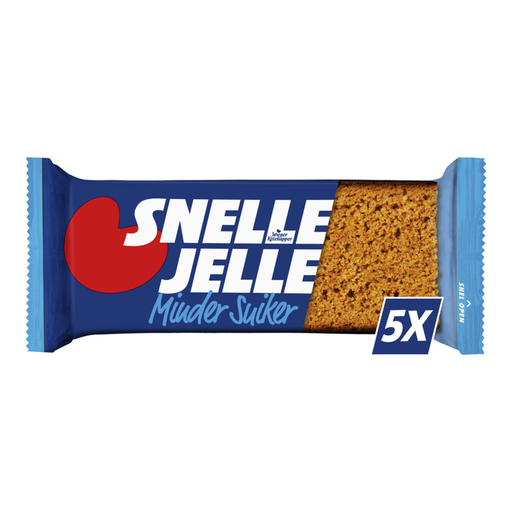 No image available
A spiced breakfast cake option if you’re happy with a different shape from taaitaai. The pack is labelled 250 g; don’t take ‘Sugar-Free’ in the product name as proof that it’s sugar-free. Check ‘of which sugars’ per 100 g on the label.
Also check the latest ingredients and allergen information before stocking up.
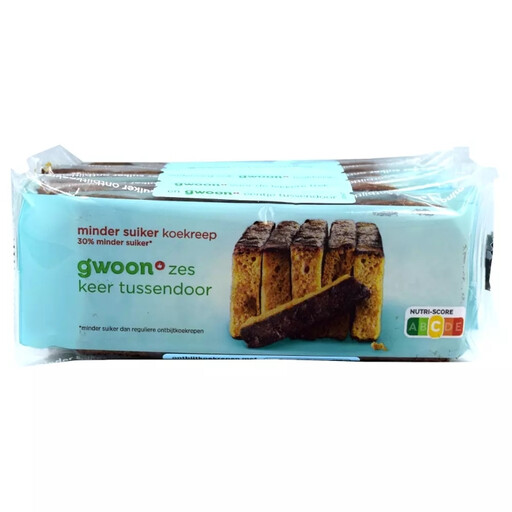 No image available
A biscuit bar option if you’re happy with a different shape from taaitaai. The product name states that the pack contains 6 pieces; ‘Less Sugar’ doesn’t confirm that these biscuit bars are sugar-free.
Compare ‘of which sugars’ per 100 g and check the latest ingredients and allergen information on the packaging.
No. Under EU Regulation (EC) No 1924/2006, the ‘sugar-free’ claim can only be used for a biscuit in the EU if it contains no more than 0.5 g of sugars per 100 g. A product with no added sugars may still contain sugars. Check ‘of which sugars’ per 100 g.
No. Albert Heijn lists 39 g of sugars per 100 g for AH Taai taai. If you need a strictly sugar-free option, look for a product with the correct label and check the latest nutritional information on the packaging.
Check which sweeteners are listed in the ingredients and follow any warnings on the packaging. The Netherlands Nutrition Centre says that large amounts of polyols can cause digestive problems.
Yes. Check the latest packaging before you buy. Ingredient information can change; for AH Taai taai, Albert Heijn lists milk, rye and wheat, among other ingredients.