Don’t choose an ordinary spritz biscuit if a sugar-free option is essential for your quick breakfast: Albert Heijn, Jumbo and Verkade list 28 g, 24,6 g and 24,2 g of sugars per 100 g respectively for the spritz biscuits mentioned below. Céréal’s sugar-free coconut biscuits at PLUS are an alternative, but they aren’t spritz biscuits and they contain polyols. If you’re mainly looking for something to include in breakfast, compare products such as granola with no added sugars or rye crispbreads, and check the claim and nutritional information on the pack you choose.
Who are these options for?
If you’re looking for a sugar-free biscuit
You want the biscuit itself to meet the sugar-free claim, even if that means it isn’t a spritz biscuit. As well as the nutritional information, check the ingredients, allergens and any warning about polyols.
If you want a quick breakfast
You’re looking for something to include in breakfast rather than a biscuit to eat on its own. Breakfast cereals you can combine with yoghurt may suit you; just check whether the pack says ‘sugar-free’ or only ‘no added sugars’.
If you mainly want a spritz biscuit
The familiar biscuit shape matters more to you than a sugar-free claim. If so, compare the sugars per 100 g and per intended portion, but don’t treat ordinary spritz biscuits as a sugar-free option.
What matters most when choosing?
First decide whether the sugar-free claim, a breakfast option or the spritz shape is your priority. Under the EU rules published on EUR-Lex, ‘sugar-free’ can only be claimed when a product contains no more than 0,5 g of sugars per 100 g or 100 ml. ‘No added sugars’ does not mean the same thing.
| What to consider |
What to check when buying |
Who it matters to |
| Sugar-free claim |
Read the exact claim and the ‘of which sugars’ figure per 100 g; don’t confuse ‘no added sugars’ with ‘sugar-free’. |
If I’m looking for a sugar-free biscuit, I don’t want to end up with a product that simply has no added sugars. Around 39% of consumers prioritise the sugar-free claim. |
| Breakfast suitability |
Check whether the product works with the breakfast combination you have in mind, and compare the nutritional information per 100 g and per portion. |
On a rushed morning, I’d rather have something I can combine with yoghurt than just a biscuit. For around 38% of consumers, breakfast suitability comes first. |
| Spritz-biscuit shape |
Compare the sugars per 100 g and the portion size; also check the allergens in the spritz biscuit you choose. |
I specifically want the familiar spritz biscuit, even if that means relaxing my sugar-free requirement. The spritz-biscuit experience comes first for around 23% of consumers. |
What should you look out for?
-
Reading ‘no added sugars’ as ‘sugar-free’
A product with no added sugars may still contain sugars. For example, the Quaker Granola Naturel listed by PLUS contains 3,2 g of sugars per 100 g, so it isn’t sugar-free.
Check the exact claim and the ‘of which sugars’ figure on the pack before choosing a product for this reason.
-
Overlooking other ingredients in a sugar-free biscuit
PLUS lists Céréal Sugar-free Coconut Biscuits as containing 18 g of polyols per 100 g. According to the Voedingscentrum, large amounts of polyols can cause intestinal discomfort.
Check the ingredients, allergens and usage warning for the specific biscuit, especially if any of these are important to you.
-
Treating a biscuit on its own as a complete breakfast
A biscuit is easy to take with you, but that doesn’t necessarily make it the breakfast combination you’re looking for. The Voedingscentrum lists wholegrain products and yoghurt with wholegrain breakfast cereals among its breakfast options.
Decide whether you’re mainly after a biscuit to enjoy or something you can combine with other foods as part of breakfast.
Brands to consider
Verkade
NoboSprits Original is worth considering if you want to stick with the spritz-biscuit shape.
- Verkade lists 24,2 g of sugars per 100 g for NoboSprits Original.
- These ordinary spritz biscuits aren’t suitable if you need a sugar-free option.
Albert Heijn
AH Spritsen is an example of a standard spritz biscuit.
- Albert Heijn lists 28 g of sugars per 100 g, so you can take this variety’s nutritional information into account.
- AH Spritsen isn’t a sugar-free option.
Jumbo
Jumbo Roomboter Lange Sprits is another option to consider if you’re specifically looking for spritz biscuits.
- Jumbo lists 24,6 g of sugars per 100 g for this variety.
- This spritz biscuit also doesn’t meet the requirements for a sugar-free option.
Céréal
The sugar-free coconut biscuits are an alternative if the sugar claim matters more to you than the spritz-biscuit shape.
- PLUS lists 0 g of sugars per 100 g for these biscuits.
- They aren’t spritz biscuits; PLUS also lists 18 g of polyols per 100 g. Check the ingredients and warning on the pack.
Quaker
Granola Naturel offers a breakfast-focused alternative to a biscuit.
- PLUS lists 22 g of fibre per 100 g for the Granola Naturel reviewed.
- ‘No added sugars’ doesn’t mean sugar-free: the nutritional information lists 3,2 g of sugars per 100 g.
Breakfast-focused products at Joybuy
These products offer a choice between rye crispbreads and cruesli for breakfast. Neither is a spritz biscuit, so check the sugar claim, nutritional information and ingredients on the pack of the variety you choose.
 Image unavailable
Wasa Sourdough Rye Crackers 235 g
For anyone who’d rather have rye crispbreads than spritz biscuits as part of breakfast. If a sugar-free option or an allergen is important to you, check the sugars per 100 g and the ingredients on the pack.
View at Joybuy
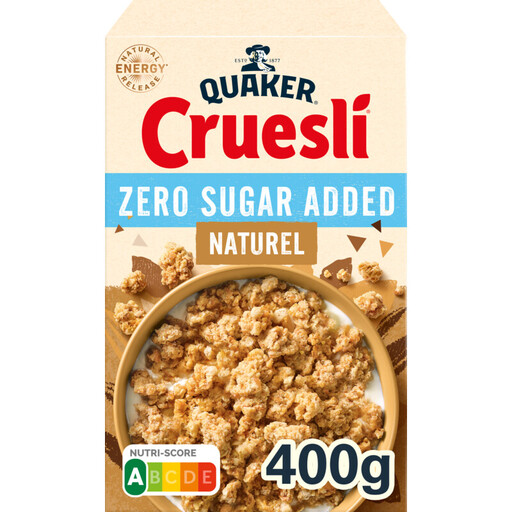 Image unavailable
Quaker Zs Cruesli Natural 400 g
For anyone who’d like to have cruesli as part of a quick breakfast instead of spritz biscuits. Check the pack for the claim about added sugars, the sugar content and allergens; ‘no added sugars’ doesn’t mean ‘sugar-free’.
View at Joybuy
Frequently asked questions
Does ‘no added sugars’ mean the same as ‘sugar-free’?
No. Under the EU rules published on EUR-Lex, the ‘sugar-free’ claim means a product can contain no more than 0,5 g of sugars per 100 g or 100 ml. A product with no added sugars may still contain sugars; PLUS lists 3,2 g per 100 g for the Quaker Granola Naturel reviewed.
Can a sugar-free biscuit replace breakfast?
Not necessarily: a sugar-free biscuit is still a different choice from a breakfast combination. If you’re looking for more than a biscuit on its own, you could try combinations with wholegrain products or yoghurt and wholegrain breakfast cereals, as recommended by the Voedingscentrum.
What should I look out for in biscuits containing polyols?
Read the ingredients and any usage warning for the specific product. PLUS lists 18 g of polyols per 100 g for Céréal Sugar-free Coconut Biscuits; the Voedingscentrum says that large amounts of polyols can cause intestinal discomfort.


