
Vandaag of morgen in huis

Kwaliteit gegarandeerd

Welkomstaanbiedingen ontgrendelen: GRATIS bezorging | Tot 80% korting | Gratis 30 dagen JoyPlus-proefperiode
Download de app
Would you like to drink less sugar while still keeping soft drinks at home for a meal, party or when you’re out and about? A can labelled “zero”, “no sugar” or “no added sugar” may seem like the obvious choice. However, these terms do not always mean the same thing. The difference between a low-calorie soft drink and an ordinary fruit drink can also be greater than the front of the packaging suggests.
As a Joybuy Product Recommendation Officer, I therefore start by looking at verifiable information: nutritional values, ingredients, pack size and when you plan to drink it. This helps you avoid buying a large multipack that doesn’t suit your taste or household.
A tropical fruit drink with no added sugar may still contain naturally occurring sugars from fruit juice. For example, Iam Superjuice Passionfruit lists 30% natural passion fruit juice and 17 kcal per 100 ml. That is different from a zero-sugar soft drink with 0 grams of sugar per 100 ml.
Always check the nutrition table. Don’t just look for words such as “light”, “zero” or “no added sugar”.
Sugar-free cola, such as Coca-Cola Zero Sugar or Pepsi Zero Sugar, uses sweeteners to recreate a sweet taste. Fruit drinks with mango, lychee or passion fruit often have a more pronounced fruit profile, so they may taste different from classic soft drinks.
According to the product description, Iam Superjuice Mango contains 30% mango juice and 17 kcal per 100 ml. Iam Superjuice Lychee lists 30% lychee juice and 15 kcal per 100 ml. These products are therefore not the same type of drink as a 0 kcal cola.
A 330 ml soft drink is practical for a single serving. A tray of 24 cans is convenient for a family, office or party, but less suitable if you want to try a flavour first. Tropical drinks are also often available in trays of 12 cans. So compare the price per litre, not just the price of the box.
Use the nutritional value per 100 ml as a consistent basis for comparison. Examples from the available product information:
Also check which sweeteners are used. Some products contain aspartame and therefore state that they contain a source of phenylalanine. If you need to avoid this, carefully check the label and warning on the packaging.
For home use, 330 ml cans are easy to distribute and chill. A pack of 24 x 330 ml contains 7.92 litres in total. A tray of 12 x 330 ml contains 3.96 litres. Capri-Sun Monster Alarm Zero Sugar comes in 200 ml pouches, making it potentially more practical for children or for taking to school, work and on day trips.
Also check whether you have enough storage space and whether the packaging is suitable for the occasion. A large can is not automatically more convenient than several smaller portions.
As well as sugar, check acids, preservatives, colourings and allergens. The product listing for Coca-Cola Zero Sugar Caffeine Free, for example, mentions colour E150d, the sweeteners aspartame and acesulfame-K, and a source of phenylalanine. Fanta Lemon Zero lists, among other ingredients, lemon juice from concentrate, sweeteners and preservatives.
Product information may vary by country, batch or packaging. Always check the physical label before drinking. As a general rule, store unopened soft drinks in a cool, dry place away from direct sunlight. Once opened, a can or pouch should be refrigerated and consumed promptly.

Why it suits this profile: A tray of 12 cans provides a manageable quantity to try at home or share. The tropical passion fruit flavour is different from standard cola and orangeade.
The product information states both “no added sugar” and 17 kcal per 100 ml. This makes it clear that it is not a 0 kcal drink.
30% natural passion fruit juice, 330 ml per can and 12 cans per tray.

Why it suits this profile: This large pack is aimed at cola lovers who do not want caffeine. The 330 ml cans are suitable for keeping at home or using in the office.
The product name and information explicitly state “caffeine free”. This makes the difference from regular Coca-Cola Zero clearer than the word “zero” alone.
24 x 330 ml, 0 grams of sugar per 100 ml and, according to the product information, 0.3 kcal per 100 ml.
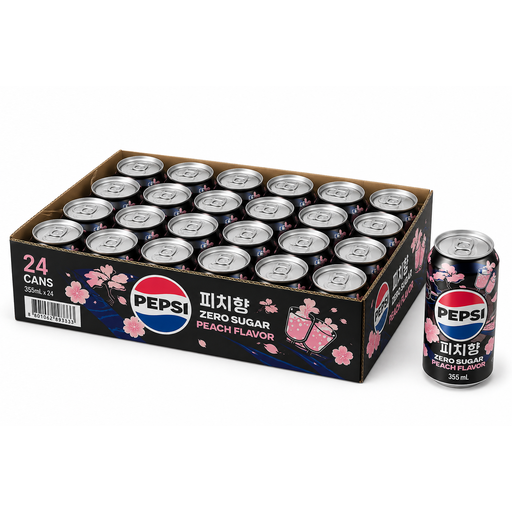
Why it suits this profile: Suitable for fans of Asian soft drinks and shoppers looking for a peach-flavoured cola instead of a classic version.
The product information states 0 kcal and 0 grams of sugar per 100 ml. The combination of sweeteners used is also shown on the label.
24 cans of 355 ml, peach flavour and zero sugar according to the stated nutritional values.
We have put together a complete, up-to-date list of products that fully meet these strict selection criteria and the applicable European safety regulations.
For a refreshing citrus option, consider Sprite Zero, Fanta Lemon Zero or Fanta Orange No Sugar. However, pay attention to the nutritional values: the information provided for Sprite Zero states 14 kcal per 100 ml, despite containing 0 grams of sugar. For a fruity option, mangosteen, mango, pink guava, lychee and soursop are available in 330 ml trays.
If you’re looking for smaller packs, Capri-Sun Monster Alarm Zero Sugar may be worth considering. For sparkling water with fruit flavour, Charlie’s Sparkling Water Cassis is an alternative with 2 kcal per 100 ml according to the product information. Beypazari Limonlu Soda, on the other hand, contains 6.5 grams of sugar per 100 ml; “light” or “refreshing” does not automatically mean sugar-free.
Not always. “Zero sugar” generally refers to a product with 0 grams of sugar according to the nutrition table. “No added sugar” means that no sugar has been added to the recipe, but fruit juice may still provide naturally occurring sugars. So always check the table per 100 ml.
A tray of 12 x 330 ml is suitable for trying a new flavour or sharing with a smaller household. A large pack of 24 x 330 ml is better suited to regular use, an office or a party. Compare the total volume in litres and the price per litre before ordering.
An opened can of soft drink quickly loses its carbonation and flavour. Keep it chilled and consume it according to the instructions on the packaging. For the shelf life of unopened products, follow the date on the can or packaging; store soft drinks in a cool, dry place away from direct sunlight.
