
Vandaag of morgen in huis

Kwaliteit gegarandeerd

Welkomstaanbiedingen ontgrendelen: GRATIS bezorging | Tot 80% korting | Gratis 30 dagen JoyPlus-proefperiode
Download de app
If you want to cut down on sugar and calories but don’t want to give up cola, fizzy fruit drinks or iced tea, sugar-free soft drinks can be a practical choice. However, comparing products is less straightforward than it seems. A prominent “zero” label, for example, doesn’t automatically tell you about caffeine, sweeteners, flavour or the price per litre.
With this buying guide, you can compare soft drinks without sugar, multipacks and smaller packs on verifiable points. That way, you’ll avoid buying a large stock that doesn’t suit your taste or usage.
The term “zero sugar” usually refers to a product with no or very little sugar, but the sweet taste often comes from sweeteners. Always check the ingredients list. Common ingredients include aspartame, acesulfame-K, sucralose and steviol glycosides.
Products containing aspartame often carry a warning that they are a source of phenylalanine. This is relevant for people with phenylketonuria (PKU). So read the label before making a purchase.
A soft drink multipack may seem good value, but compare the price per litre or per 100 ml. For example, a case of 24 cans of 330 ml contains 7.92 litres. A pack of 12 cans of 500 ml contains 6 litres. The numbers may look similar, but the total volume differs.
Also consider storage space. Twenty-four cans take up more room than a single 1.5-litre bottle. For students or smaller households, a more compact pack might be more convenient.
A low-calorie soft drink isn’t always caffeine-free. Cola and energy drinks often contain caffeine, while variants like Coca-Cola Zero Sugar Caffeine Free state this explicitly. With a sugar-free energy drink, you need to look at the caffeine content, serving size and recommended usage information on the pack, as well as the sugar.
Look at the nutritional information per 100 ml. This makes comparison easier, especially when one product is sold in a can and another in a bottle. Check at least:
Pay attention to differences between product variants. For example, the product information for Coca-Cola Zero Sugar Caffeine Free states 0 g sugar and 0.3 kcal per 100 ml. Pepsi Zero Sugar Cola states 0 g sugar and 0.4 kcal per 100 ml. These values can be verified on the product page, but also check the pack when it arrives.
“Soft drink without added sugar” can mean different types of drink. Think about:
A zero sugar soft drink with a classic cola flavour suits a different preference to a Korean peach or pear drink flavour. So don’t just look at the word “zero” – also look at the flavour description and serving suggestion.
Cans of 330 ml are good for a fixed portion and chill relatively quickly. Bottles of 1.5 litres are more convenient when several people are drinking at once, but need to be kept refrigerated after opening and used within the period stated on the pack.
Store unopened soft drinks in a cool, dry place, away from direct sunlight and excessive heat. Check the best before date on the pack. With imported products, such as some Asian soft drinks, it’s especially important to check the information on the actual label.

Why this fits the profile: A multipack with a familiar cola flavour and a clear content of 24 cans of 330 ml. The caffeine-free variant is suitable for times when you don’t want to drink caffeine.
The product information separately states that this cola contains no sugar and no caffeine. This means you don’t have to rely solely on the term “zero”.
24 x 330 ml; 0 g sugar and 0.3 kcal per 100 ml according to the stated nutritional information; caffeine-free.
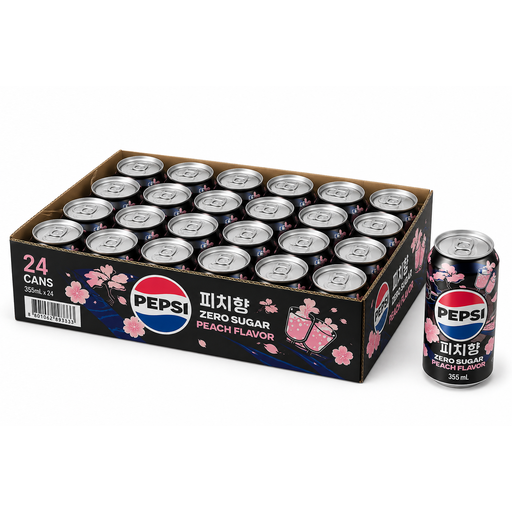
Why this fits the profile: For those looking for an international variant rather than a standard cola. The combination of cola and peach flavour offers a different taste profile, while the pack is suitable for sharing.
The flavour is specifically described as peach flavour. The nutritional information states 0 g sugar and 0 kcal per 100 ml, so you can base your choice on more than just the packaging.
24 x 355 ml; per 100 ml 0 g sugar and 0 kcal according to the product information; contains aspartame, acesulfame-K and sucralose.

Why this fits the profile: This pack is aimed at consumers who regularly drink energy drinks and want a larger can size. The citrus description suits those who prefer a fruitier profile.
The product information distinguishes between sugar-free and energy drink. It also states caffeine, taurine and a content of 500 ml per can, so you can weigh up the serving size and ingredients.
12 x 500 ml; 0 g sugar and 12 kcal per 100 ml according to the stated nutritional information; citrus profile with lemon and grapefruit.
We’ve put together a full, up-to-date list of products that fully meet these strict selection criteria and comply with current European safety regulations.
If you prefer a citrus drink, you could look at 7UP Zero Sugar Lemon and Lime Soda – 1.5 L. This bottle is practical for shared use. For orange flavour, options include Fanta Orange Zero Sugar and Fanta Lemon Zero. With Fanta Orange, check the stated nutritional value: the product information mentions 0.4 g sugar per 100 ml. This highlights why it’s wise to read the table rather than just the front of the pack.
For tea lovers, Lipton Sparkling Zero Ice Tea 24 x 330 ml and Lipton Ice Tea Green Zero Can 330 ml x 24 are options to compare side by side. The green variant states 1 kcal and 0 g sugar per 100 ml and uses, among other things, green tea extract, steviol glycosides and sucralose.
A smaller, international choice is Sweet16 Korean Pear Ade Zero Sugar – 200 ml. The portion is significantly smaller than a 330 ml can, and the product description states no declared allergens. If you prefer to dilute it yourself, you could look at Raak Zero Pear Syrup – 750 ml. Pay attention to the recommended dilution and store the opened product refrigerated according to the label.
Not always. “No added sugar” means that no sugar has been added during production. There may still be natural sugars from, for example, fruit juice. So check both the ingredients list and the nutritional information for sugars per 100 ml.
Store opened soft drinks in the fridge and consume them within the period stated on the pack. Store unopened cans or bottles in a cool, dry place, away from direct sunlight. You’ll find the exact shelf life in the best before date on the pack.
That depends on the price and total volume. Divide the price by the number of litres to compare products fairly. A multipack is especially practical if you regularly drink the same flavour and have enough storage space. If in doubt, a smaller pack can help you assess the flavour first.
