
Vandaag of morgen in huis

Kwaliteit gegarandeerd

Welkomstaanbiedingen ontgrendelen: GRATIS bezorging | Tot 80% korting | Gratis 30 dagen JoyPlus-proefperiode
Download de app
Want to drink less sugar without constantly buying individual cans from the supermarket? Then sugar-free soft drinks may seem like the obvious choice. However, zero-sugar soft drinks, sugar-free drinks and low-calorie soft drinks can differ considerably in taste, caffeine content, sweeteners, packaging and price per serving.
The product name does not tell you everything. “Zero” generally means that no sugar has been added or that the sugar content is extremely low, but the drink may still contain sweeteners. Likewise, a product with no added sugar is not automatically sugar-free. Use the checks below to avoid buying a multipack that does not suit your everyday needs.
Zero-sugar cola can still contain caffeine. This matters if you avoid caffeine, want to serve the drink in the evening or are looking for a caffeine-free soft drink for the whole family. Always check the product description and ingredients list. Some varieties state the caffeine content explicitly, while others specifically indicate that they are caffeine-free.
A drink containing 0 grams of sugar may still contain sweeteners such as aspartame, acesulfame K, sucralose or saccharin. If you want to avoid specific sweeteners, you need to look beyond the front of the packaging. Also check for warnings such as “contains a source of phenylalanine” on products containing aspartame.
Coconut water is another example. No added sugar does not automatically mean that the product contains no naturally occurring sugars. Review the full nutrition table when you want to compare sugar and calorie content accurately.
A box of 24 cans may look like good value, but it takes up space and may not match your consumption. A larger pack can be practical for households with several soft-drink drinkers. For occasional use, a 6-pack or 12-pack is often easier to manage. Also check the volume per can: 200 ml, 330 ml and 355 ml are not equivalent.
Compare the nutritional values per 100 ml, then calculate them for the full package. A 330 ml can contains more than three times the amount shown on the label per 100 ml. At a minimum, check:
For example, the product details for Coca-Cola Zero Sugar Caffeine Free state 0 grams of sugar and 0.3 kcal per 100 ml. First Choice Cola Caffeine-Free Light lists 1 kcal per 100 ml and no sugar. These figures come from the supplied product information; check the packaging upon receipt for the most up-to-date details.
When choosing a caffeine-free soft drink, look for a clear statement confirming that it contains no caffeine. If “caffeine” appears in the ingredients list, the drink is not suitable if you want to avoid caffeine completely.
Also check the sweeteners and any applicable warnings. According to the product information, Coca-Cola Zero Sugar Caffeine Free contains aspartame and acesulfame K, and the product states that it contains a source of phenylalanine. First Choice’s product information lists E951 and E950 as sweeteners. These are verifiable ingredient statements, not an assessment of the product’s effects or suitability for every consumer.
A can is convenient for immediate consumption, while a bottle needs to be refrigerated after opening. When ordering online, check:
For coconut water, an unopened package can often be stored outside the refrigerator, whereas the product must be refrigerated after opening. Always follow the instructions on the label.
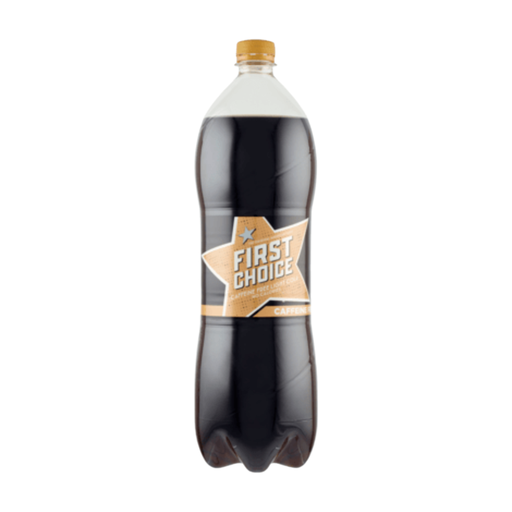
Why it suits this profile: The 6-pack is an easy way to try sugar-free, caffeine-free cola without committing to a larger quantity. The product information lists 1 kcal per 100 ml and no sugar.
The product states both that it is caffeine-free and its nutritional values, so you do not have to rely solely on the term “light”.
6 cans; caffeine-free according to the product description; 1 kcal per 100 ml.

Why it suits this profile: A large pack of 24 330 ml cans is ideal for households that regularly serve sugar-free, caffeine-free cola.
The product details separately specify zero sugar, caffeine-free status and nutritional values per 100 ml.
24 x 330 ml; 0 grams of sugar per 100 ml according to the product information; serve chilled.
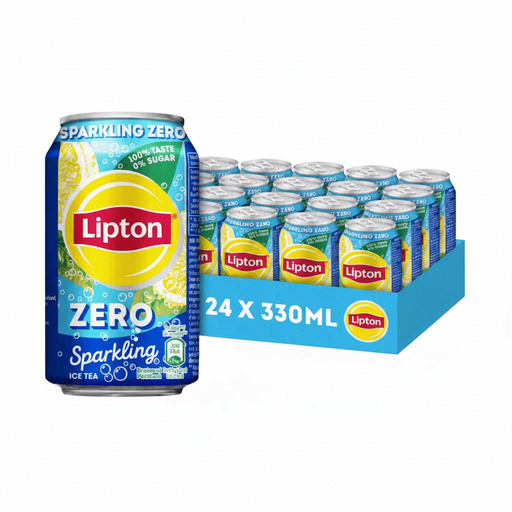
Why it suits this profile: A 24-pack of sugar-free iced tea is practical for sports clubs, families and occasions when you want an alternative to zero-sugar cola.
The product description states 0% sugar and a low calorie content. Check the current packaging for the exact nutritional values.
24 x 330 ml; sparkling iced tea; serve chilled according to the product description.
We have compiled a complete, up-to-date list of products that fully meet these strict selection criteria and the applicable European safety regulations.
If you are looking beyond cola and iced tea, consider:
For every product, check the ingredients, allergens, caffeine information and nutritional values. Product formulations and labels may change.
Not always in terms of its practical composition. According to the product information, zero-sugar soft drinks generally contain no sugar, but are often sweetened with one or more sweeteners. Always review the ingredients list and nutritional values per 100 ml.
This varies by product variant. First Choice Cola Caffeine-Free Light and Coca-Cola Zero Sugar Caffeine Free are listed as caffeine-free in the product information. Always check the label before consuming, particularly if avoiding caffeine is important to you.
That depends on the price per litre, shipping costs and your consumption. Divide the total price by the number of litres and compare it with smaller packages. A large pack is most practical when you use the drink regularly and have sufficient storage space.
