If you want genuinely sugar-free muesli for Easter brunch, look for the ‘sugar-free’ claim and check the nutritional information: according to the Netherlands Nutrition Centre, this claim means no more than 0.5 g of sugars per 100 g. If your main aim is to avoid added sugar or sweeteners, other varieties may also be suitable, but compare their total sugars and check the ingredients and allergens.
Who is this choice relevant to?
Anyone comparing total sugars carefully
You want to know whether muesli really meets the ‘sugar-free’ claim. According to the Netherlands Nutrition Centre, it must contain no more than 0.5 g of sugars per 100 g; ‘no added sugar’ means something different.
Anyone who wants to avoid added sugar or sweeteners
You’re looking for something crunchy for Easter brunch and are happy with sugars that occur naturally in the ingredients. Just check separately whether a variety contains sweeteners.
Anyone catering for brunch guests
You’re not choosing based on sugar content alone: check the ingredients and allergens on the packaging before serving the muesli.
What should you look for when choosing?
First decide whether ‘sugar-free’ is a must-have for you. Then compare muesli per 100 g and check which ingredients are suitable for your brunch guests.
| What to consider | What to check when buying | Who it matters to |
|---|
| Total sugars |
Read the exact claim and compare ‘of which sugars’ per 100 g. According to the Netherlands Nutrition Centre, ‘sugar-free’ means no more than 0.5 g of sugars per 100 g. |
If I want as little total sugar as possible in my muesli, ‘no added sugar’ on its own isn’t enough. Around 40% of consumers put this strict sugar check first. |
| Added sugar and sweeteners |
Check both separately, and read the ingredients list and any usage warnings. |
I’m happy with naturally occurring sugars, but don’t want added sugar at brunch and would rather avoid sweeteners too. This is the top priority for around 30% of consumers. |
| Ingredients and allergens |
Check the ingredients and allergens on the current packaging, especially for fruit and nut varieties. |
When guests with different dietary preferences or allergies are joining us, I want to know what I can serve. This is the main consideration for around 30% of consumers. |
Common mistakes
-
Reading ‘no added sugars’ as ‘sugar-free’
Muesli with no added sugars can still contain sugars that occur naturally in its ingredients. According to the Netherlands Nutrition Centre, the ‘sugar-free’ claim has a limit of 0.5 g of sugars per 100 g.
If that claim is a must-have, check both the front of the pack and ‘of which sugars’ in the nutritional information.
-
Comparing only portions or the front of the pack
Portion sizes can vary, so figures per portion don’t allow for a direct comparison between products.
Compare similar muesli products per 100 g, as recommended by the Netherlands Nutrition Centre, then read the ingredients list.
-
Overlooking sweeteners
‘0% added sugar’ doesn’t rule out sweeteners. Albert Heijn lists maltitol in AH Krokante muesli noten 0% suiker and warns that excessive consumption may have a laxative effect.
If you want to avoid sweeteners, look for a variety that is also explicitly described as sweetener-free, and check the label.
-
Assuming a fruit or nut mix is automatically low in sugar
A variety may be sold with no added sugar and still contain naturally occurring sugars. Ingredients and sugar content vary from product to product.
First decide which feature matters for your brunch, then compare the nutritional information and allergens for each variety.
Brands to consider
Quaker Cruesli
The Zero Sugar Added varieties are crunchy breakfast cereals for anyone looking to avoid added sugar; check the details for each flavour.
- Albert Heijn also states that no sweeteners have been added to Quaker Cruesli Zero Sugar Added Naturel.
- ‘Zero Sugar Added’ doesn’t mean ‘sugar-free’. Jumbo lists 3.9 g of sugars per 100 g for the Noten variety.
Albert Heijn
AH Krokante muesli noten 0% suiker is a nut variety for anyone who wants to assess the added-sugar claim alongside the ingredients.
- The product information lets you check the sugar content and ingredients of this variety separately.
- This variety contains maltitol. Albert Heijn warns that excessive consumption may have a laxative effect; check the allergens too.
Holie
Holie Crunchy Muesli Low Carb Seeds is a seed-based variety that Jumbo sells with the claim ‘0% added sugars’.
- Jumbo lists 4.6 g of naturally occurring sugars per 100 g for this variety.
- Check the ingredients and allergens if the contents matter to your brunch guests.
Zonnatura
Zonnatura Bio Muesli Rijkgevuld is a fruit and nut variety for anyone mainly concerned with added sugar and ingredients.
- Jumbo lists this variety as having ‘0% added sugar’ and states that it contains naturally occurring sugars.
- Check the total sugar content and allergens; a claim about added sugar doesn’t tell you how much sugar the product contains overall.
Muesli for Easter brunch on Joybuy
These Quaker Cruesli varieties offer a choice of flavours if you’re considering crunchy muesli. Check the current packaging for the sugar content per 100 g, ingredients and allergens for each variety; the words ‘Zero Sugar’ in a name don’t, on their own, confirm the ‘sugar-free’ claim.
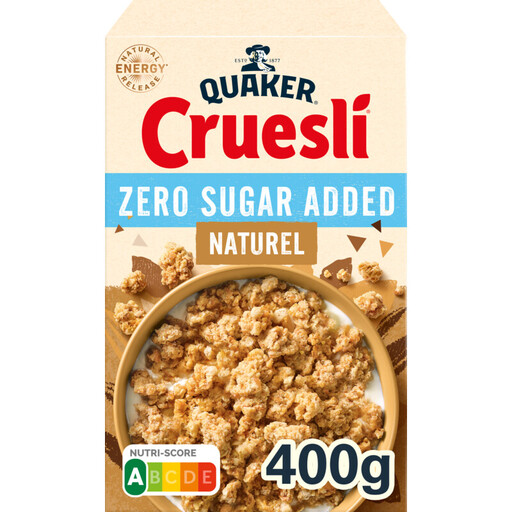 Image unavailable
Quaker Zs Cruesli Natural, 400 g
A natural variety for serving crunchy muesli at Easter brunch. Compare the current nutritional information per 100 g and check the allergens before choosing it for your guests.
View on Joybuy
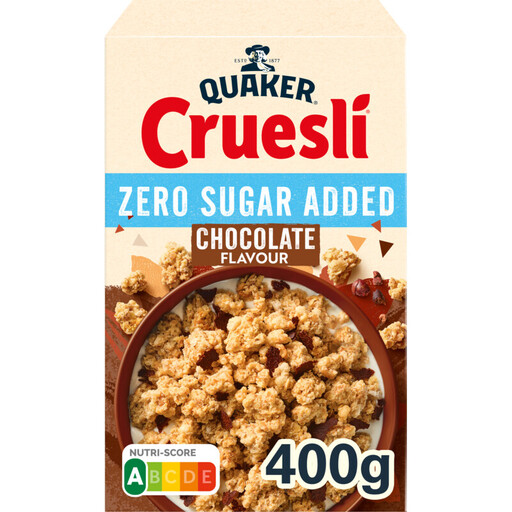 Image unavailable
Quaker Cruesli Choco Zero Sugar, 400 g
A chocolate variety if you want to choose by flavour as well as the sugar claim. Check ‘of which sugars’ per 100 g on the packaging, and read the ingredients and allergens for your brunch guests.
View on Joybuy
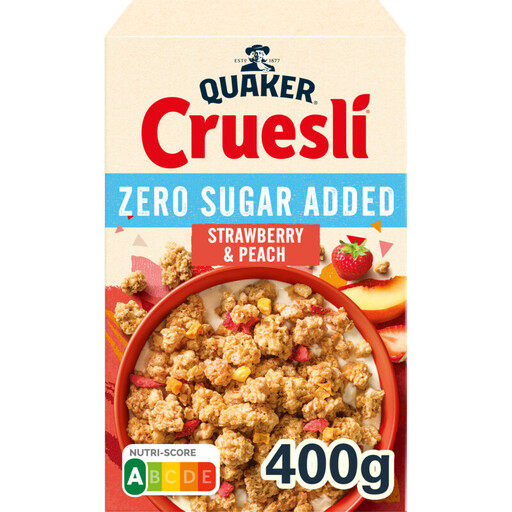 Image unavailable
Quaker Cruesli Zero Sugar Added Strawberry & Peach, 400 g
A strawberry and peach variety if you fancy a fruity flavour at Easter brunch. Check how much sugar the muesli contains per 100 g, and read the allergen information on the packaging.
View on Joybuy
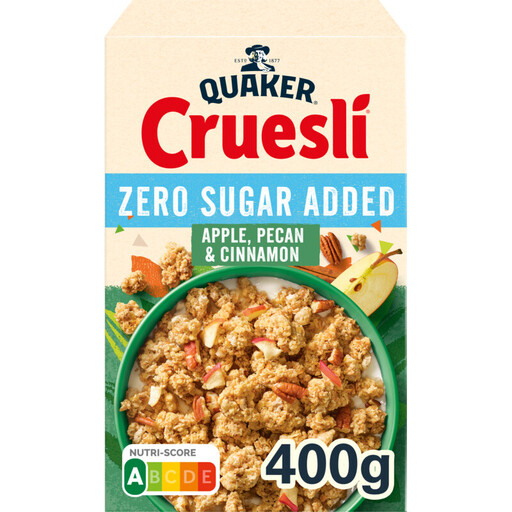 Image unavailable
Quaker Cruesli Zero Sugar Added Apple, Pecan and Cinnamon, 400 g
An apple, pecan and cinnamon variety if those flavours suit your brunch. As pecans are listed, check the current allergen information carefully and compare the total sugars per 100 g.
View on Joybuy
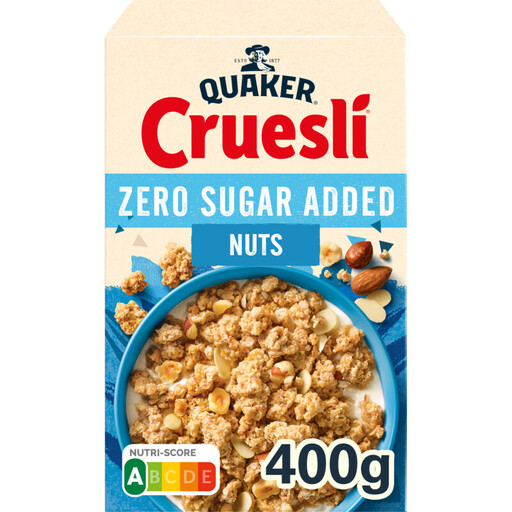 Image unavailable
Quaker Cruesli Nuts Zero Sugar, 400 g
A nut variety if you’d like to serve that flavour at Easter brunch. Read the current allergen information and check ‘of which sugars’ per 100 g; the product name alone isn’t enough if you’re making a strict choice about sugar.
View on Joybuy
Frequently asked questions
What does ‘sugar-free’ mean on muesli?
According to the Netherlands Nutrition Centre, the ‘sugar-free’ claim means that the product contains no more than 0.5 g of sugars per 100 g. A statement that no sugar has been added is not the same claim.
Does muesli with no added sugars contain no sugar at all?
No, ingredients can contain naturally occurring sugars. Check ‘of which sugars’ per 100 g in the nutritional information to see the total sugar content of the variety you’ve chosen.
How do I compare two types of muesli for Easter brunch?
Compare similar products per 100 g rather than just per portion, as recommended by the Netherlands Nutrition Centre. Then check the ingredients and allergens so you can decide what to serve your guests.
Can muesli labelled ‘0% added sugar’ contain sweeteners?
Yes, that claim doesn’t rule out sweeteners. For example, Albert Heijn lists maltitol in AH Krokante muesli noten 0% suiker and warns that excessive consumption may have a laxative effect.
Can I serve nut muesli to all my brunch guests?
First check the allergen information on the current packaging and consider the guests you’re serving. The name of a nut variety doesn’t tell you what other allergens or possible traces are listed on the label.


