
If you want to serve a strictly sugar-free treat
For you, the sugar-free requirement matters more than the shape of the biscuit. A different kind of treat is a good option if its current nutritional information meets that requirement.


If sugar-free is non-negotiable, don’t choose a standard kano biscuit from Albert Heijn, Jumbo or PLUS: their regular versions list 39 g, 36.8 g and 38.9 g of sugars per 100 g respectively. Instead, choose an alternative whose current packaging confirms the sugar-free claim and nutritional values, and be prepared for it not to be a kano biscuit filled with almond paste. If you’d rather treat someone to that classic kano biscuit, let go of the sugar-free requirement.
For you, the sugar-free requirement matters more than the shape of the biscuit. A different kind of treat is a good option if its current nutritional information meets that requirement.
You’re looking for the familiar butter biscuit filled with almond paste for Valentine’s Day. The regular kano biscuits from Albert Heijn, Jumbo and PLUS aren’t sugar-free options.
You want to be able to check what a treat contains. Compare the nutritional values per 100 g and, if there’s an allergy, read the ingredients and allergen information on the current packaging.
First decide whether sugar-free is essential or whether you mainly want a kano biscuit filled with almond paste. Then compare the exact product’s ingredients and nutritional values.
| What to consider | What to check before buying | Who it matters to |
|---|---|---|
| Sugar-free claim | Check the claim and the ‘of which sugars’ value per 100 g. Under EU Regulation (EC) No 1924/2006, a product can contain no more than 0.5 g of sugars per 100 g to carry the ‘sugar-free’ claim. | If I want to serve a sugar-free treat, I’d rather give up the kano shape than that requirement. Sugar-free comes first for around 50% of these consumers. |
| Classic kano biscuit | Check whether it’s a kano biscuit filled with almond paste, and compare portion sizes and sugars per 100 g. | For Valentine’s Day, I specifically want to share the familiar butter biscuit filled with almond paste, even if it isn’t sugar-free. The classic kano biscuit takes priority for around 30% of these consumers. |
| Ingredients and allergens | Read the ingredients, allergen information and nutritional values on the exact pack; compare products per 100 g. | If I’m buying something for someone else, I want to know what’s in it and whether it’s suitable for them. Ingredients and allergens matter most to around 20% of these consumers. |
Albert Heijn, Jumbo and PLUS list between 36.8 g and 39 g of sugars per 100 g for their regular kano biscuits. That’s above the limit for the sugar-free claim under EU Regulation (EC) No 1924/2006.
If sugar-free is non-negotiable, check both the claim and the ‘of which sugars’ value per 100 g for any alternative.
Seeing ‘sugar-conscious’ or ‘Zero’ in a name doesn’t tell you how much sugar the exact product contains. An alternative may also be something other than a kano biscuit filled with almond paste.
Read the current nutrition table and ingredients list before deciding whether both the ingredients and the type of treat are right for you.
The product information for the regular kano biscuits reviewed lists ingredients including wheat, milk, egg, soya and almond. Allergens vary from product to product.
If someone has an allergy, ask what they need to avoid and check the allergen information on the exact pack, including any ‘may contain’ statements.
A product you can see now may not be available in the same shop around Valentine’s Day.
Check availability shortly before buying, and read the packaging label then too.
Albert Heijn lists a regular butter kano biscuit and a separate category of sugar-conscious products.
Jumbo’s biscuit range includes a regular kano biscuit made with butter.
PLUS lists a regular butter kano biscuit filled with almond paste.
Lidl lists Sondey Kano’s as butter biscuits filled with almond paste, in a 325 g pack.
Verkade sells biscuits and chocolate products, including products with ‘Zero’ in the name.
These Klene products are alternatives for anyone happy to look beyond the classic kano biscuit. The heart-shaped option is liquorice; the name and product description of the other option don’t make its shape clear. If you need a strictly sugar-free option, always check the current nutritional values on the packaging.
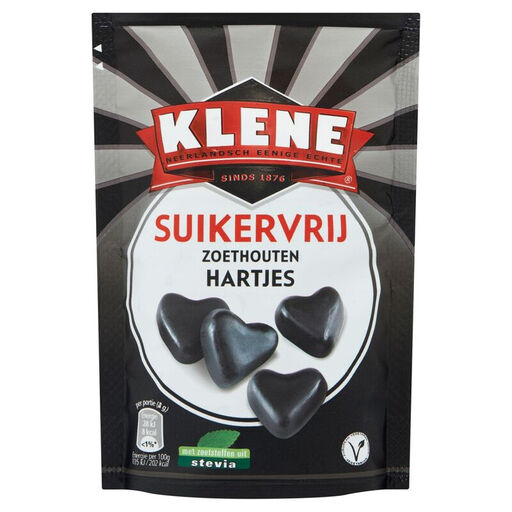 Image unavailable
A heart-shaped liquorice treat for anyone who doesn’t need a kano biscuit filled with almond paste for Valentine’s Day. Check the current nutritional values, ingredients and allergens on the packaging. The product information warns that excessive consumption may have a laxative effect.
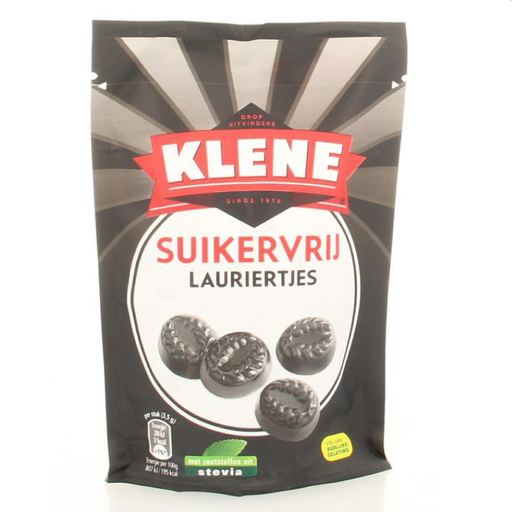 Image unavailable
A sweet alternative if you’re not set on having a kano biscuit. The title says ‘Biscuits’, while the product description suggests liquorice, so check the product’s shape, nutritional values, ingredients and allergens on the current packaging. Also bear in mind the warning about excessive consumption.
No. Albert Heijn lists 39 g of sugars per 100 g for AH Roomboter kano’s, Jumbo lists 36.8 g for Kano’s met Roomboter, and PLUS lists 38.9 g for its butter kano biscuit. These values are above the limit for the sugar-free claim.
Under EU Regulation (EC) No 1924/2006, a food can carry the ‘sugar-free’ claim if it contains no more than 0.5 g of sugars per 100 g, or per 100 ml for a drink. For a biscuit, check the ‘of which sugars’ value per 100 g in the current nutrition table; ‘sugar-conscious’ doesn’t mean the same thing.
Compare the nutritional values per 100 g, and also check the ingredients, allergens and portion size. The Netherlands Nutrition Centre recommends comparing products per 100 g, so differences in portion size don’t skew the comparison. Also check whether you’re looking for a biscuit filled with almond paste or are happy with a different kind of treat.
Always check the allergen information for the exact product. The product information for the regular kano biscuits reviewed lists ingredients including wheat, milk, egg, soya and almond, but ingredients and ‘may contain’ statements can vary.