If you’re looking for genuinely sugar-free granola for Sunday breakfast, don’t rely solely on a ‘0% added sugar’ claim: according to the Netherlands Nutrition Centre, sugar-free means no more than 0.5 g of sugars per 100 g. The examples reviewed, with 1.6 to 3.2 g of sugars per 100 g, are above this limit. So first compare ‘of which sugars’ per 100 g, then take fibre, energy, ingredients and allergens into account.
Who is this distinction important for?
Label readers looking for genuinely sugar-free granola
If sugar-free is a firm requirement for you, check the total sugar content. The Netherlands Nutrition Centre sets a maximum of 0.5 g of sugars per 100 g for this claim; ‘no added sugar’ means something different.
Families looking to avoid added sugars
Granola with no added sugars may suit your breakfast if you’re happy with naturally occurring sugars. As well as checking the claim, look at ‘of which sugars’ per 100 g.
Breakfast fans comparing more nutritional values
If you’re also considering carbohydrates, protein, fibre or energy, compare these values on the same basis. If you’re choosing a granola with grains or nuts, check the allergen information on the packaging too.
What should you look for when choosing?
Start with the sugar claim that matters to you, then compare the nutritional values per 100 g. That way, you can also consider fibre, energy and ingredients for your Sunday breakfast without confusing ‘no added sugar’ with sugar-free.
| What to consider |
What to check when buying |
Who it matters to |
| Sugar-free or no added sugar |
Check ‘of which sugars’ per 100 g. According to the Netherlands Nutrition Centre, the ‘sugar-free’ claim allows a maximum of 0.5 g of sugars per 100 g; a claim about added sugars does not tell you the total sugar content. |
If I’m looking for genuinely sugar-free granola, I want to be able to check the total sugar content rather than relying on the front of the pack. For around 42% of consumers, this strict sugar limit comes first. |
| Fibre and energy |
Compare sugars, fibre and energy per 100 g, then consider how much you serve yourself. |
At breakfast, I want to know not just how little sugar there is, but also the fibre and energy in my portion. For around 33% of consumers, this broader comparison takes priority. |
| Allergens and other nutritional values |
Read the ingredients and allergen warnings. Compare carbohydrates and protein per 100 g if these values matter to your choice. |
With a nut or grain variety, I first need to know which ingredients and allergens it contains; only then do I compare the other nutritional values. For around 25% of consumers, this is the first consideration. |
Common mistakes
-
Assuming ‘no added sugar’ means ‘sugar-free’
According to the Netherlands Nutrition Centre, these claims don’t mean the same thing: naturally occurring sugars count towards the total sugar content.
Decide which of the two requirements you mean, then check ‘of which sugars’ per 100 g in the nutrition table.
-
Comparing only the sugar figure
A low sugar figure on its own tells you nothing about the amount of energy or fat. For example, Albert Heijn lists 1.9 g of sugars, 532 kcal and 36 g of fat per 100 g for its reduced-carbohydrate granola.
Compare sugars, energy, fat and fibre on the same basis, then decide what portion fits with the rest of your breakfast.
-
Skipping the allergen list
The granolas discussed contain a range of grains and nuts; some varieties also list soya or peanuts. A product name or image won’t tell you which warnings apply to the variety you’re buying.
Before buying, check both the listed allergens and any ‘may contain’ warnings on the current packaging.
Brands compared
Albert Heijn
The Granola Nuts 0% Added Sugar and Reduced-Carbohydrate Granola 0% Sugar varieties show why you should check the nutrition table as well as the claim.
- Albert Heijn lists 1.9 g of sugars and 14 g of fibre per 100 g for the nut variety.
- The reduced-carbohydrate variety also lists 1.9 g of sugars, but has 532 kcal and 36 g of fat per 100 g. Check the allergens for both varieties.
Quaker Cruesli
Zero Sugar Added Granola Naturel is worth considering if you’re looking for a variety with no added sugars, but not if you want to choose solely on the basis of a sugar-free claim.
- Jumbo lists 3.2 g of sugars and 22 g of fibre per 100 g for the Naturel variety.
- At 3.2 g of sugars per 100 g, this variety does not meet the limit the Netherlands Nutrition Centre sets for ‘sugar-free’. Check the nutrition information again for each flavour.
Holie
Holie Low Carb is worth comparing if carbohydrates and protein are important to your choice.
- Jumbo lists 18 g of carbohydrates, 22 g of protein and 16 g of fibre per 100 g for Holie Low Carb.
- The same product information lists 3.2 g of sugars per 100 g. Compare the energy and fat content too, and check the ingredients and allergens.
Zonnatura
Granola Classic Crunchy is an option to compare for its stated total sugar and fibre content, without assuming it makes a claim about added sugars.
- Zonnatura lists 1.6 g of sugars and 22 g of fibre per 100 g for Classic Crunchy.
- The product information lists gluten and soya, and warns that the product may contain nuts, milk and sesame.
Granola options on Joybuy
These granolas offer different things to consider for your Sunday breakfast: a Low Carb Crunch variety and two Quaker Cruesli flavours with Zero Sugar Added in the product name. If you’re looking for something strictly sugar-free, always check the total sugars per 100 g on the current packaging.
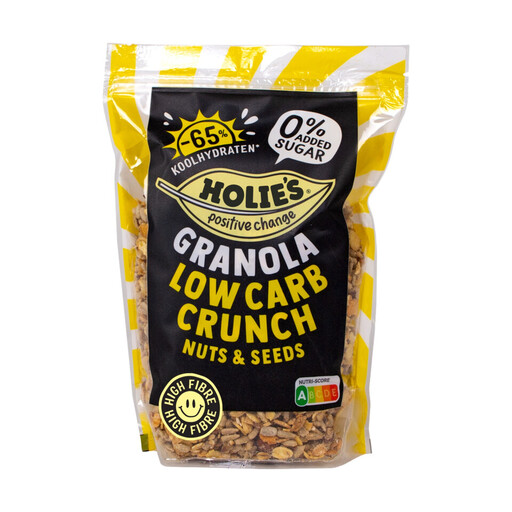 Image unavailable
Holie's Granola Low Carb Crunch, 350 g
An option if you also want to compare carbohydrates and protein for your Sunday breakfast.
Joybuy lists 3.2 g of sugars, 16 g of fibre and 22 g of protein per 100 g for Low Carb Crunch. This means its sugar content is above the limit the Netherlands Nutrition Centre sets for ‘sugar-free’.
Before choosing this variety, check the current packaging for energy, fat, ingredients and allergens.
View on Joybuy
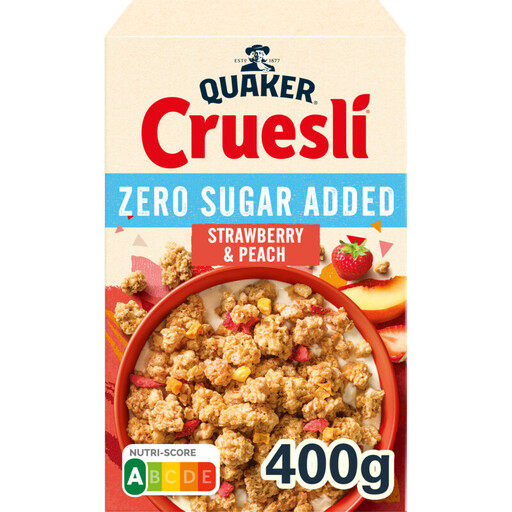 Image unavailable
Quaker Cruesli Zero Sugar Added Strawberry & Peach, 400 g
A strawberry and peach variety to consider if you’re looking for granola with a claim about added sugars.
The pack contains 400 g. Check the current nutrition information for the total sugars per 100 g; the words Zero Sugar Added don’t, on their own, prove that the granola is sugar-free.
Check the ingredients and allergen warnings for this flavour too.
View on Joybuy
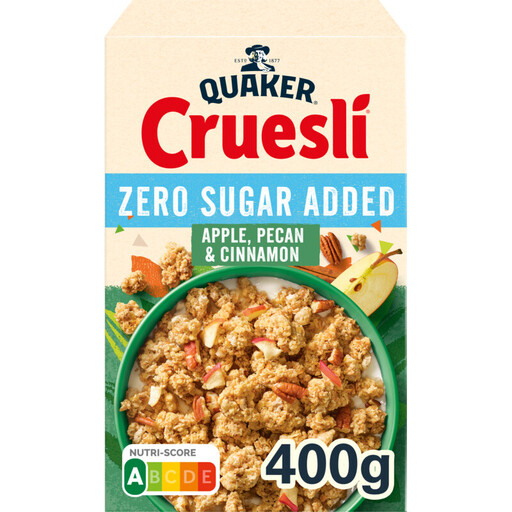 Image unavailable
Quaker Cruesli Zero Sugar Added Apple, Pecan and Cinnamon, 400 g
An apple, pecan and cinnamon variety to compare with other granolas for your Sunday breakfast.
The pack contains 400 g. Before deciding whether this variety meets a strict sugar limit, check the total sugars per 100 g in the current nutrition table.
For this flavour, check the ingredients and allergen warnings on the packaging too.
View on Joybuy
Frequently asked questions
Is granola labelled ‘0% added sugar’ automatically sugar-free?
No. According to the Netherlands Nutrition Centre, ‘sugar-free’ means no more than 0.5 g of sugars per 100 g, while ‘no added sugar’ refers to what has been added to the product. Naturally occurring sugars still count towards the nutrition table total.
How do I compare two types of granola?
First compare the nutritional values per 100 g, so different portion sizes don’t distort the comparison. Then check total sugars, fibre and energy, and read the ingredients of the variety you’re considering.
Can granola that’s low in sugar still be high in energy?
Yes. Albert Heijn lists 1.9 g of sugars for its Granola Reduced Carbohydrate 0% Sugar, but also 532 kcal and 36 g of fat per 100 g. So don’t assess the sugar content in isolation from the rest of the nutrition information.
What should I look for if I have a grain or nut allergy?
Read the allergen information for the specific granola you want to buy, including any ‘may contain’ warnings. The varieties discussed have different ingredients; a sugar claim tells you nothing about allergens.
How should I store granola once it’s open?
Store granola in a cool, dry place and seal the pack well after use. Also follow the storage instructions on the packaging of your product.


