What should you look for when choosing?
Start by understanding the difference between ‘sugar-free’ and ‘no added sugars’. Then compare the nutritional values per 100 g, so different pack sizes and serving sizes don’t skew your choice.
| What to consider | What to check before buying | Who it matters to |
|---|
| Added sugars or sugar-free |
Read the exact wording and check ‘of which sugars’ per 100 g. The EU ‘sugar-free’ claim allows a maximum of 0.5 g of sugars per 100 g. |
I want to avoid added sugar, but don’t want to confuse this with a product that contains no sugars; around 36% of consumers prioritise this distinction. |
| Fibre and nutritional value |
Compare fibre, sugars, energy and fat on the same 100 g basis. |
When I have granola for breakfast, I want to look beyond the wording on the front of the pack. This broader comparison matters most to around 29% of consumers. |
| Carbohydrates or protein |
Check carbohydrates and protein per 100 g, along with energy and fat values. |
If carbohydrates or protein are my main criteria, I don’t want to overlook the rest of the nutritional information; around 21% of consumers prioritise these nutrients. |
| Allergens and ingredients |
Read the ingredients, allergens and any ‘may contain’ warning for the variety you’ve chosen. |
I need to be able to judge whether this particular pack is suitable for my allergies. This check is a priority for around 14% of consumers. |
Brands to compare
These examples cover specific granola products; their nutritional values and ingredients don’t necessarily apply to other varieties from the same brand.
Albert Heijn
AH Granola nuts 0% added sugar is an own-brand option for anyone looking to avoid added sugar.
- Albert Heijn lists 1.9 g of sugars, 14 g of fibre and 13 g of protein per 100 g.
- The nuts and gluten-containing cereals mean you’ll need to check the allergen list; 1.9 g of sugars per 100 g is above the limit for the ‘sugar-free’ claim.
Cruesli (Quaker)
The Zero Sugar Added Naturel and Nuts & Seeds varieties are granolas that, according to the product information listed by Jumbo, are made without added sugars or sweeteners.
- Jumbo lists 3.2 g of sugars and 22 g of fibre per 100 g for Naturel; Nuts & Seeds contains 3.8 g of sugars and 23 g of fibre.
- Both listed sugar values are above the limit for the ‘sugar-free’ claim. Check the allergens for your chosen variety too.
Jumbo
Jumbo Granola Protein with no added sugars is worth considering if protein is your main point of comparison.
- Jumbo lists 24.1 g of protein and 17.1 g of fibre per 100 g.
- According to Jumbo, the same 100 g contains 4.0 g of sugars and 446 kcal. The recipe includes soya, wheat protein and nuts.
Holie’s
Holie’s Granola Low Carb is a granola to compare based on carbohydrates per 100 g.
- For the Low Carb variety reviewed, Jumbo lists 18 g of carbohydrates, 16 g of fibre and 22 g of protein per 100 g.
- Jumbo also lists 490 kcal, 33 g of fat and 3.2 g of sugars per 100 g. Check the allergens, including soya, almond, peanut and gluten-containing cereals.
Zonnatura
Zonnatura Granola classic crunchy high fibre is a no-added-sugar variety to compare for its sugar and fibre content.
- Albert Heijn lists 1.6 g of sugars and 22 g of fibre per 100 g.
- With 1.6 g of sugars per 100 g, this variety doesn’t meet the ‘sugar-free’ claim. It contains gluten-containing cereals and soya; also check the warning about possible traces.
Granola for your weekend breakfast on Joybuy
These product picks focus on granola for a weekend breakfast where added sugars are a consideration. The names of the Choco and Strawberry & Peach varieties don’t tell you how much sugar they contain per 100 g; check the packaging for that information.
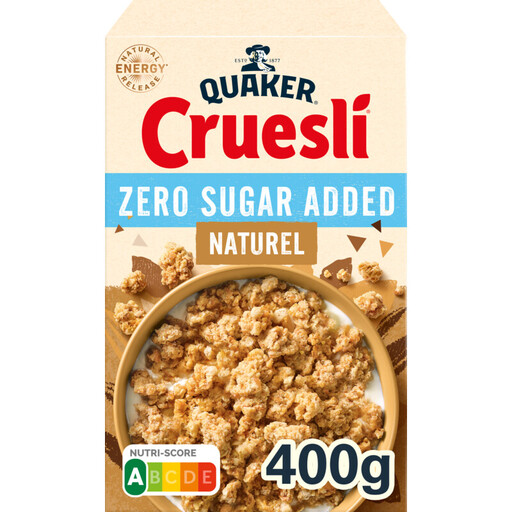 Image unavailable
Quaker Zs Cruesli Natural 400 g
A natural variety for anyone looking for granola with no added sugars. According to the Joybuy product description, this variety contains naturally occurring sugars; check ‘of which sugars’ per 100 g on the pack if you want to assess the ‘sugar-free’ claim.
View on Joybuy
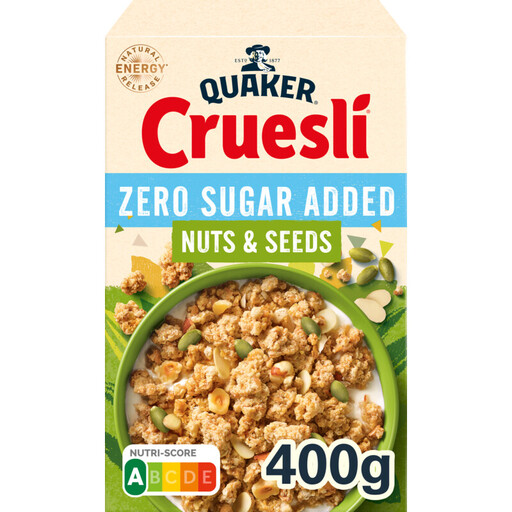 Image unavailable
Quaker Zs Cruesli Nuts & Seeds 400 g
A nuts-and-seeds variety for anyone looking for these ingredients at breakfast. Before buying, check the sugar content per 100 g and the allergens listed for this specific pack.
View on Joybuy
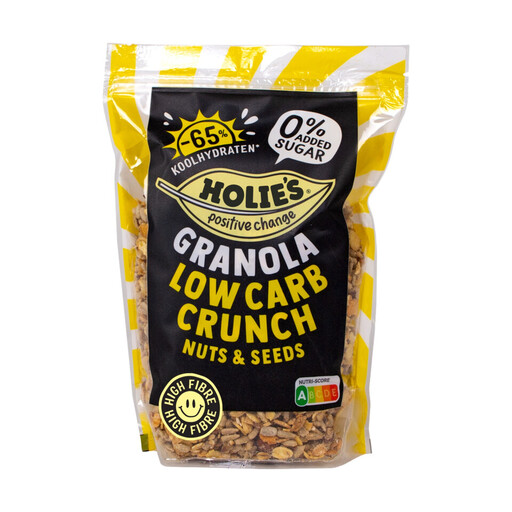 Image unavailable
Holie’s Granola Low Carb Crunch 350 g
A variety to consider if carbohydrates are an important point of comparison. Joybuy’s product information lists 3.2 g of sugars, 16 g of fibre and 22 g of protein per 100 g. Also compare energy, fat and allergens on the packaging; its sugar content is above the EU limit for the ‘sugar-free’ claim.
View on Joybuy
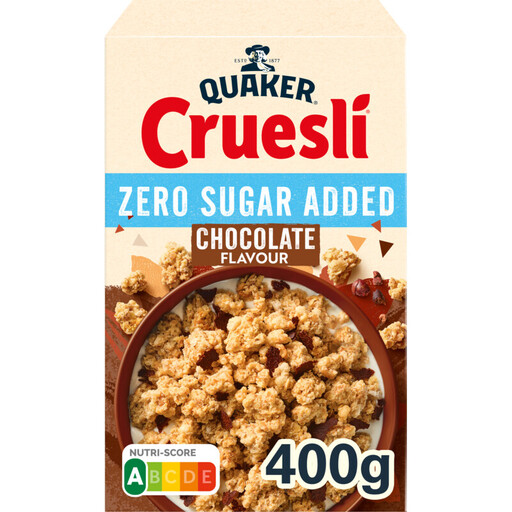 Image unavailable
Quaker Cruesli Choco Zero Sugar 400 g
A chocolate variety to consider if you’d like this flavour for weekend breakfast. Check the current ingredients and sugar content per 100 g on the pack; don’t assume that ‘Zero Sugar’ in the product name means this variety meets the EU limit for ‘sugar-free’.
View on Joybuy
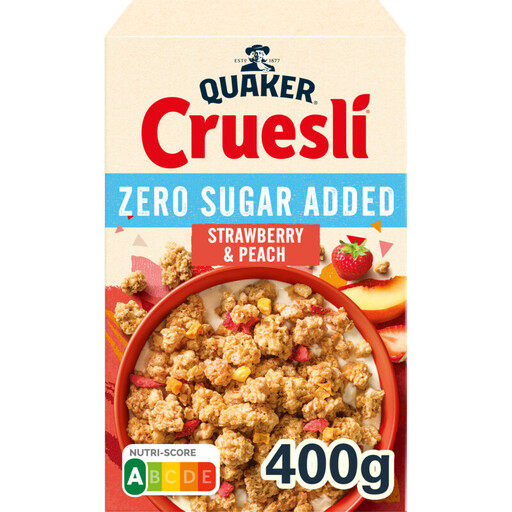 Image unavailable
Quaker Cruesli Zero Sugar Added Strawberry & Peach 400 g
A variety to consider if you’re looking for strawberry and peach in your granola. Check the current ingredients, allergens and sugars per 100 g on the pack; ‘Zero Sugar Added’ in the name doesn’t automatically mean ‘sugar-free’.
View on Joybuy
Frequently asked questions
Does ‘no added sugars’ mean the same as sugar-free?
No. According to the Netherlands Nutrition Centre, a product with no added sugars can still contain naturally occurring sugars. Under European Regulation (EC) No 1924/2006, the EU ‘sugar-free’ claim allows a maximum of 0.5 g of sugars per 100 g, so don’t treat the two claims as interchangeable.
Are the granolas compared with no added sugars also sugar-free?
No, not according to the sugar values listed for these specific varieties. Albert Heijn lists 1.6 g of sugars per 100 g for Zonnatura Granola classic crunchy high fibre and 1.9 g for AH Granola nuts 0% added sugar. Jumbo lists 3.2 g for Quaker Naturel and Holie’s Low Carb, and 4.0 g for Jumbo Granola Protein. All these values are above the EU limit of 0.5 g per 100 g for the ‘sugar-free’ claim.
How do I compare granola for breakfast with yoghurt or quark?
Start by comparing the nutritional information per 100 g, so different serving sizes are measured on the same basis. Check sugars, fibre, protein, energy and fat, then decide how much granola to add to your breakfast.
What should I look for if I’m allergic to nuts, gluten or soya?
Check the allergen declaration and any ‘may contain’ warning on the packaging for the specific variety. The recipes discussed have different ingredients, so the nutritional information or allergen list for another flavour is no substitute.
How should I store granola after opening?
Store granola in a cool, dry place and seal the pack well after use, as advised in the product information reviewed from Albert Heijn and Jumbo. Follow any more specific instructions on your pack.


