
Vandaag of morgen in huis

Kwaliteit gegarandeerd

Welkomstaanbiedingen ontgrendelen: GRATIS bezorging | Tot 80% korting | Gratis 30 dagen JoyPlus-proefperiode
Download de app
A bowl of granola seems like a healthy start to the day. But often, it contains a surprising amount of hidden sugar, even in varieties marketed as 'natural' or 'whole grain'. Finding a truly sugar-free granola can be a real challenge.
If you want to consciously reduce your sugar intake, the label is your most important tool. In this article, we'll help you make the right choices. We will highlight several popular options based on their product specifications, so you know exactly what you're buying.
Before we dive into the products, here are a few practical tips to help you choose a healthy granola.
The term 'sugar-free' can be misleading. Products often contain naturally occurring sugars from ingredients like fruit or grains. What you should really look for is granola with no added sugars. This means the manufacturer has not added any extra sugar, syrup, honey, or other sweeteners. Check the ingredients list: if sugar (or one of its many aliases like glucose-fructose syrup) is high on the list, it's best to leave the product on the shelf.
Depending on your lifestyle, the ratio of macronutrients can be important.
Fibre is essential for good digestion and contributes to a feeling of fullness. A good sugar-free granola is rich in fibre, ideally more than 10 grams per 100 grams. Fibre mainly comes from whole grains, nuts, seeds, and chicory root.
Based on the criteria above, we have compiled a list of interesting products for you.
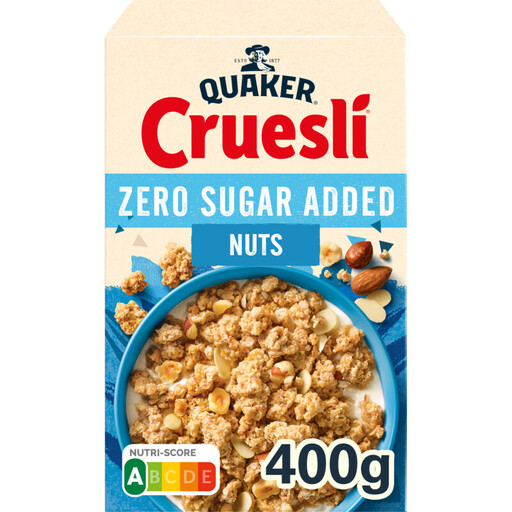
Why It Stands Out For fans of the classic, crunchy cruesli texture, this is an excellent option. Quaker has developed a version that offers the familiar taste and crunch, but without any added sugars or sweeteners. The sweetness is subtle and comes from the ingredients themselves.
Benefits
Who Is It For? This product is ideal for those looking to switch from traditional, sugary cruesli to a sugar-free alternative without compromising on texture. It's a great choice for a high-fibre breakfast.
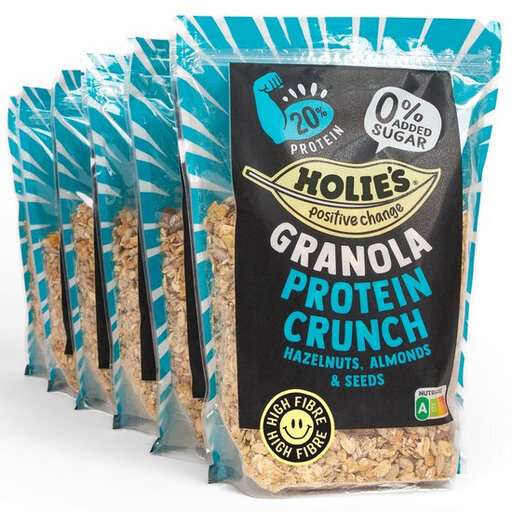
Why It Stands Out This granola from Holie's specifically focuses on a high protein content. With 20% protein, it provides a powerful start to your day. The base consists of a mix of sunflower seeds, soy flakes, and various whole grains, supplemented with almonds and hazelnuts.
Benefits
Who Is It For? This high-protein granola is an excellent choice for athletes, people with an active lifestyle, or anyone looking for a breakfast that is very filling.
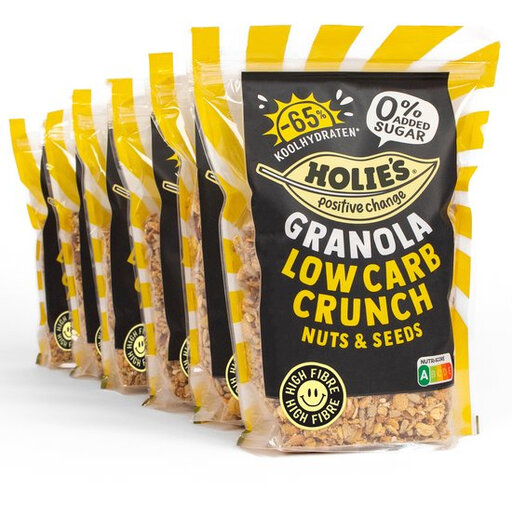
Why It Stands Out This version from Holie's is specially formulated for those looking to limit their carbohydrate intake. According to the manufacturer, this granola contains 65% fewer carbohydrates than comparable granolas. The base of sunflower seeds, soy flakes, and nuts ensures a low carbohydrate content and a high protein and fat content.
Benefits
Who Is It For? This is the ideal low-carb granola for people following a keto or carbohydrate-restricted diet. The combination of low carbs with high protein and healthy fats fits perfectly into that lifestyle.
If your ideal breakfast isn't listed here, or if you're curious about other flavours and compositions, we understand. Everyone has different preferences when it comes to taste, texture, and nutritional values.
Explore our full range for more options. Here, you can leisurely compare different types of granola and breakfast cereals to find the version that best suits you.
View our full range of granola breakfast cereals here
Granola and cruesli are similar, but there is a slight difference. Sugar-free cruesli consists of grain flakes that are baked into crispy clusters. Traditionally, sugar or honey is used as a binding agent; in sugar-free versions, alternative binders like fibre are used. Granola is often a looser mixture of grains, nuts, and seeds that is also roasted, but not always formed into large clusters.
Granola with no added sugars is a better choice than its sugary counterparts. Whether it can be labelled 'healthy' depends on its complete composition. A good granola contains whole grains, nuts, and seeds, which provide fibre, protein, and healthy fats. However, be mindful of the portion size, as granola can be calorie-dense.
You can buy granola in most supermarkets, but the online selection is often larger and more diverse. Online, you can more easily compare the nutritional values and ingredient lists of different brands and types, allowing you to make an informed choice that fits your dietary needs.
