
If you want to choose something strictly sugar-free
‘Less sugar’ isn't enough for you. Compare the claim on the packaging with the ‘of which sugars’ figure per 100 g; the Voedingscentrum defines ‘sugar-free’ as no more than 0.5 g per 100 g.


If you're looking for strictly sugar-free chocolate flakes to take on the road, you can't assume that ordinary flakes or cereal flakes with no added sugars are sugar-free without checking the label. The Voedingscentrum defines ‘sugar-free’ as no more than 0.5 g of sugars per 100 g. Cereal flakes may work for a breakfast stop; a snack in a different form is only an alternative if the flakes themselves aren't essential.
‘Less sugar’ isn't enough for you. Compare the claim on the packaging with the ‘of which sugars’ figure per 100 g; the Voedingscentrum defines ‘sugar-free’ as no more than 0.5 g per 100 g.
You want to eat flakes with something like yoghurt or quark, and are mainly looking for no added sugars. Also check the sugars present and the cereals in the specific product.
You want packaging that's practical to take with you and portion out on the go. A different type of product may work, provided you don't need flakes and the label meets your requirements.
First decide whether you're looking for chocolate flakes, cereal flakes for a breakfast stop or simply a snack for the journey. Then check the nutritional information for that exact type of product.
| What to consider | What to check before buying | Who it's important for |
|---|---|---|
| Strictly sugar-free | Check the claim and the ‘of which sugars’ figure per 100 g. The Voedingscentrum defines ‘sugar-free’ as no more than 0.5 g per 100 g. | If I want to take sugar-free chocolate flakes with me, I don't want to rely on ‘less sugar’ alone. Around 40% of consumers prioritise a claim that can be verified as sugar-free. |
| Breakfast with no added sugars | Read the claim, the sugars per 100 g and the ingredients, including any gluten-containing cereals. | If I want to eat cereal flakes with yoghurt at a stop, having no added sugars matters more to me than the type of chocolate topping. Around 30% of consumers prioritise this breakfast choice. |
| Taking it with you and storing it | Check the storage instructions and whether the packaging can be sealed securely after opening; also think about what you'll eat the flakes with. | For a snack that doesn't need breakfast preparation, I want to be able to take a portion easily without loose flakes in the car. This convenience is a priority for around 20% of consumers. |
| Sweeteners and warnings | For sweets or mint alternatives, read the ingredients and warnings on the packaging. | If I'm considering a new sugar-free sweet for the journey, I want to know what warnings apply to its use. Sweeteners and these warnings are decisive for around 10% of consumers. |
These claims don't mean the same thing. According to PLUS product information, Smaakt Zevengranenvlokken contain 0.99 g of sugars per 100 g, despite the claim that they contain no added sugars.
If sugar-free is essential for you, compare the exact claim with the ‘of which sugars’ figure per 100 g.
A familiar name doesn't tell you how much sugar a particular variety contains. PLUS states that De Ruijter Witte Vlokken contain 77 g of sugars per 100 g and Venz Tijgervlokken contain 75 g per 100 g.
Read the nutritional information for the exact variety you want to take with you.
Albert Heijn lists Céréal Hagelslag melk minder suikers as a topping for people watching their sugar intake. Hagelslag is a different type of product, and the name ‘less sugars’ doesn't confirm that it's sugar-free.
Choose this option only if hagelslag is a suitable alternative for you and the nutritional information fits your goal.
For its sugar-free Wilhelmina Mints, Jumbo lists sorbitols and xylitol and warns that excessive consumption may have a laxative effect.
Check the ingredients and usage warnings for the specific product before taking it with you.
Witte Vlokken are chocolate flakes for uses such as spreading on bread.
Tijgervlokken melk-vanille are flakes for spreading on bread or using as a topping.
Zevengranenvlokken are breakfast cereals for eating with yoghurt, milk or quark, for example; they're not the same as chocolate flakes.
Hagelslag melk minder suikers is an alternative in a different form from flakes.
If flakes aren't essential, you could also consider a snack in a different form for the journey. The option below is salty liquorice, not chocolate or breakfast flakes.
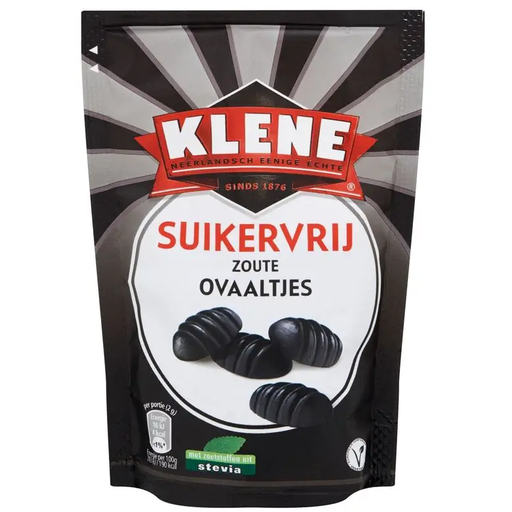 Image unavailable
Worth considering if you're looking for a snack for the journey and don't need flakes: this is salty liquorice in a 110 g pack. Check the nutritional information, ingredients and any usage warnings on the pack you choose.
The Voedingscentrum defines ‘sugar-free’ as no more than 0.5 g of sugars per 100 g and ‘low-sugar’ as no more than 5 g per 100 g. ‘No added sugars’ means that no sugars or other foods have been added for their sweetening properties; naturally occurring sugars may still be present.
No. The Witte Vlokken for which PLUS provides product information aren't suitable if you need a strictly sugar-free option: sugar is listed as the first ingredient and the variety contains 77 g of sugars per 100 g. Check other varieties separately.
Yes, if you mean cereal flakes and your aim is to avoid added sugars. According to the product information, these flakes contain 0.99 g of sugars per 100 g and include oats, barley, rye and wheat, among other ingredients; they're therefore not the same as sugar-free chocolate flakes.
Take the cereal flakes in a sealed container and decide in advance what you'll eat them with at a stop. For Smaakt Zevengranenvlokken, PLUS recommends storing them in a cool, dry, dark place in a sealed container.
Check the ingredients and warnings for the specific product. For its sugar-free Wilhelmina Mints, Jumbo lists sorbitols and xylitol and warns that excessive consumption may have a laxative effect; this doesn't automatically apply to every sugar-free alternative.