
If you want a strictly sugar-free option
You want to serve something with coffee that meets the sugar-free limit. Check the sugars per 100 g: the Voedingscentrum defines this as no more than 0.5 g per 100 g.


If you need a strictly sugar-free option, don’t choose the standard filled cakes we looked at: Albert Heijn lists 39 g of sugars per 100 g for AH Roomboter kano’s, while Jumbo lists 36.8 g per 100 g for Jumbo Kano’s met Roomboter. According to the Voedingscentrum, ‘sugar-free’ means no more than 0.5 g of sugars per 100 g. AH Digestive 0% suiker contains 0.3 g per 100 g, but it’s a biscuit, not a filled cake. According to the product information, Verkade San Francisco Zero is an option with no added sugar, but at 1.7 g of sugars per 100 g, it isn’t sugar-free.
You want to serve something with coffee that meets the sugar-free limit. Check the sugars per 100 g: the Voedingscentrum defines this as no more than 0.5 g per 100 g.
You’re looking for something to serve with coffee when friends come over, but you’re happy to swap a filled cake for a biscuit. Compare not only the sugar content, but also the type of biscuit and the number in the pack.
If anyone has allergies or questions about sweeteners, the sugar content alone isn’t enough. The product information from Albert Heijn and Jumbo lists allergens for the filled cakes we looked at. For alternatives, check the ingredients and warnings on the packaging too.
Choosing a filled cake or an alternative to serve with coffee involves different considerations. First decide how strict your sugar requirements are and whether a different kind of treat will suit.
A good choice if: you specifically want to serve a filled cake and it doesn’t need to be sugar-free.
The trade-off: the filled cakes we looked at from Albert Heijn and Jumbo contain 39 g and 36.8 g of sugars per 100 g respectively, both above the sugar-free limit.
A good choice if: a sugar-free label is your priority and you’re happy to serve a biscuit instead of a filled cake.
The trade-off: Albert Heijn lists 0.3 g of sugars and 14 g of polyols per 100 g for AH Digestive 0% suiker. It isn’t a filled biscuit.
A good choice if: you’re looking for no added sugar, but don’t require it to meet the stricter sugar-free limit.
The trade-off: Albert Heijn lists 1.7 g of sugars per 100 g for Verkade San Francisco Zero, which is above the sugar-free limit.
| What to consider | What to check when buying | Especially relevant if |
|---|---|---|
| Sugar-free label | Compare the sugars per 100 g with the limit of no more than 0.5 g per 100 g that the Voedingscentrum gives for sugar-free products. Don’t confuse this with ‘no added sugar’. | I want to serve a sugar-free biscuit, so its nutritional values need to meet that requirement. Around 50% of consumers make this strict sugar requirement their priority. |
| Type of treat | Decide whether you want to serve a filled cake, a biscuit or a cracker, and check how many are in the pack. | For my coffee break, it matters whether guests will enjoy a different kind of biscuit from the familiar filled cake. Around 30% of consumers prioritise finding a suitable type of treat. |
| Ingredients | Check the allergen information and, for products containing sweeteners, the ingredients and any warnings on the packaging. | If I’m considering what my guests can eat, I look beyond the sugar content. For around 20% of consumers, allergens or sweeteners are the main consideration. |
No added sugar doesn’t automatically mean sugar-free. Albert Heijn lists 1.7 g of sugars per 100 g for Verkade San Francisco Zero.
If you need a sugar-free option, compare the nutritional values per 100 g with the maximum of 0.5 g given by the Voedingscentrum.
The shape or size won’t tell you how much sugar a biscuit contains. The product information from Albert Heijn, Jumbo and PLUS lists 39 g, 36.8 g and 38.9 g of sugars per 100 g respectively for the butter-filled cakes we looked at.
If you want a sugar-free option, check the nutritional values for the specific product rather than relying on its name or appearance.
According to their product information, the filled cakes we looked at contain different allergens. Biscuits with sweeteners may also carry warnings on the packaging.
Keep the packaging to hand and check the full ingredients and allergen information before serving anything to guests.
The product information makes the difference clear between a standard filled cake and a separate sugar-free biscuit.
Jumbo Kano’s met Roomboter are an option if you specifically want to serve a standard filled cake with coffee.
Verkade San Francisco Zero is a biscuit for anyone looking for no added sugar, not for anyone wanting a filled cake.
PLUS Roomboter kano’s are a traditional filled biscuit, not a suitable choice if you need a strictly sugar-free option.
This Joybuy selection includes a matzo cracker for anyone considering serving a cracker instead of a filled cake with coffee. If you need a sugar-free option, check the nutritional values on the packaging.
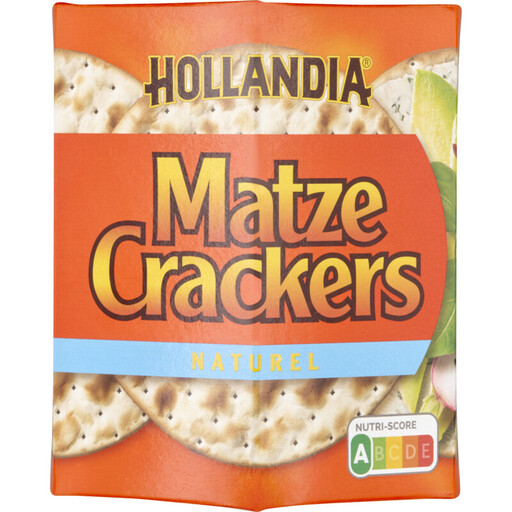 Image unavailable
A cracker for anyone who wants to serve something different from a filled cake with coffee.
For a sugar-free option, check the sugars per 100 g. If you have allergies, refer to the full information on the packaging.
According to the Voedingscentrum, ‘sugar-free’ means that a product contains no more than 0.5 g of sugars per 100 g. ‘No added sugar’ is a different claim, so always compare the nutritional values per 100 g.
The ones we looked at from Albert Heijn and Jumbo aren’t: their product information lists 39 g and 36.8 g of sugars per 100 g respectively. If you’re considering a different filled cake, check the nutritional values for that specific variety.
A different type of biscuit could work if you don’t need a filled cake. Albert Heijn lists 0.3 g of sugars per 100 g for AH Digestive 0% suiker. It’s a biscuit, not a filled cake. Check the ingredients and warnings on the packaging too.
Check the ingredients, allergens and warnings for the specific product. Albert Heijn lists polyols in AH Digestive 0% suiker and maltitol in Verkade San Francisco Zero. Both products carry a warning that excessive consumption may have a laxative effect.