
Same-day & Next-day Delivery

Quality Guaranteed

Unlock Your Welcome Offers: FREE Delivery | Up to 80% OFF | Free 30-day JoyPlus trial
Download the APP
A sugar-free energy drink may seem easy to choose at first glance. You look for “zero” or “sugar-free”, select a flavour and order a multipack. However, there are clear differences in caffeine content, can size, sweeteners and price per litre. If you only look at the front of the can, you may end up buying a pack that is less suitable for your everyday needs.
This buying guide will help you compare a sugar-free energy drink objectively. You’ll find practical points to consider, along with some popular choices for travelling, work or study and an active lifestyle.
A sugar-free energy drink generally contains few calories, but may still contain a relatively high amount of caffeine. The label often states 32 mg of caffeine per 100 ml. In a 250 ml can, that works out at around 80 mg of caffeine. A 500 ml can with the same concentration contains around 160 mg.
So don’t just look for terms such as “zero calorie” or “sugar-free”. Also check:
An energy drink with caffeine is not the same as an ordinary soft drink without caffeine. Also, don’t thoughtlessly consume several caffeinated drinks in one day.
An energy drink multipack containing 12 or 24 cans can be convenient, but check the price per litre. For example, a box with 12 cans of 500 ml contains 6 litres of drink. A box with 24 cans of 250 ml also contains 6 litres. The total price alone therefore says little about the actual value.
Also check:
For occasional use, a pack of 4 or 6 cans may be more practical. If you take a can to work or study every day, a larger pack may offer better value.
A sugar-free energy drink uses sweeteners instead of sugar. Many products contain sucralose and acesulfame-K, for example, while other varieties may also contain aspartame or other sweeteners. As a result, the flavour may differ from the regular version made by the same brand.
When switching to a new flavour, check the ingredients list. If you have an allergy, intolerance or specific dietary preference, always check the physical label. Product information may vary by flavour, country or production batch.
The amount of caffeine is one of the most important factors when choosing a caffeinated drink. Red Bull Sugarfree states 32 mg per 100 ml. A 250 ml can therefore contains around 80 mg. Monster Ultra White is supplied in 500 ml cans; at a similar concentration, this means a considerably higher amount per can.
Celsius varieties state 0.03% caffeine in the product information provided. Check the current packaging before buying for the exact nutritional and caffeine information.
According to the product information, sugar-free varieties usually contain 0 grams of sugar per 100 ml and around 2 to 3 kcal per 100 ml. However, be aware that sugar and total carbohydrates may differ. “Sugar-free” does not always mean that all carbohydrates are zero.
Therefore, compare the full nutritional table rather than just the front of the can.
The can size determines both your portion size and how easy it is to carry:
A smaller can is not automatically better value. Calculate the price per litre and compare it with other brands.
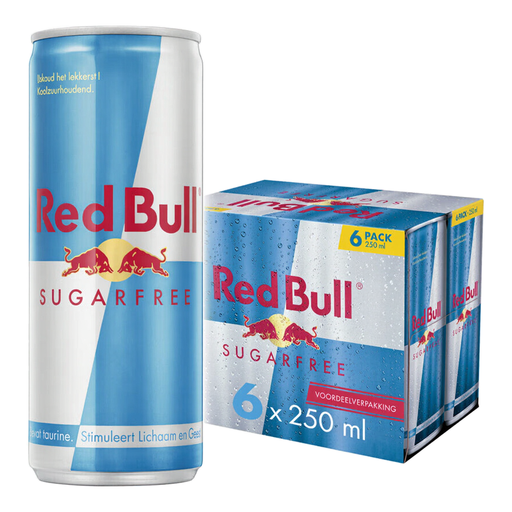
Why it suits this profile: The pack of six compact cans is ideal if you want to try a familiar brand and a consistent portion size first.
The volume per can is clearly specified, while the product information states 32 mg of caffeine per 100 ml and 0 grams of sugar per 100 ml.
250 ml per can, a sugar-free formula and B vitamins according to the product information.

Why it suits this profile: The citrus combination of lemon and grapefruit, together with the large can size, is ideal for those who enjoy a bold, refreshing flavour.
The packaging clearly states 12 cans of 500 ml and 0 grams of sugar per 100 ml, so you can estimate the total amount in advance.
12 x 500 ml, citrus flavour and a sugar-free formula according to the product description.
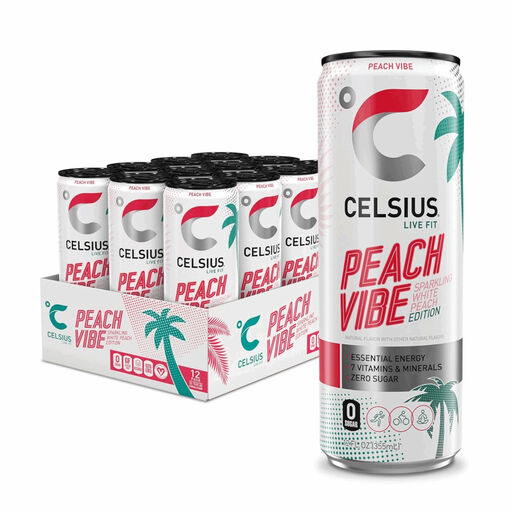
Why it suits this profile: The can size is suitable for regular occasions such as commuting, studying or a workout.
The product information states 3 kcal and 0 grams of sugar per 100 ml. Check the caffeine content on the current label before ordering.
Peach flavour, 12 cans of 250 ml and an ingredients list that includes B vitamins and sweeteners.
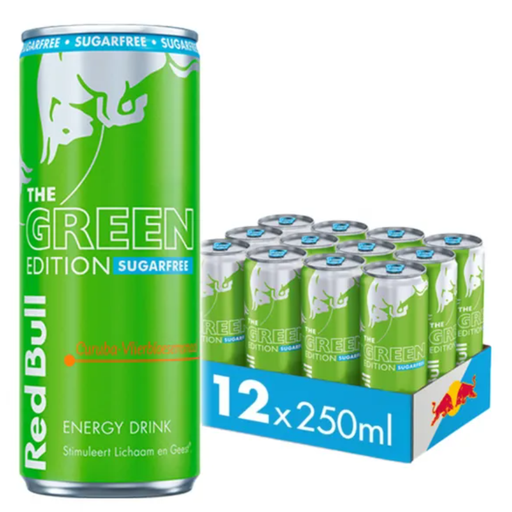
Why it suits this profile: The curuba and elderflower flavour offers an alternative to standard citrus or classic energy drink flavours.
The packaging states 12 x 250 ml, 0 grams of sugar and 32 mg of caffeine per 100 ml. This makes it easy to calculate the portion and caffeine content.
Sugar-free formula, 3 kcal per 100 ml and a distinctive fruity flavour profile.
We’ve put together a complete, up-to-date list of products that fully meet these strict selection criteria and the applicable European safety regulations.
Usually, yes. In the product information discussed, the energy value is around 2 to 3 kcal per 100 ml. However, check the nutritional table, as recipes and carbohydrate values may vary between products.
Store an opened can in the fridge and consume it according to the instructions on the packaging. Check the taste and smell, and look out for any changes in the product. Store unopened cans in a cool, dry place away from direct sunlight. The best-before date is shown on the can or packaging.
That depends on your total caffeine intake and personal circumstances. Remember to include coffee, tea, cola, pre-workout and other caffeinated drinks. Products with a high caffeine content are not recommended for children or pregnant or breastfeeding women. Always read the warning and consume energy drinks in moderation.
