
Same-day & Next-day Delivery

Quality Guaranteed

Unlock Your Welcome Offers: FREE Delivery | Up to 80% OFF | Free 30-day JoyPlus trial
Download the APP
A sugar-free energy drink may seem easy to choose at first glance. You look for a can without sugar, pick a flavour and order a multipack. However, there are clear differences in ingredients, caffeine, sweeteners, size and ease of use. If you only look at the front of the can, you may end up paying for packaging that does not suit the way you use it.
For students, professionals, sporty adults and fans of zero-sugar soft drinks, these are the main pitfalls to watch out for:
A caffeinated energy drink should be compared not only per can, but also per 100 ml. Red Bull Sugar-Free and Red Bull Green Edition Sugarfree state 32 mg of caffeine per 100 ml. According to the product information, a 250 ml can therefore contains 80 mg of caffeine.
For a 500 ml energy drink, it is important to check whether the caffeine content per 100 ml is the same as in smaller variants. Then calculate the total content per pack. Also pay attention to the statutory warning: according to the product labels, drinks with a high caffeine content are not recommended for children or pregnant or breastfeeding women. Consume caffeine in moderation and take coffee, tea and other caffeinated products into account.
An energy drink without sugar may contain sucralose, acesulfame K, aspartame, cyclamates, saccharin or steviol glycosides. So always check the ingredients list if you want to avoid particular sweeteners.
Red Bull Green Edition Sugarfree Curuba Elderflower states 0 grams of sugar and 3 kcal per 100 ml. Monster Energy Ultra White also states 0 grams of sugar, but 4.4 grams of carbohydrates per 100 ml in the supplied product information. This shows why the term “sugar-free” alone is not enough if you are also monitoring calories or carbohydrates.
A sugar-free soft drink without caffeine, such as a zero-sugar sparkling water, is not automatically an energy drink either. Products such as Genki Forest Sparkling Water may be suitable if you are mainly looking for a carbonated fruit-flavoured drink, but they do not have the same caffeinated formulation as an energy drink.
Choose the size based on when you typically use it:
Compare the price per litre and per can, not just the total price. A multipack of 24 x 250 ml contains 6 litres. A pack of 12 x 500 ml also contains 6 litres. The pack sizes may therefore differ even though the total quantity is the same.
Also check the best-before date, storage instructions and deposit information. Store unopened cans in a cool, dry place, away from direct sunlight and excessive heat. The product packaging remains the definitive source for the current ingredients, warnings and date.
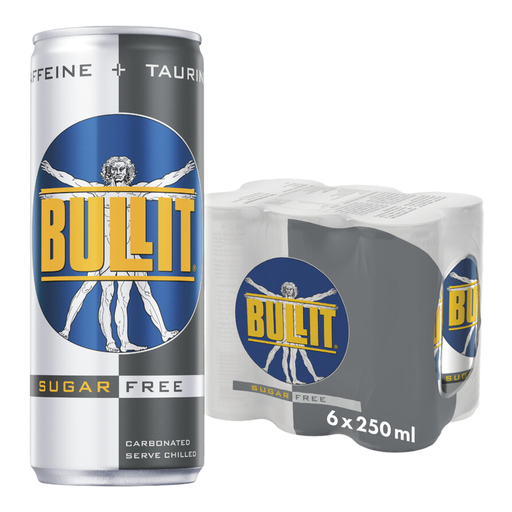
Why it suits this profile: The 6-pack of 250 ml cans offers a manageable introduction to a sugar-free energy drink without requiring you to buy a large supply straight away.
The product information states 0 grams of sugar per 100 ml and 32 mg of caffeine per 100 ml. However, check the current ingredients and warnings on the can.
250 ml per can, 6 cans per pack, 0 grams of sugar and B vitamins according to the product description.
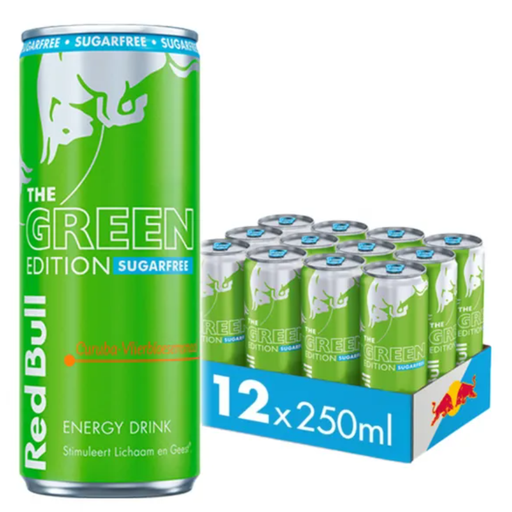
Why it suits this profile: If you are looking for a consistent size and a distinctive fruit flavour, you get curuba and elderflower flavours in a stock of twelve compact cans.
The label states 0 grams of sugar, 3 kcal and 32 mg of caffeine per 100 ml. The flavour and formulation are clearly specified.
12 x 250 ml, curuba and elderflower flavour, 0 grams of sugar and taurine according to the product information.

Why it suits this profile: The larger size is ideal for people who want to stock up on multiple servings at home, during long working days or for sharing.
The pack clearly states 12 x 500 ml and 0 grams of sugar. Compare the total caffeine per can with smaller sizes before ordering.
12 cans of 500 ml, a citrus profile with lemon and grapefruit, and 0 grams of sugar per 100 ml according to the product details.
We have put together a complete, up-to-date list of products that fully meet these strict selection criteria and the applicable European safety regulations.
Not always. Many products are low in calories, but the value varies by brand and flavour. For example, Red Bull Sugar-Free states approximately 2 to 3 kcal per 100 ml, while the product information for Pepsi Zero Sugar Peach states 0 kcal per 100 ml. Check the nutritional information for the specific variant.
That depends on the price per litre. Divide the total price by the total number of litres for a fair comparison. A 12-pack of 500 ml contains 6 litres, just like a multipack of 24 x 250 ml. The larger can is not automatically cheaper and may be less practical when you are out and about.
Follow the instructions on the packaging. The product information from several brands recommends storing an opened can in the fridge and consuming it within the stated period. Store an unopened can in a cool, dry place away from direct sunlight. Always check the best-before date and the condition of the can before drinking it.
When buying energy drinks online, it is worth comparing flavour, size, caffeine per 100 ml, sweeteners and price per litre first. That way, you are not just choosing a zero-sugar energy drink that sounds appealing, but a pack that genuinely suits the way you use it every day.
