
Vandaag of morgen in huis

Kwaliteit gegarandeerd

Welkomstaanbiedingen ontgrendelen: GRATIS bezorging | Tot 80% korting | Gratis 30 dagen JoyPlus-proefperiode
Download de app
If you want to cut down on sugar and calories, you’ll quickly come across sugar-free drinks, zero-sugar fizzy drinks and low-calorie drinks online. But the front of the pack doesn’t always tell the whole story. A product labelled “zero”, for example, may contain sweeteners, while “no added sugar” doesn’t automatically mean a drink contains no natural sugars.
Use these practical checks to compare sugar-free fizzy drinks, fruit-flavoured sparkling water and fruit drinks with no added sugar, based on information you can verify.
Drinks with no added sugar may still contain naturally occurring sugars from fruit or coconut water. According to the product information, Grace 100% Coconut Water contains 5 grams of sugars per 100 ml, despite being labelled “no added sugar”. That’s different from a sugar-free fizzy drink.
Always check the “of which sugars” line in the nutrition table. Under EU regulations, the claim “sugar-free” applies to drinks containing no more than 0.5 grams of sugars per 100 ml.
A low calorie count tells you nothing about caffeine, sweeteners or fruit content. According to the product information, Coca-Cola Zero Sugar Caffeine Free contains 0.3 kcal per 100 ml and no sugar, but it does contain aspartame and acesulfame-K. Charlie’s Sparkling Water Raspberry & Lime is also labelled as containing no sugar, but has a different recipe, with sparkling water, raspberry purée and lime juice.
So look at the full combination of energy, sugars, ingredients and serving size.
A 24-pack of fizzy drinks can be good value and convenient for a household, office or party. But if you only drink them occasionally, a pack that size takes up a lot of space. Check the best-before date and storage instructions too, and consider whether cans or smaller portions are practical for taking out and about.
Always compare products on the same basis: per 100 ml. This helps avoid getting a misleading impression from a large bottle or a can. Check:
A 330 ml can contains three times the amount shown per 100 ml. So a value of 2 kcal per 100 ml works out at around 6 kcal per can.
Sugar-free cola and other zero-sugar fizzy drinks often use sweeteners such as aspartame, acesulfame-K or sucralose. Check the ingredients if you want to avoid particular sweeteners. Products containing aspartame usually also state that they contain a source of phenylalanine.
Caffeine is another important difference. According to the product information, Coca-Cola Zero Sugar and Pepsi Zero Sugar contain caffeine. The caffeine-free Coca-Cola version clearly states that it contains no caffeine. This could be a deciding factor if you plan to drink it later in the day or have children in your household who may drink it too.
Small 200 ml packs, such as Capri-Sun Monster Alarm Zero Sugar, are easy to take with you and help keep portions in check. A tray of 12 330 ml cans is suitable for stocking up, sharing or keeping at work. Large bottles are handy at home, but should be refrigerated after opening and used within the stated period.
For fruit drinks, check the fruit percentage too. Capri-Sun Monster Alarm Zero Sugar, for example, states that it contains 7% fruit and no more than 0.5 grams of sugars per 100 ml. This makes it different from fruit-flavoured sparkling water, which may have a different fruit content and nutritional profile.
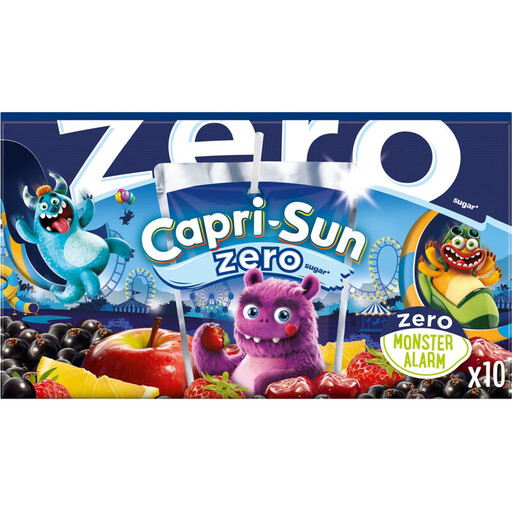
Why it suits this profile: The 200 ml portions are easy to manage and take along to school, work or on a day out.
The nutrition information states 3 kcal and less than 0.5 grams of sugars per 100 ml. Check the current label before use.
10 packs of 0.2 litres; fruit drink with 7% fruit content and sweetener.
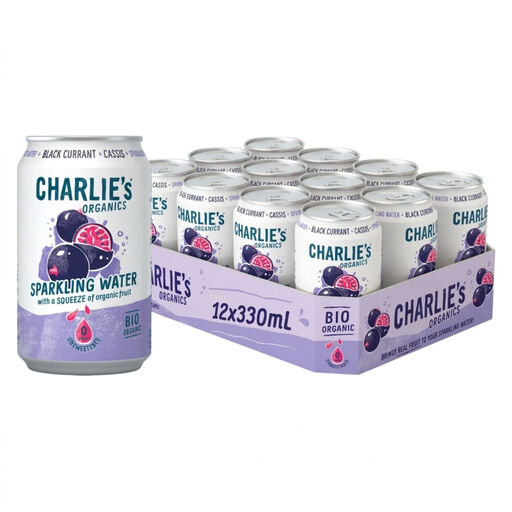
Why it suits this profile: A good choice if you’re looking for fruit-flavoured sparkling water with a fruity taste and no sugar according to the stated nutritional values.
The ingredients and nutritional values are clearly stated: 94.8% sparkling water, 5.2% organic juice and 0 grams of sugar per 100 ml.
12 cans of 330 ml; organic blackcurrant and aronia juice; 2 kcal per 100 ml.

Why it suits this profile: A handy stock-up option for offices, parties or households looking for sugar-free cola without caffeine.
This version is clearly labelled caffeine free and states 0 grams of sugar per 100 ml. Always check the packaging when it arrives.
24 cans of 330 ml; 0.3 kcal and 0 grams of sugar per 100 ml according to the product information.
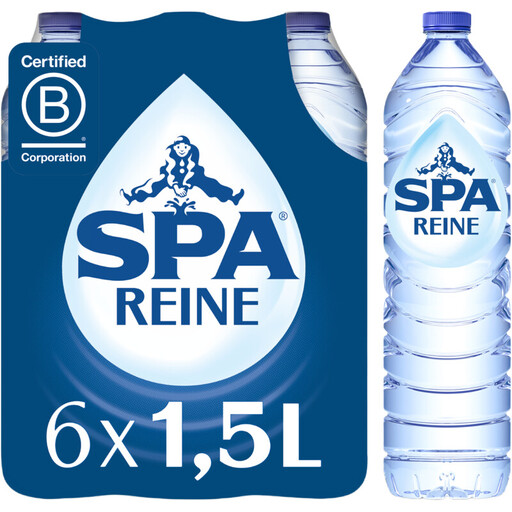
Why it suits this profile: A straightforward option for everyday drinking at home, with no sweeteners, caffeine or flavourings.
According to the product information, the ingredients list contains only natural mineral water. There’s no need to rely on flavour claims to understand what’s in it.
6 bottles of 1.5 litres; 0 kcal and 0 grams of sugar per 100 ml.
We’ve put together a complete, up-to-date list of products that meet these strict selection criteria and comply with current European safety regulations.
Not always to the same extent, but sugar-free fizzy drinks are generally low in energy because they contain no sugar. Check the nutritional values per 100 ml. A drink with 2 kcal per 100 ml provides around 7 kcal in a 330 ml can.
Zero sugar refers to a very low sugar content, in line with the legal requirements for using that claim. No added sugar means no sugar was added during production. Fruit or coconut drinks may still contain natural sugars, so always check the nutrition table.
It depends on your preferences. Plain water has the simplest ingredients. If you’d like more flavour, you could choose fruit-flavoured sparkling water or a zero-sugar fizzy drink. For everyday use, consider caffeine, sweeteners, serving size and how much you drink overall.
