
Buyers with a strict sugar-free requirement
You need a product that you won’t mistakenly present as sugar-free on the buffet. Currant buns containing sultanas or currants therefore need careful checking against the product specification.


Don’t choose an ordinary currant bun for a strictly sugar-free hotel breakfast buffet: the Netherlands Nutrition Centre gives the average sugar content as 15.9 g per 50 g currant bun. If your main aim is to avoid added sugars, check a specific product’s current ingredients list and nutritional information; sultanas and currants can still contribute sugars.
You need a product that you won’t mistakenly present as sugar-free on the buffet. Currant buns containing sultanas or currants therefore need careful checking against the product specification.
You want to offer a familiar breakfast item while distinguishing between added sugar and sugars that occur naturally in dried fruit.
You need to be able to find ingredient, allergen and portion information when rolls are served without their packaging.
First decide whether your buffet needs a strictly sugar-free product or whether the aim is to avoid added sugars. These two requirements call for different ways of assessing a currant bun made with dried fruit.
| What to consider | What to check when buying | Who does this matter most to? |
|---|---|---|
| Sugar-free claim | Check the claim and sugar content on the current packaging; don’t rely on the product category or a search term. | If I describe the buffet as sugar-free, I want to be sure the product I choose can be labelled that way. Around 42% of consumers make this claim their top priority. |
| Added and total sugars | Check the ingredients list for items such as sugar, dextrose and glucose syrup. Compare sugars per 100 g and per serving. | I want to avoid added sugars but still offer a currant bun made with fruit; in that case, the total sugar content is still relevant. This distinction matters most to around 33% of consumers. |
| Allergens and buffet information | Keep the current packaging or product specification available and make sure guests can get allergen information, even when items are served loose. | When rolls are displayed without their packaging, I need to be able to answer questions about allergens. This information is the top priority for around 25% of consumers. |
Sultanas and currants can contribute sugars, even if no sugar has been added to the dough. The two claims therefore don’t mean the same thing for a product on the buffet.
Check the exact wording on the product, and don’t describe an option with no added sugars as sugar-free.
Albert Heijn lists ingredients including sugar, dextrose and glucose syrup for AH Raisin Currant Buns. Jumbo Raisin Currant Buns list dextrose in the ingredients and 24.0 g of sugars per 100 g in the nutritional information.
Check the ingredients and the ‘of which sugars’ line for the variant you’re actually buying. Update buffet labels if the product specification changes.
When items are served loose, the packaging is no longer visible. The Netherlands Food and Consumer Product Safety Authority says that food businesses must inform guests about allergens.
Keep the current product information and make it clear to guests where they can get allergen information.
A reference to baker’s salt on one product tells you nothing about the ingredients of another currant bun. Wetten.nl defines baker’s salt as iodised table salt.
Check the ingredients list for the variant you’ve bought before making a product-specific statement about it on the buffet.
The product information for AH Raisin Currant Buns includes ingredients, allergens and nutritional values.
Jumbo lists Raisin Currant Buns in packs of six, with nutritional information per 100 g and per 65 g.
PLUS lists currant buns, including a pack of six.
Lidl lists currant buns and refers customers to the packaging for ingredients, allergens and nutritional values.
ALDI lists Raisin Currant Buns in a pack of six.
If you’d like to consider another breakfast item alongside currant buns, you could assess this crispbread. It isn’t a currant bun; check the current packaging before making a sugar claim or providing allergen information for the buffet.
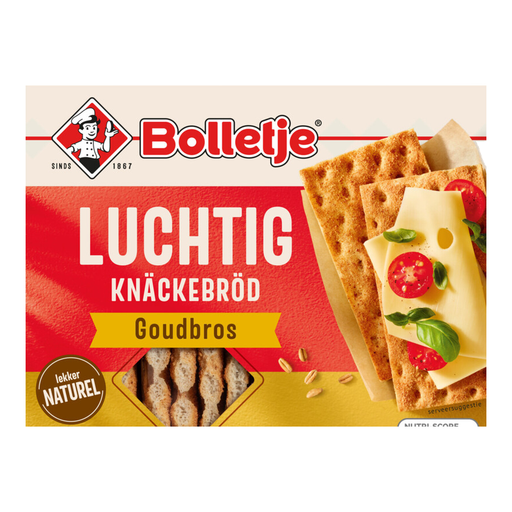 Image unavailable
A crispbread to consider if you’d like to serve another breakfast item alongside currant buns.
Pack size: 240 g. Before serving it at the buffet, check the current packaging for ingredients, sugars per serving and allergens.
Don’t assume so: the Netherlands Nutrition Centre gives the average sugar content as 15.9 g for a 50 g currant bun. Always check a sugar-free claim against the specific product and its current nutritional information; sultanas and currants can also contribute sugars.
No. A product with no added sugars may still contain sugars that occur naturally in ingredients such as sultanas. So check both the ingredients list and the sugar content in the nutritional information.
Make sure guests can get allergen information for the currant buns you serve. The Netherlands Food and Consumer Product Safety Authority says that food businesses must inform customers about allergens, so keep the current product information available to the buffet team.
You can’t assume that every currant bun does. Wetten.nl defines baker’s salt as iodised table salt, but you’ll need to check the ingredients list for the variant you’ve bought to find out what it contains.