If you’re looking for a strictly sugar-free breakfast, don’t choose a standard currant bun: Albert Heijn, Jumbo and PLUS list around 24–25.5 g of sugars per 100 g for the currant buns discussed here. If your main aim is to limit added sugars while stocking up on convenient breakfasts for student accommodation, compare total sugars, portion sizes and storage instructions too. A product with no added sugars isn’t automatically sugar-free.
Who is this choice relevant to?
Student with a strict sugar-free requirement
You want to know whether a product meets that requirement, not just whether less sugar has been added. The currant buns discussed here contain sugars, so check the nutritional information on the packaging of any alternative.
Student looking to limit added sugars
You want to keep a currant bun as a quick breakfast option. Compare added sugars, total sugars and fibre on the same per-100 g basis, rather than relying on the front of the pack.
Student looking to stock up on breakfast
You want to be able to store portions when you move in. Check how many buns you’re buying and whether the packaging instructions say they can be frozen.
What should you look for when choosing?
First decide whether sugar-free is a firm requirement. If you still want to eat a currant bun, compare the nutritional information and choose a pack that suits your storage plans.
| What to consider |
What to check when buying |
Who it matters to |
| Sugar-free requirement |
Read the claim and the ‘of which sugars’ line per 100 g. Don’t assume that ‘no added sugars’ means the same thing. |
If I don’t want any sugar in my breakfast, less added sugar isn’t enough for me. An estimated 42% of consumers put this strict requirement first. |
| Added sugars and fibre |
Compare total and added sugars, and fibre, per 100 g; take portion size into account. |
I want to keep eating currant buns, but I also want to see what has been added on top of the sugars from the fruit. This is the main consideration for around 33% of consumers. |
| Portions and storage |
Check the number of buns and follow the freezing and usage instructions on the packaging. |
In my new room, I want to stock up without buying more buns than I can store. Around 25% of consumers say this practical need is their main priority. |
Common mistakes
-
Reading ‘no added sugars’ as ‘sugar-free’
A product can contain naturally occurring sugars even if no sugars have been added. In currant buns, the sugars from the raisins and currants count towards ‘of which sugars’.
Decide which of the two claims matters to you, then check the nutritional information per 100 g.
-
Looking only at ‘wholemeal’ or the front of the pack
Albert Heijn lists its Extra lang lekker raisin and currant buns as containing 6.1 g of fibre and 25 g of sugars per 100 g. So, while this variety contains more fibre, it isn’t sugar-free.
When comparing products, look at total sugars, added sugars, fibre and portion size side by side.
-
Buying a large bag without a storage plan
A pack intended to last several days is only practical if you can store the buns as instructed.
Check whether they can be frozen and follow the stated usage period. PLUS says its Krentenbollen lekker lang lekker can be frozen at home on the day of purchase and should be used within one month.
Buns you don’t use in time may have to be thrown away.
-
Skipping the allergen information because it’s bread
The Albert Heijn and PLUS currant buns discussed here list wheat and milk ingredients, among other things.
Check the current ingredients and allergen information every time you buy, especially if you switch brand or variety.
Brands to compare
Albert Heijn
Albert Heijn lists both regular and Extra lang lekker raisin and currant buns.
- The Extra lang lekker variety lists 1.7 g of added sugars and 6.1 g of fibre per 100 g; the regular variety lists 2.2 g of added sugars and 2.9 g of fibre per 100 g.
- Both varieties list 25 g of total sugars per 100 g. Check the current allergen information too.
Jumbo
Jumbo lists raisin and currant buns and also offers breakfast cereals as a different type of product.
- This lets you compare a currant bun with breakfast in a different format if added sugars are the deciding factor for you.
- Jumbo lists 24.0 g of sugars per 100 g for its Rozijnen Krentenbollen. Breakfast cereal isn’t a currant bun, so you’ll need to assess it using its own nutritional information.
PLUS
PLUS lists currant buns in several pack sizes, including a lekker-lang-lekker variety.
- PLUS says this variety can be frozen at home on the day of purchase and should be used within one month.
- According to the product information, the PLUS currant buns discussed here still contain around 25 g of total sugars per 100 g; check the allergens too.
ALDI
ALDI describes raisin and currant buns in a pack of six.
- The number of buns can help if you’re looking for a pack that suits your plans for student accommodation.
- Check the packaging for sugars, ingredients and allergens before comparing this variety with other currant buns.
Lidl
Lidl describes currant buns with currants, sold in packs of six, as an in-store product.
- The pack size is useful when planning portions.
- Check the nutritional information and ingredients in store if you want to compare sugars or allergens.
Bolletje
Bolletje offers rusks and crackers, among other things, for anyone considering a different breakfast format.
- A different format could work if you’re open to something other than a soft currant bun.
- Assess each product you choose individually by checking its claims, ingredients and nutritional information; rusks and crackers aren’t automatically sugar-free.
Other breakfast products at Joybuy
These muesli and granola products are worth considering if you’re looking for a different breakfast format from currant buns. Compare their nutritional information and ingredients on the packaging with your own requirements around sugars; the product names alone don’t tell you enough.
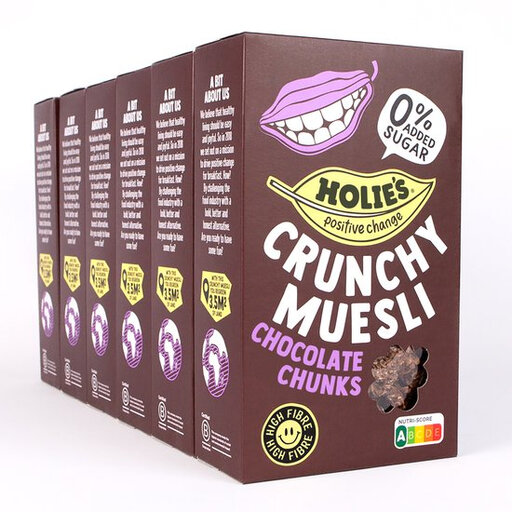 Image unavailable
Holie's Crunchy Muesli Chocolate Chunks, 6 × 400 g
A muesli to consider if you’re open to something other than a currant bun for breakfast in student accommodation.
Pack size: 6 × 400 g. Check the packaging for sugars per 100 g, ingredients and allergens.
View at Joybuy
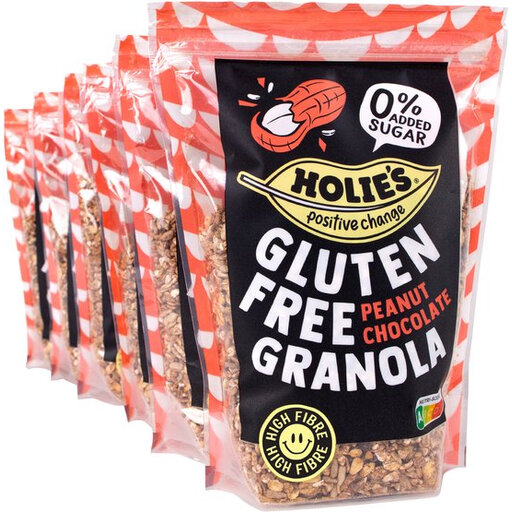 Image unavailable
Holie's Granola Glutenfree Peanut Chocolate, 6 × 330 g
A granola to compare if a different breakfast format could work for you.
Pack size: 6 × 330 g. Check the packaging for sugars and allergens; don’t assume it’s suitable for a particular diet based only on ‘Glutenfree’ in the product name.
View at Joybuy
Frequently asked questions
Are standard currant buns sugar-free?
The currant buns discussed here aren’t sugar-free. Jumbo lists 24.0 g of sugars per 100 g for its Rozijnen Krentenbollen; the varieties discussed from Albert Heijn and PLUS list around 25–25.5 g per 100 g. Check the nutritional information on the specific pack you buy.
What’s the difference between sugar-free and no added sugars?
Sugar-free refers to the sugars in the product; no added sugars refers to what has been added to it. Under European rules for the latter claim, no mono- or disaccharides or foods used for their sweetening properties may be added. Naturally occurring sugars may still appear in the nutrition table.
Can I freeze currant buns for my first few weeks in student accommodation?
According to the product information, the Albert Heijn and PLUS varieties discussed here can be frozen on the day of purchase. PLUS says its Krentenbollen lekker lang lekker should be used within one month. Always follow the storage and usage instructions on your pack.
Which allergens should I check in currant buns?
At the very least, check the current information for cereals containing gluten and milk ingredients. These are listed in the product information discussed here from Albert Heijn and PLUS; other ingredients and possible traces can vary by product. So use the packaging for the variety you choose as your guide.


