If you want cornflakes that are strictly sugar-free, choose a product containing no more than 0.5 g of sugars per 100 g, the limit set by EU Regulation (EC) No 1924/2006. According to Jumbo, the Smaakt Bio Cornflakes Ongezoet listed online contain 1.0 g of sugars per 100 g; Jumbo Special Flakes contain 1.3 g, while Kellogg’s Corn Flakes contain 8.0 g per 100 g according to Kellogg’s Netherlands. If your main aim is to avoid added sugar, other products may be worth considering. Before ordering, also check the ingredients, fibre and salt content.
Who should care about this distinction?
People looking for strictly sugar-free products
For you, the ‘of which sugars’ figure is what matters: under EU Regulation (EC) No 1924/2006, a product labelled ‘sugar-free’ can contain no more than 0.5 g of sugars per 100 g. Simply seeing ‘unsweetened’ on an online product page isn’t enough.
People avoiding added sugar
You’re happy with naturally occurring sugars, but want to know what has been added to the breakfast cereal. So check both the ingredients list and the nutritional information per 100 g; a product with no added sugar isn’t necessarily sugar-free.
People who also keep an eye on fibre
You’re considering breakfast cereals other than cornflakes and comparing fibre, sugars and salt per 100 g. Check the ingredients too if you want to avoid sweeteners or particular grains.
What should you look for when choosing?
Before using online filters, decide whether ‘sugar-free’ is an absolute must. If you’re looking for no added sugar or a different nutritional profile instead, compare the latest nutritional information for products in the same category, per 100 g.
| What to consider |
What to check before buying |
Who it matters to |
| Strictly sugar-free |
Check the ‘of which sugars’ figure per 100 g. Under EU Regulation (EC) No 1924/2006, the ‘sugar-free’ claim is limited to a maximum of 0.5 g of sugars per 100 g. |
If sugar-free is a must for me, I don’t want to rely on the word ‘unsweetened’. For around 42% of these consumers, this strict limit comes first. |
| No added sugar |
Check the ingredients list as well as the sugars figure per 100 g; naturally occurring sugars are included in that figure too. |
I want to avoid added sugar, but I don’t need to rule out every product containing natural sugars. This is the main consideration for around 33% of these consumers. |
| Fibre and ingredients |
Compare fibre, sugars and salt per 100 g, and check the ingredients list to see which grains and any sweeteners have been used. |
If I’m considering other breakfast cereals too, I want to compare more than just the sugar content. This is the main consideration for around 25% of these consumers. |
Common mistakes
-
Assuming ‘unsweetened’ means ‘sugar-free’
A product with no added sugar can still contain sugars. Jumbo lists 1.0 g of sugars per 100 g for Smaakt Bio Cornflakes Ongezoet and 1.3 g per 100 g for Jumbo Special Flakes.
If you need a strictly sugar-free product, check the sugars per 100 g against the maximum limit of 0.5 g set by EU Regulation (EC) No 1924/2006.
-
Comparing only the sugar content
Breakfast cereals can also differ in their fibre, salt and ingredients. Jumbo lists 7.2 g of fibre and 1.15 g of salt per 100 g for Special Flakes; the ingredients list includes maltitols.
Compare products per 100 g and check the ingredients if you want to avoid particular grains or sweeteners.
-
Thinking added vitamins answer your sugar concerns
Kellogg’s Netherlands lists vitamins and iron for Corn Flakes, but sugar is also an ingredient, and the product contains 8.0 g of sugars per 100 g.
Consider the sugar content separately if it’s a deciding factor for you.
-
Waiting until checkout to check delivery terms
Placing a separate order may be inconvenient if the minimum order value or available delivery slot doesn’t fit in with your shopping plans.
Before filling your basket, check whether delivery is available to your postcode and what the delivery or collection terms are.
Brands worth comparing
Smaakt
Smaakt Bio Cornflakes Ongezoet is a cornflake made from maize for anyone looking for a short ingredients list and no added sugar.
- Jumbo lists organic maize as an ingredient, with 1.0 g of sugars, 3.1 g of fibre and 0.01 g of salt per 100 g.
- At 1.0 g of sugars per 100 g, it doesn’t meet the ‘sugar-free’ limit. If you have allergies, also check the listed possible traces.
Jumbo
Jumbo Special Flakes is an alternative breakfast cereal for anyone who also wants to compare wholegrains and fibre; it isn’t made solely from maize.
- The product information lists wholegrain wheat and rice, with 7.2 g of fibre per 100 g.
- Jumbo also lists maltitols, 1.3 g of sugars and 1.15 g of salt per 100 g. As it contains wheat, it isn’t suitable for anyone who needs to avoid gluten.
Kellogg’s
According to Kellogg’s Netherlands, Kellogg’s Corn Flakes are classic maize cornflakes with added vitamins and iron.
- The manufacturer lists maize and barley malt extract in the ingredients.
- The ingredients also include sugar; with 8.0 g of sugars per 100 g, this product isn’t suitable for a strictly sugar-free selection.
Golden Bridge
Golden Bridge is the own-brand name under which ALDI Netherlands lists cornflakes and other breakfast cereals.
- ALDI Netherlands lists Golden Bridge Cornflakes in a 500 g pack.
- Before choosing these cornflakes as a sugar-free option, check the latest product information or packaging for the ingredients and sugars per 100 g.
Alternative breakfast cereals at Joybuy
These products are crunchy muesli, not cornflakes. Consider them only if you’re also looking at other breakfast cereals; the name ‘Zero Sugar’ doesn’t prove that they meet the limit for strictly sugar-free products.
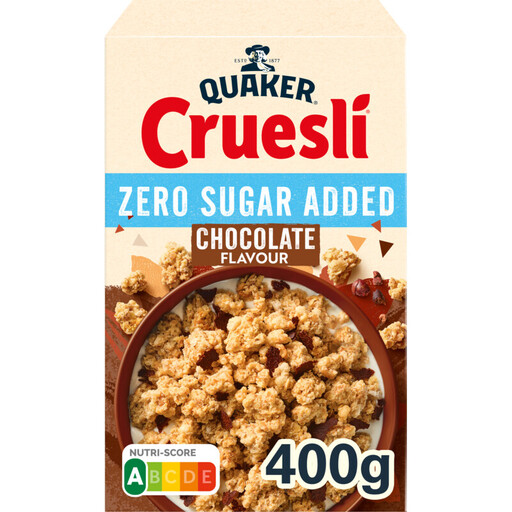 Image unavailable
Quaker Cruesli Choco Zero Sugar, 400 g
An alternative if you’d like to order crunchy muesli rather than cornflakes. For a strictly sugar-free choice, check the sugars per 100 g on the latest packaging, and read the ingredients and allergen information.
View at Joybuy
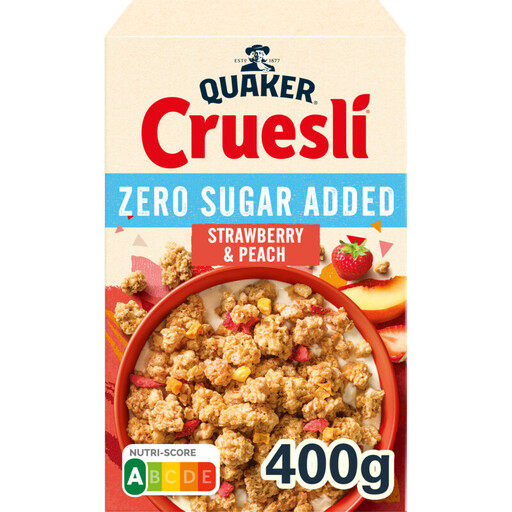 Image unavailable
Quaker Cruesli Zero Sugar Added Strawberry & Peach, 400 g
A strawberry and peach muesli option for anyone who isn’t set on cornflakes. Before buying, compare the sugars per 100 g with your own criteria and check the latest ingredients and allergen information.
View at Joybuy
Frequently asked questions
When can cornflakes be labelled ‘sugar-free’?
Under EU Regulation (EC) No 1924/2006, the ‘sugar-free’ claim is limited to a maximum of 0.5 g of sugars per 100 g. So when checking cornflakes, look at the ‘of which sugars’ figure per 100 g rather than relying only on wording on the front of the pack.
Does ‘no added sugars’ mean the product contains no sugars?
No, the product may still contain naturally occurring sugars. For example, Jumbo says Smaakt Bio Cornflakes Ongezoet has no added sugar, but it does contain 1.0 g of sugars per 100 g.
How can I compare different breakfast cereals online?
Compare products in the same category per 100 g, rather than comparing serving sizes alone. The Voedingscentrum recommends checking factors including sugars and fibre when comparing breakfast cereals; also look at the salt content and ingredients list.
What should I check just before ordering online?
Check the latest nutritional information, ingredients, allergens, pack size and availability. Albert Heijn notes that product information can change; for delivery, also check that your chosen slot and the terms suit your postcode.


