
Shoppers with a strict sugar-free requirement
For you, the total amount of sugars matters, not just what’s printed on the front of the pack. Compare the ‘of which sugars’ figure per 100 g with the EU limit for the ‘sugar-free’ claim.


If you’re looking for strictly sugar-free chocolate breakfast cereals for the weekend, check that the nutrition information lists no more than 0.5 g of sugars per 100 g. Under EU Regulation (EC) No 1924/2006, this is the limit for the ‘sugar-free’ claim. If your main aim is to avoid added sugars, also check whether the product contains sweeteners, and look at the serving size and allergens. ‘No added sugars’ doesn’t mean the same as sugar-free.
For you, the total amount of sugars matters, not just what’s printed on the front of the pack. Compare the ‘of which sugars’ figure per 100 g with the EU limit for the ‘sugar-free’ claim.
You’re looking for chocolate breakfast cereals with no added sugars and no sweeteners. Albert Heijn lists both of these features for Quaker Cruesli zero sugar added chocolate, but also states that the product contains naturally occurring sugars.
You mainly want to compare the nutritional information and ingredients in muesli for your weekend breakfast. As well as sugars, check the serving size, fibre, any polyols and the allergen information.
First, decide whether sugar-free is a firm requirement or whether you mainly want to avoid added sugars. Then compare the sweeteners and ingredients on the label of the product you’re considering.
| What to look for | What to check before buying | Who it matters to |
|---|---|---|
| Genuinely sugar-free | Check the ‘of which sugars’ figure per 100 g. Under Regulation (EC) No 1924/2006, the EU ‘sugar-free’ claim allows a maximum of 0.5 g of sugars per 100 g. | I want my chocolate breakfast cereal to meet a strict sugar-free requirement, even if the pack says ‘zero’ or ‘0%’; for around 42% of consumers, this check matters most. |
| Added sugars and sweeteners | Compare the claim about added sugars with the ingredients list and any warnings about polyols. | Chocolate flavour with no added sugar appeals to me, but I also want to know whether it contains sweeteners; around 33% of consumers say this combination is their top priority. |
| Serving size and ingredients | Compare the nutrition information per 100 g, and check the stated serving size and allergen information. | For my weekend breakfast, I’m looking for something crunchy that’s easy to serve, while still being able to assess the ingredients and serving size; around 25% of consumers put this practical choice first. |
Albert Heijn lists 0.6 g of sugars per 100 g for AH Krokante muesli chocolade 0% suiker. That’s above the EU limit of no more than 0.5 g per 100 g for the ‘sugar-free’ claim, even though Albert Heijn lists 0 g of added sugars.
If you have a strict requirement, use the ‘of which sugars’ figure per 100 g rather than relying only on the claim on the front of the pack.
A low sugar figure doesn’t tell you which ingredients provide the sweet taste. Albert Heijn lists maltitols in its crunchy chocolate muesli and warns that excessive consumption may have a laxative effect.
Check the ingredients list and any warnings if you want to avoid sweeteners or are mindful of your tolerance.
Albert Heijn’s product information gives a 40 g serving for its chocolate muesli; for the Quaker version, it also shows a prepared serving with yoghurt. These serving sizes aren’t a like-for-like basis for comparison.
Compare the nutrition information per 100 g and check the allergens on the current packaging for both products.
Albert Heijn presents Quaker Cruesli zero sugar added chocolate 400 g as chocolate cruesli with no added sugars and no sweeteners.
AH Krokante muesli chocolade 0% suiker 400 g is Albert Heijn’s own-brand chocolate muesli, with nutrition information and ingredients listed by the retailer.
Jumbo’s breakfast cereal category includes both Quaker Cruesli Zero Sugar Added Chocolade and regular chocolate breakfast cereals.
These products offer different ways to enjoy chocolate at breakfast: cruesli, crunchy muesli, cocoa hoops and granola. Check the total sugars per 100 g for each product individually; a name containing ‘Zero Sugar’ doesn’t by itself confirm that the product is sugar-free.
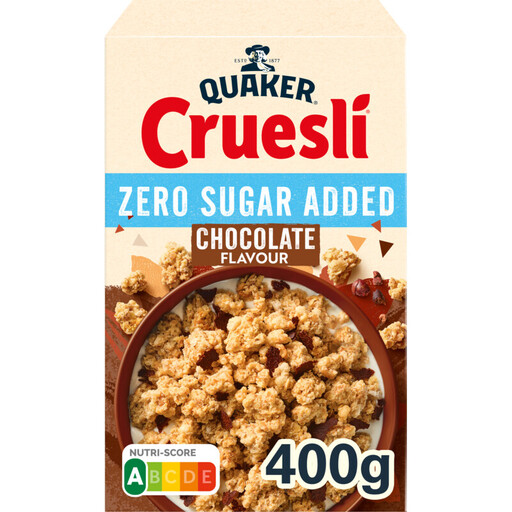 Image unavailable
Chocolate cruesli to consider if you’re specifically looking for cruesli for your weekend breakfast. Check the ‘of which sugars’ figure per 100 g before taking the name as a sugar-free claim.
If you’re choosing based on ingredients, also check the current allergen information.
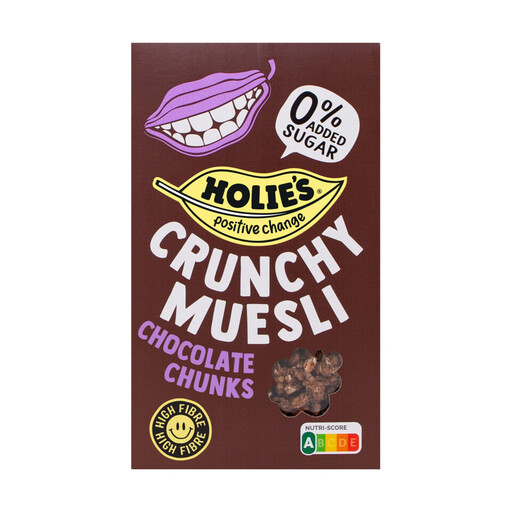 Image unavailable
An option if you’re looking for crunchy chocolate muesli rather than cruesli or cocoa hoops. Compare the total sugars and fibre per 100 g, and check the ingredients and allergens.
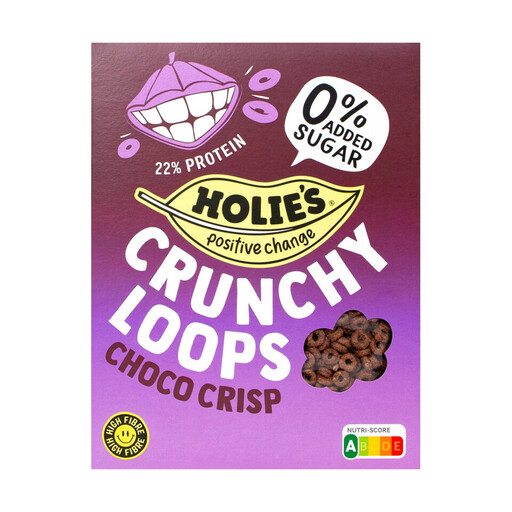 Image unavailable
Worth a look if you’d rather serve cocoa hoops than chocolate muesli at the weekend. Check the current nutrition information and ingredients list before assessing any sugar or dietary claims.
Check the allergen information carefully if peanuts or gluten are a concern for you.
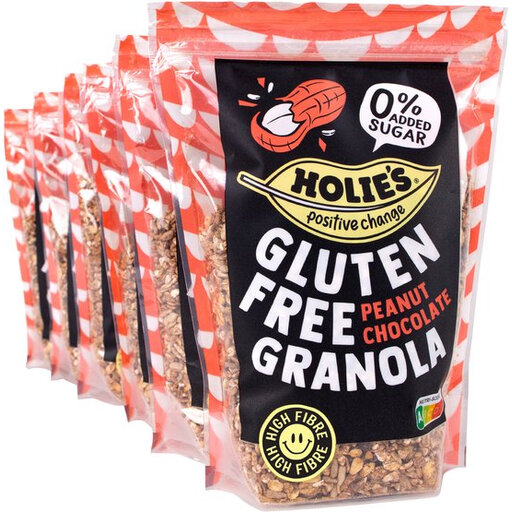 Image unavailable
A chocolate and peanut granola to consider if you’re looking for this flavour combination and want a pack of 6 × 330 g. Check the total sugars per 100 g, and compare fibre values only when the serving basis is clear.
Check dietary claims and allergens against the current packaging.
No. Under EU Regulation (EC) No 1924/2006, a product can contain no more than 0.5 g of sugars per 100 g or 100 ml to carry the ‘sugar-free’ claim. A product with no added sugars may still contain naturally occurring sugars. So check the total sugars on the label.
No. The nutrition information listed by Albert Heijn gives 0.6 g of sugars per 100 g, which is above the EU limit of 0.5 g per 100 g for the ‘sugar-free’ claim. The product information lists 0 g of added sugars per 100 g; check the current packaging when you buy it.
Check which sweeteners are listed in the ingredients and whether the packaging includes a warning. Albert Heijn lists maltitols in its crunchy chocolate muesli and warns that excessive consumption may have a laxative effect.