What should you look for when choosing?
First decide whether ‘sugar-free’ is a must-have or whether you mainly want to avoid added sugar. After that, differences in sweeteners, fibre and preparation can help you choose the right cereal for weekday breakfasts.
Strictly sugar-free
When: if only cereals with no more than 0.5 g of sugars per 100 g meet your requirements.
Consider: ‘no added sugars’ isn’t enough; naturally occurring sugars count too.
No added sugars
When: if you’re happy with naturally occurring sugars and mainly want to avoid added sugars.
Consider: check separately whether the product contains sweeteners; its sugar content may still be above the ‘sugar-free’ threshold.
| What to consider |
What to check |
Especially relevant if |
| Sugars per 100 g |
Check ‘of which sugars’ in the nutritional information. Regulation (EC) No 1924/2006 sets a maximum of 0.5 g per 100 g for the ‘sugar-free’ claim. |
‘Sugar-free’ is a must-have for me, so I don’t want to rely on wording on the front of the pack. Around 36% of consumers put this strict sugar threshold first. |
| Additives |
Check the ingredients list for added sugars and sweeteners, including polyols such as maltitol. |
I’m happy with naturally occurring sugars, but want to know what has been added. For around 29% of consumers, the choice of ingredients matters most. |
| Fibre and portion size |
Compare fibre on the same basis, for example per 100 g, then consider how much you actually put in your bowl. |
For a breakfast I eat regularly, I want to compare the fibre content of my portion as well as my sugar choice. This is the first additional consideration for around 21% of consumers. |
| Allergens and preparation |
Check the allergen declaration, any warnings about possible traces, and the portion and preparation information on the current pack. |
If I need to avoid certain ingredients or have little time in the morning, the product also needs to work for my breakfast routine. Around 14% of consumers say these requirements come first. |
Chocolate breakfast cereals at Joybuy
These chocolate breakfast cereals are worth considering if you’re looking at varieties with no added sugars and are happy with naturally occurring sugars. Don’t use them as a substitute for a product that must meet strict sugar-free requirements; check the nutritional information and ingredients on the pack you buy.
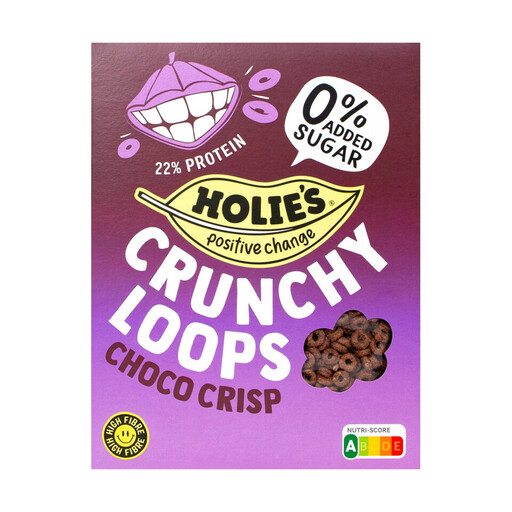 Image unavailable
Holie's Crunchy Loops Choco Crisp, 350 g
A chocolate breakfast cereal to consider if you want to avoid added sugars but are happy with naturally occurring sugars. Its stated sugar content means it isn’t suitable if you have a strict sugar-free requirement; compare the current label per 100 g.
View at Joybuy
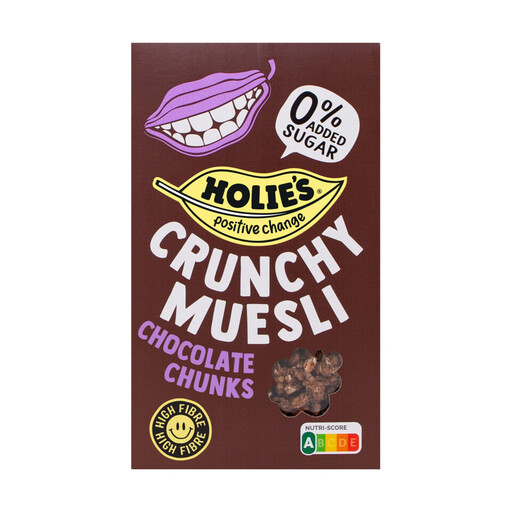 Image unavailable
Holie's Crunchy Muesli Chocolate Chunks, 400 g
This chocolate muesli may suit you if you’re mainly keeping an eye on added sugars. Its stated sugar content means it doesn’t meet strict sugar-free requirements; check the ingredients and allergens on the current pack before adding it to your breakfast.
View at Joybuy
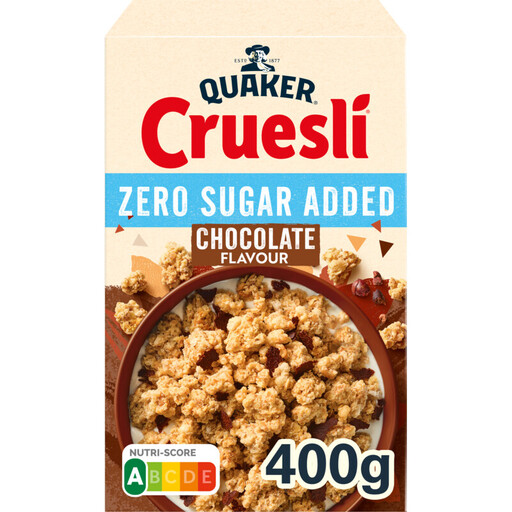 Image unavailable
Quaker Cruesli Choco Zero Sugar, 400 g
A variety to consider if you want to avoid added sugars and sweeteners but are happy with naturally occurring sugars. Its stated sugar content is above the ‘sugar-free’ threshold; also check the ingredients and allergens on the packaging.
View at Joybuy
Frequently asked questions
What’s the difference between sugar-free and no added sugars?
Under Regulation (EC) No 1924/2006, ‘sugar-free’ means no more than 0.5 g of sugars per 100 g, or per 100 ml for drinks. ‘No added sugars’ doesn’t rule out naturally occurring sugars. So, when choosing chocolate breakfast cereals, check both the claim and the ‘of which sugars’ figure per 100 g.
Is AH Krokante muesli chocolade 0% suiker sugar-free?
No, not according to the European threshold for the ‘sugar-free’ claim: Albert Heijn lists 0.6 g of sugars per 100 g for this variety, while the maximum is 0.5 g per 100 g. The wording about added sugar on the packaging answers a different question.
Why should I check polyols as well as the sugar content?
Because a product can contain polyols as well as having a low sugar content. Albert Heijn lists maltitol and 23 g of polyols per 100 g in its crunchy chocolate muesli; the packaging warns that excessive consumption may have a laxative effect. So check the ingredients and warnings if you’re considering this variety.
How do I compare two chocolate breakfast cereals for a weekday breakfast?
First compare the sugars per 100 g against your own requirements, then compare fibre on the same basis. Next, work out what portion you’ll have and what you’ll add, such as milk or yoghurt. Check the ingredients and allergens on both packs separately.


