
Shoppers with a strict sugar-free requirement
You only want to choose breakfast cereals that meet the EU threshold for the sugar-free claim. A statement that no sugar has been added isn’t enough for you.


If sugar-free is a strict requirement, only choose chocolate breakfast cereals that contain no more than 0.5 g of sugars per 100 g, as shown in the nutrition table. The Albert Heijn and Quaker chocolate varieties discussed here exceed this limit, even though their names refer to no added sugar. If you’re happy with naturally occurring sugars, compare the ingredients, allergens, fibre and pack size before stocking up for the whole week.
You only want to choose breakfast cereals that meet the EU threshold for the sugar-free claim. A statement that no sugar has been added isn’t enough for you.
You’re happy with naturally occurring sugars, but you’re looking for chocolate breakfast cereals with no added sugars and, ideally, no sweeteners either.
You’re buying breakfast for several days and want to know more than just the nutritional value: how much is in each pack, how to store it and whether the ingredients are suitable for your household.
Start by deciding whether sugar-free is a strict requirement for you. Only then is it worth comparing no-added-sugar varieties for sweeteners and features that matter when buying a week’s supply.
Choose this only if: the product lists no more than 0.5 g of sugars per 100 g.
Limitations: based on their stated sugar content, the Albert Heijn and Quaker chocolate varieties discussed here don’t qualify.
Suitable if: you’re happy with naturally occurring sugars but also want to avoid added sweeteners.
Bear in mind: Albert Heijn says Quaker Cruesli Zero Sugar Added Chocolade contains no added sugars or sweeteners, but Jumbo lists 3.4 g of sugars per 100 g.
Suitable if: you want to avoid added sugar and don’t mind sweeteners.
Bear in mind: Albert Heijn says AH Krokante muesli chocolade 0% suiker contains maltitols; the packaging warns that excessive consumption may have a laxative effect.
Under Regulation (EC) No 1924/2006, the sugar-free claim may only be used in the EU if a product contains no more than 0.5 g of sugars per 100 g or 100 ml. So compare breakfast cereals by their total sugars per 100 g, not just by the wording on the front of the pack.
| What to consider | What to check | Who it matters to |
|---|---|---|
| Truly sugar-free | Check ‘of which sugars’ per 100 g; the EU sugar-free claim allows a maximum of 0.5 g. | If I only want to stock up on sugar-free breakfast cereals, a claim about added sugar isn’t enough. For around 42% of consumers, this strict requirement comes first. |
| Added sugar and sweeteners | Check the ingredients for added sugars, sweeteners and polyols; also compare total sugars per 100 g. | I’m happy with naturally occurring sugars, but want to choose whether my breakfast contains sweeteners. For around 33% of consumers, avoiding added sugar and sweeteners is the top priority. |
| Suitable for a week’s supply | Compare nutrition information per 100 g and check the pack size, storage instructions and allergens. | When several people are eating from the same supply, I want to know whether the quantity and ingredients suit them. For around 25% of consumers, these practical considerations for the family matter most. |
According to Albert Heijn’s product information, AH Krokante muesli chocolade 0% suiker contains 0.6 g of sugars per 100 g. Jumbo lists 3.4 g per 100 g for Quaker Cruesli Zero Sugar Added Chocolade. Both figures exceed the EU limit of 0.5 g per 100 g for the sugar-free claim.
If sugar-free is a strict requirement, start with ‘of which sugars’ in the nutrition table, then look at claims about added sugar.
A sugar claim doesn’t tell you which sweeteners or allergens a product contains. Albert Heijn lists maltitols in its chocolate muesli and warns against excessive consumption; according to Jumbo, the Quaker variety discussed here contains cereals containing gluten and milk.
Read the ingredients and allergen information before buying several packs, especially if different members of your household will be eating them.
The AH variety discussed here uses a 40 g serving, while Quaker shows information for 45 g of product with yoghurt. These serving sizes aren’t directly comparable.
Compare sugars and fibre per 100 g first. Then consider how much breakfast cereal your household actually eats at a time.
The own-brand range includes AH Krokante muesli chocolade 0% suiker in a 400 g pack.
The Zero Sugar Added Chocolade variety discussed here is a 400 g chocolate cruesli with no added sugars.
Jumbo lists a range of chocolate breakfast cereals, including Quaker Cruesli Zero Sugar Added Chocolade.
These products may be worth considering if you’re shopping for chocolate breakfast cereals for the week and want to assess a product name that says ‘zero sugar’ or a larger pack. Check the nutrition table on the packaging to see whether a product meets your requirements for sugar-free or no added sugars.
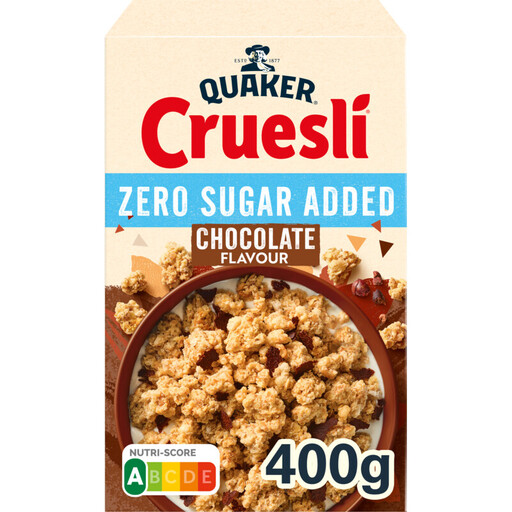 Image unavailable
If you’re considering chocolate cruesli and want to compare the sugar information, check ‘of which sugars’ per 100 g before relying on the Zero Sugar name.
400 g pack. If several members of your household will be eating it, also read the ingredients and allergen information.
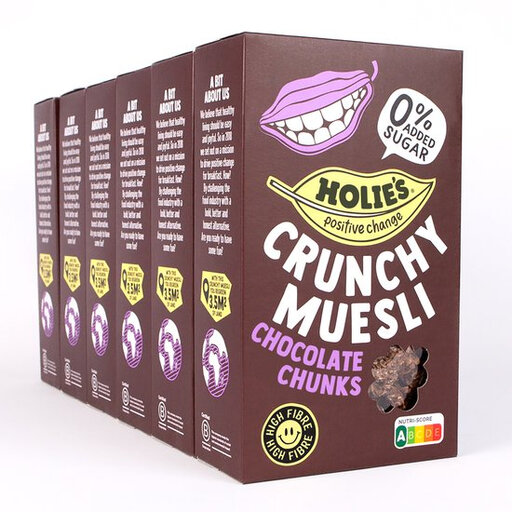 Image unavailable
The multipack may suit a planned weekly shop; before buying, check that the ingredients and nutrition information are right for your household.
The product name lists 6 x 400g. If sugar-free is a strict requirement, check the total sugars per 100 g.
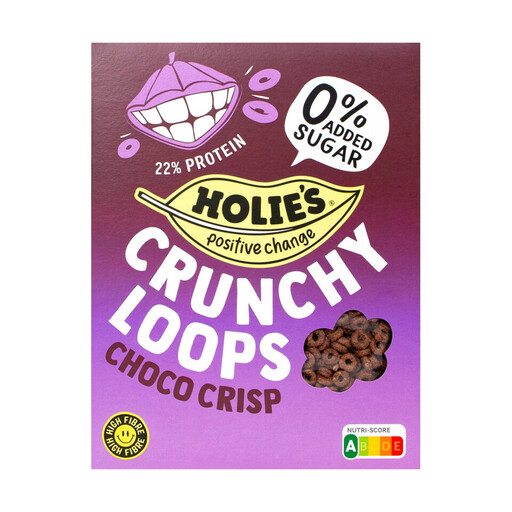 Image unavailable
If you’re considering chocolate breakfast cereal in ring form, compare the nutrition information per 100 g and read the ingredients if you also want to avoid sweeteners.
The product name lists a 350gr pack. Check the allergen information if several people will be eating it.
Under Regulation (EC) No 1924/2006, the sugar-free claim may only be used in the EU if a product contains no more than 0.5 g of sugars per 100 g or 100 ml. No added sugars doesn’t automatically mean that the total sugar content is below this limit.
No. Albert Heijn lists 0.6 g of sugars per 100 g, which is above the EU limit of 0.5 g per 100 g for the sugar-free claim. The statement that it contains 0 g of added sugars refers to something different from the total sugars.
Compare total sugars and other nutrition information for similar products per 100 g, as recommended by the Netherlands Nutrition Centre. Then check the pack size, ingredients, allergens and storage instructions; serving sizes on packaging can vary.
Follow the storage instructions on the pack you buy. Albert Heijn recommends storing the chocolate muesli discussed here in a cool, dark and dry place, with the pack tightly closed. According to the product information, the Quaker variety discussed here should be stored in a cool, dry place, with the bag rolled up after use.