If both chocolate and a ‘sugar-free’ claim matter, choose a chocolate variety only if the current packaging confirms that claim. Also check the ingredients, allergens, nutritional information and portion size: a sugar claim doesn’t automatically make a biscuit a balanced part of a school lunch. If the product contains polyols, check the warning on the label too, and ask the school what its allergen policy is.
Who is this choice relevant to?
Parents looking to limit sugar
Want to compare the sugar content of a biscuit without losing sight of its energy and other nutritional information. The Netherlands Nutrition Centre points out that sugar-free biscuits can still be high in energy and low in nutrients.
Pupils who want chocolate
Are looking for a chocolate biscuit, not a plain sugar-free biscuit. So check that both the chocolate variety and the sugar claim appear on the same packaging.
Families checking allergens and polyols
Need to know about ingredients and allergens, any polyols, and the school’s rules on bringing in or sharing food before packing a biscuit.
What should you look for when choosing?
First decide whether you need both chocolate and a sugar claim. Then compare the current label with the portion you’ll be packing for school.
| What to consider | What to check when buying | Who it matters to |
|---|
| Sugar and nutritional information |
Read the exact sugar claim and compare ‘of which sugars’ and energy per 100 g and per portion. |
If I want to limit sugar, I need to know what’s in the portion being taken to school without ignoring the rest of the nutritional information. This is the top priority for around 36% of consumers. |
| Allergens and school rules |
Read the allergen information and any relevant ‘may contain’ warnings on the pack; ask about the school’s rules. |
If a pupil needs to take allergens or school rules into account, I don’t want to pack the biscuit until I have clear information. This check comes first for around 29% of consumers. |
| Polyols and portion size |
Check the ingredients and any warnings about polyols, and find out how many biscuits make up one portion. |
For a school day, I want to choose a portion the pupil is used to, especially if the biscuit contains polyols. Portion size and tolerance are the main concerns for around 21% of consumers. |
| Buying again |
When you buy again, check the chocolate variety, sugar claim and label once more. |
For regular school lunches, I want to be able to recognise the same type of biscuit without mistaking a plain biscuit for a chocolate cookie. This repeatable choice is the deciding factor for around 14% of consumers. |
Common mistakes when choosing
-
Taking ‘sugar-free’ as a verdict on the whole lunch
The Netherlands Nutrition Centre says that sugar-free biscuits can still be high in energy and low in nutrients. A sugar claim doesn’t tell you what else is in the biscuit or the lunch.
Also compare the nutritional information per portion, and don’t use the biscuit as a replacement for the rest of the lunch.
-
Mistaking a sugar-free biscuit for a chocolate biscuit
AH Digestive 0% suiker and Verkade San Francisco Zero are not chocolate biscuits. So they won’t meet a purchase requirement where chocolate is essential.
Also check the exact sugar claim on the label of your chosen chocolate variety.
-
Only checking the sugar content when polyols are involved
The Netherlands Nutrition Centre says that large amounts of polyols can cause bowel problems. Albert Heijn warns that AH Digestive 0% suiker may have a laxative effect if consumed in excess.
Read the ingredients and follow the warning and portion information on the packaging.
-
Relying on an old label or assumptions about school rules
Ingredients and allergen information can change. Schools may also have their own rules about bringing in or sharing food.
Check the pack you’re actually buying, and ask the school what rules apply at the time.
Brands and product ranges to consider
Céréal
Albert Heijn lists a Céréal Chocolate chip cookie without sugars. The product name therefore matches both the desire for chocolate and the sugar claim.
- The product name explicitly says ‘Chocolate chip cookie’ and ‘without sugars’.
- Before buying, check the current packaging for ingredients, allergens, nutritional information and portion size, especially if any of these are key to your choice.
Albert Heijn
AH Digestive 0% suiker is a biscuit for anyone looking to limit sugar who doesn’t have to choose chocolate.
- Albert Heijn states that AH Digestive 0% suiker contains 0.3 g of sugars, 14 g of polyols and 5.7 g of fibre per 100 g.
- It isn’t a chocolate biscuit. Albert Heijn says it contains wheat, may contain barley, oats and rye, and carries a warning that excessive consumption may have a laxative effect.
Verkade
Verkade San Francisco Zero is a biscuit with no added sugars, not a confirmed chocolate variety.
- Verkade states that San Francisco Zero contains 1.7 g of sugars per 100 g.
- Verkade says the product contains wheat, milk and soya, and may contain other cereals containing gluten.
Joybuy products: regular chocolate biscuits
This chocolate biscuit is a good fit for a lunchbox if chocolate matters but a sugar-free option isn’t essential.
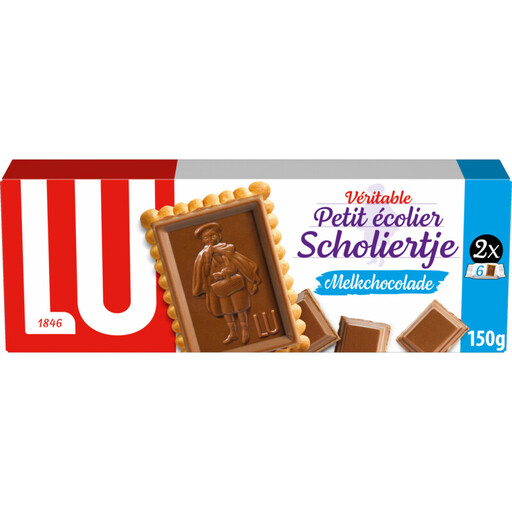 Image unavailable
LU Scholiertje milk chocolate biscuits 150 g
A regular chocolate biscuit for a school lunch when limiting sugar isn’t essential.
Albert Heijn states that LU Scholiertje melk contains 39 g of sugars per 100 g. Check the current packaging to find out how much sugar is in the portion you’ll be packing.
According to Albert Heijn, this product contains milk, wheat, soya and cereals containing gluten, and may contain nuts. Check the current label before packing it, and bear the school’s rules in mind.
View on Joybuy
Frequently asked questions
Is a sugar-free chocolate biscuit automatically a balanced school lunch?
No. The Netherlands Nutrition Centre points out that sugar-free biscuits can still be high in energy and low in nutrients. Check the nutritional information per portion and consider the biscuit as part of the whole lunch.
What should I check if a biscuit contains polyols?
Read the ingredients, portion information and any warnings on the packaging. The Netherlands Nutrition Centre says that large amounts of polyols can cause bowel problems; Albert Heijn warns that AH Digestive 0% suiker may have a laxative effect if consumed in excess.
How do I check for gluten and other allergens before packing a lunchbox?
Use the allergen information on the packaging you buy, and ask the school what rules it has about bringing in and sharing food. For example, Verkade lists wheat, milk and soya for San Francisco Zero; Albert Heijn lists milk, wheat, soya and cereals containing gluten for LU Scholiertje melk.


