
If you want to serve a strictly sugar-free treat
You’re looking for a birthday treat that meets the threshold for ‘sugar-free’. If a canoe pastry doesn’t meet it, you could choose a different type of product.


For a strictly sugar-free birthday treat, choose a canoe pastry only if the nutritional information for that exact variety lists no more than 0.5 g of sugars per 100 g—the limit for the ‘sugar-free’ claim set out by EUR-Lex. The standard canoe pastries for which Jumbo and PLUS list sugar values exceed that limit. If the canoe shape isn’t important, you could consider a different treat, but ‘no added sugars’ or ‘zero’ doesn’t prove on its own that a product is sugar-free.
You’re looking for a birthday treat that meets the threshold for ‘sugar-free’. If a canoe pastry doesn’t meet it, you could choose a different type of product.
You’d like to offer something different alongside the usual treats and are open to a product with no added sugars or less sugar. You don’t automatically take those claims to mean ‘sugar-free’.
For you, the shape and taste of a traditional canoe pastry matter most. You check the sugar content and, if any guests have allergies, check the ingredients of the variety you choose.
First, decide whether ‘sugar-free’ is a firm requirement for the birthday. Only then choose between a different type of treat and a standard canoe pastry.
| What to consider | What to check | Who it matters to |
|---|---|---|
| Sugar-free | Check the ‘of which sugars’ value per 100 g for the exact variety. According to EUR-Lex, a product making the ‘sugar-free’ claim may contain no more than 0.5 g of sugars per 100 g. | If sugar-free is a firm requirement for my birthday treat, I don’t want to rely on a word such as ‘zero’. Around 50% of consumers demonstrably prioritise products that are genuinely sugar-free. |
| A different type of treat | Decide which sugar claim suits your choice and compare the nutritional information per 100 g and, where provided, per serving. | If I’m not set on the shape of a canoe pastry, I can consider a different treat. For around 30% of consumers, a sugar-conscious alternative matters most. |
| Classic canoe pastry | Read the sugar content, ingredients and allergen information on the packaging. If you’re buying in advance, check the storage instructions too. | If I specifically want to serve a traditional canoe pastry, I accept that the standard varieties listed by Jumbo and PLUS are not sugar-free. The classic canoe pastry comes first for around 20% of consumers. |
‘No added sugars’, ‘less sugar’ and ‘sugar-free’ don’t mean the same thing. For a biscuit to carry the ‘sugar-free’ claim, EUR-Lex sets a limit of no more than 0.5 g of sugars per 100 g.
If you have a strict requirement, check the sugars value on the packaging of the exact variety, rather than relying only on the wording on the front.
Jumbo lists 36.8 g of sugars per 100 g for Jumbo Kano's met Roomboter. PLUS lists 38.9 g per 100 g for PLUS Roomboter kano's and 37.6 g per 100 g for Aviateur Kano's.
If sugar-free is essential, don’t choose any of these varieties. Consider a different type of treat or check the nutritional information for another canoe pastry separately.
A canoe pastry containing almond paste may include ingredients that are relevant to guests with allergies. The ingredients vary between varieties.
Ask about relevant allergies in advance, then read the ingredients and allergen information on the packaging of the product you actually buy.
These brands are relevant if you’re choosing between a standard canoe pastry and another treat. Their inclusion doesn’t mean that any specific product should be called sugar-free.
Jumbo lists its own butter canoe pastry and also has a category for sugar-conscious products.
At PLUS, you can compare the listed nutritional values for PLUS Roomboter kano's and Aviateur Kano's.
Jumbo lists Verkade San Francisco Naturel Zero toegevoegd suiker as a biscuit option outside the canoe pastry category.
Albert Heijn lists AH BASIC Kano's and also offers a selection of sugar-conscious snacks.
This Joybuy selection focuses on an alternative for anyone who isn’t set on the shape of a canoe pastry. Before buying, check that the product type and nutritional information suit what you want to serve at the birthday party.
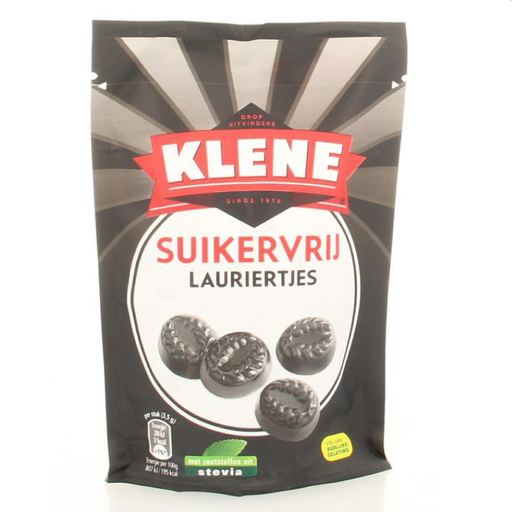 No image available
If a canoe pastry isn’t essential, you could consider this variety as a possible treat. The product name lists 110 g, but the term ‘Sugar-Free’ isn’t a substitute for the nutritional information: check the sugars per 100 g on the packaging.
Also check whether the packaging describes the product as biscuits or liquorice, and read the information about polyols before choosing it for your guests.
Under the EU rules published by EUR-Lex, a biscuit can only carry the ‘sugar-free’ claim if it contains no more than 0.5 g of sugars per 100 g. Check the nutritional information on the exact packaging to confirm the value.
Not the varieties listed here: Jumbo lists 36.8 g of sugars per 100 g for Jumbo Kano's met Roomboter; PLUS lists 38.9 g for PLUS Roomboter kano's and 37.6 g per 100 g for Aviateur Kano's. Check the nutritional information for any other variety individually.
No. That wording alone doesn’t confirm that a product contains no more than 0.5 g of sugars per 100 g. If sugar-free is a firm requirement, check the ‘of which sugars’ value.
Check the ingredients and allergen information for the exact treat you’re buying. Ask guests in advance which ingredients are relevant to them, and don’t assume another canoe pastry or pack has the same ingredients.
The storage instructions for the PLUS canoe pastries mentioned here say to store in a cool, dry place. Follow the instructions on the packaging of the variety you choose.