Who is this choice for?

Parents for whom sugar-free is a firm requirement

When choosing a treat for a children’s party, they want to compare the exact claim with the amount of sugars in the nutritional information. The standard canoe cakes from Albert Heijn, Jumbo and PLUS do not meet this requirement.

Parents considering a different celebratory biscuit

A biscuit with no added sugars could be an alternative if it doesn’t need to be canoe-shaped. According to Verkade, San Francisco Zero contains 1.7 g of sugars per 100 g; it’s a biscuit, not a canoe cake.

Parents bringing treats for a group of children

For a class, after-school club or mixed group, allergens, portions and the venue’s rules all matter. The Netherlands Nutrition Centre advises checking for allergies in advance and keeping portions small.

What should you look for?

First decide whether sugar-free is essential. Then choose the type of treat and make sure it suits the children and the venue.

What to consider What to check when buying Who it matters most to
Sugar-free claim Read the exact claim and compare ‘of which sugars’ per 100 g. Under European Union Regulation (EC) No 1924/2006, ‘sugar-free’ may only be used when a product contains no more than 0.5 g of sugars per 100 g. If sugar-free is a firm requirement, I don’t want to rely on a name such as ‘Zero’. For around 33% of consumers, this strict approach to sugar is the top priority.
Allergens and venue rules Read the allergen information on the packaging and check the school or after-school club’s rules about bringing in treats. When I’m handing out treats to a whole group, my choice needs to suit both the children and the venue. This is the top priority for around 27% of consumers.
Type of treat Decide whether it needs to be a canoe cake, or whether another biscuit, fruit or a small portion of plain popcorn would work. I want to be able to hand out something festive, even if a standard canoe cake doesn’t fit my requirements around sugar. Around 27% of consumers prioritise this consideration.
Portion and quantity Check the portion size and work out how many treats you’ll need. The Netherlands Nutrition Centre recommends small portions. I want to have enough for everyone in my group without ending up with too much left over. This planning matters most to around 13% of consumers.

Common mistakes

  • Assuming ‘no added sugars’ means ‘sugar-free’

    These claims don’t mean the same thing. According to Verkade, San Francisco Zero, which the brand describes as having no added sugars, contains 1.7 g of sugars per 100 g.

    Check both the claim and the ‘of which sugars’ figure in the nutritional information. Under European Union Regulation (EC) No 1924/2006, the ‘sugar-free’ claim is only allowed for products containing no more than 0.5 g of sugars per 100 g.

  • Assuming a standard butter canoe cake is sugar-free

    The product information for Albert Heijn, Jumbo and PLUS lists 39 g, 36.8 g and 38.9 g of sugars per 100 g respectively for their standard canoe cakes. Their shape or name doesn’t change that.

    If sugar-free is essential, check the label of another product rather than searching only for canoe-shaped cakes.

  • Only checking with the group after you’ve bought the treats

    The canoe cakes we checked list allergens, and the school or after-school club may also have rules about bringing in treats. This could make your chosen biscuit unsuitable for the occasion.

    Ask in advance about any relevant allergies and the venue’s rules. The Netherlands Nutrition Centre recommends checking for allergies beforehand.

Brands and shops compared

Albert Heijn

Supermarket selling standard butter canoe cakes, as well as a separate range of products aimed at people watching their sugar intake.

  • Albert Heijn lists 39 g of sugars, including 38 g of added sugars, per 100 g for AH Roomboter kano's.
  • The separate range of products aimed at people watching their sugar intake doesn’t make these canoe cakes sugar-free.

Jumbo

Supermarket selling Jumbo Kano's met Roomboter and a separate Verkade biscuit with no added sugars.

  • Jumbo lists 36.8 g of sugars per 100 g for its butter canoe cakes.
  • The Verkade biscuit with no added sugars is a different type of product; it doesn’t make Jumbo’s canoe cakes sugar-free.

PLUS

Supermarket selling butter canoe cakes whose product information also lists allergens.

  • PLUS lists 38.9 g of sugars, including 38.5 g of added sugars, per 100 g for its butter canoe cakes.
  • These standard canoe cakes don’t meet a sugar-free requirement; check the allergen information too if you’re buying for a group.

Verkade

Biscuit brand whose San Francisco Zero is a biscuit with no added sugars.

  • According to Verkade, San Francisco Zero contains 1.7 g of sugars per 100 g.
  • The product contains maltitols and isn’t a canoe cake. ‘No added sugars’ doesn’t mean ‘sugar-free’.

ALDI / Heerlijck Banket

ALDI describes Heerlijck Banket Kano's as pastries shaped like canoes.

  • ALDI lists a pack size of 330 g.
  • If you need a sugar-free option, check the claim and nutritional information on the packaging first.

Lidl / Sondey

Lidl describes Sondey Kano's as butter biscuits filled with almond paste.

  • Lidl lists a pack size of 325 g.
  • Check the claim, ingredients and nutritional information on the packaging before choosing these canoe cakes to meet a specific requirement around sugar.

Joybuy products for a different kind of treat

If it doesn’t need to be canoe-shaped, you could consider a different type of treat. The option below is salty liquorice; check separately whether it’s suitable for the children and complies with the venue’s rules.
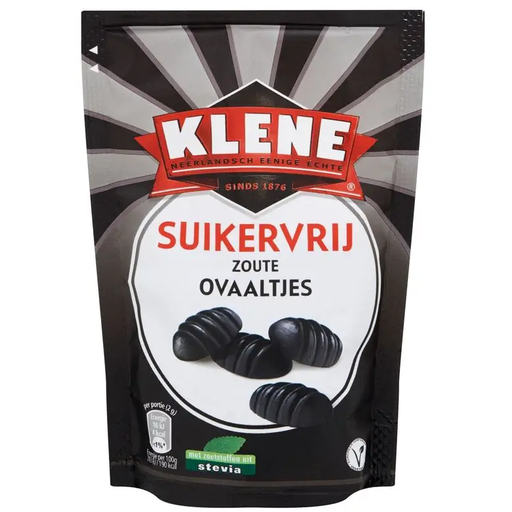
Klene Sugarfree Salty Ovals, 110 g pack

Klene Sugarfree Salty Ovals, 110 g

This salty liquorice is only a possible treat if it doesn’t need to be a canoe cake. Before buying, check the nutritional information and ingredients on the packaging, make sure it’s suitable for the children and check any rules set by the school or after-school club.

View at Joybuy

Frequently asked questions

When can a biscuit be called ‘sugar-free’?

Under European Union Regulation (EC) No 1924/2006, the ‘sugar-free’ claim may be used if the product contains no more than 0.5 g of sugars per 100 g. For a packaged biscuit, check both the claim and the ‘of which sugars’ figure in the nutritional information.

Is a biscuit with no added sugars also sugar-free?

No, that doesn’t follow from the claim. According to Verkade, San Francisco Zero, a biscuit with no added sugars, still contains 1.7 g of sugars per 100 g. It isn’t a canoe cake either.

Are standard canoe cakes from Albert Heijn, Jumbo or PLUS sugar-free?

No. Albert Heijn lists 39 g of sugars per 100 g for AH Roomboter kano's, Jumbo lists 36.8 g for Jumbo Kano's met Roomboter, and PLUS lists 38.9 g for its butter canoe cakes. These specific products therefore don’t meet the European threshold for the ‘sugar-free’ claim.

What should I check before bringing treats to school or an after-school club?

Ask what rules apply to bringing in treats, and take account of allergies and other relevant needs within the group. The Netherlands Nutrition Centre recommends checking for allergies in advance and keeping portions small; at some venues, a party activity may be used instead of edible treats.

Could homemade biscuits with no added sugars be an alternative?

Yes, if the ingredients and the venue’s rules allow it, but don’t automatically call them sugar-free. For example, the Albert Heijn Allerhande recipe for biscuits with no added sugars lists 6 g of sugars per portion and contains almonds and egg.
