What should you look for when choosing?
Start with your main requirement for a breakfast cereal. Then compare the nutritional information per 100 g and consider separately what milk, yoghurt, fruit or toppings add to your bowl.
| What to consider |
What to check when buying |
Who it matters to |
| Strictly sugar-free |
Check ‘of which sugars’ per 100 g: the EU ‘sugar-free’ claim allows a maximum of 0.5 g. |
If sugar-free is a strict requirement for me, I can’t rely on ‘0% added sugar’. Around 13% of consumers put this requirement first. |
| No added sugar or sweeteners |
Check both the added-sugar claim and the ingredients list for sweeteners. |
I want a crunchy breakfast with no added sugar or sweeteners, even if the ingredients contain naturally occurring sugars. This is the top priority for around 33% of consumers. |
| Sweet crunch with sweeteners |
Check which sweetener has been used, and look for any polyols and warnings listed. |
A distinctly sweet, crunchy taste matters more to me than avoiding sweeteners. This taste preference comes first for around 27% of consumers. |
| Fibre or protein |
Compare fibre, protein, sugars, salt and fat per 100 g, rather than relying only on a claim on the front of the pack. |
I want to prioritise fibre or protein in my breakfast, while taking the total sugar content into account. Around 27% of consumers give this the highest priority. |
Breakfast cereals on Joybuy
These products are crunchy muesli and granola options for anyone keeping an eye on added sugar at breakfast. Use the product name as a starting point and check the latest nutritional information for each variety: don’t assume any of them is strictly sugar-free based on its name alone.
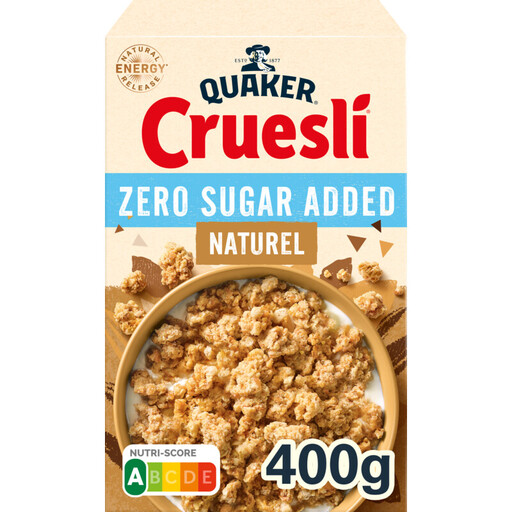 Image unavailable
Quaker Zs Cruesli Natural, 400 g
A crunchy muesli to consider if you want to avoid added sugars or sweeteners. For the Natural variety, Albert Heijn’s product information lists 3.8 g of sugars per 100 g, so it isn’t strictly sugar-free. Check the allergen information if you need to avoid oats, wheat, milk or nuts.
View on Joybuy
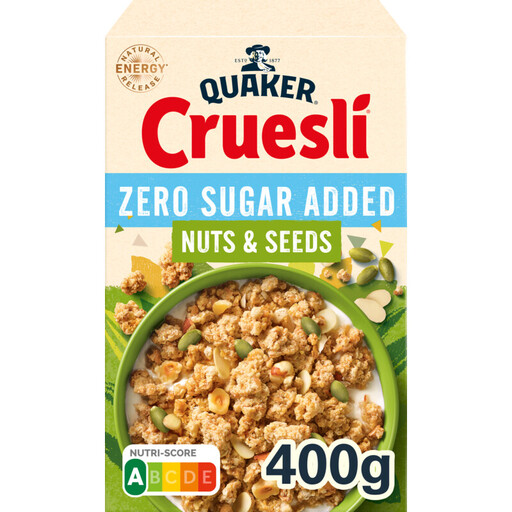 Image unavailable
Quaker Zs Cruesli Nuts & Seeds, 400 g
A crunchy muesli with nuts and seeds if you’re looking for those ingredients in your breakfast. Check the total sugars, any sweeteners and the allergen information for this variety separately; the name alone doesn’t prove that it’s strictly sugar-free.
View on Joybuy
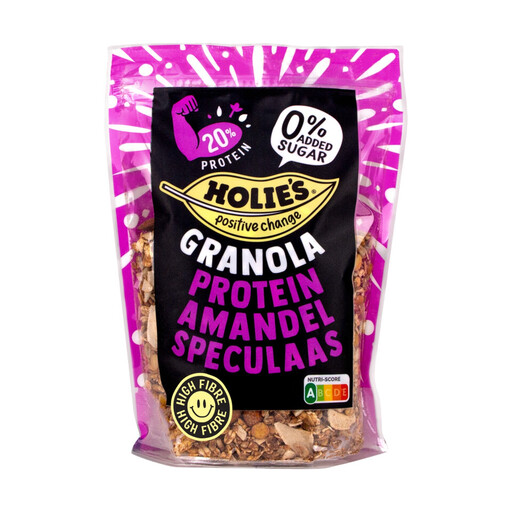 Image unavailable
Holie's Granola Protein Amandel Speculaas, 350 g
A granola to compare if you’re looking for an almond and speculaas variety and want to keep an eye on protein too. Check the nutritional information for the amount of protein and total sugars per 100 g. Carefully check the allergens if you need to avoid soya, peanuts, almonds or grains.
View on Joybuy
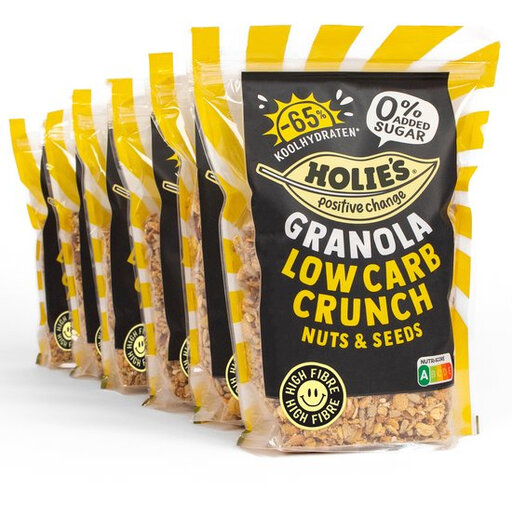 Image unavailable
Holie's Granola Low Carb Crunch, 6 × 350 g
A pack of six bags of crunchy granola to consider if you want to stock up. Check the total sugars per 100 g rather than relying on ‘Low Carb’. Don’t assume this variety is gluten-free: check the current packaging directly to see which grains and allergens are listed.
View on Joybuy
Frequently asked questions
Does ‘0% added sugar’ mean the same as sugar-free?
No. Under European Union rules, breakfast cereals can only carry the claim ‘sugar-free’ if they contain no more than 0.5 g of sugars per 100 g. Products with ‘no added sugars’ may still contain naturally occurring sugars, which count towards the ‘of which sugars’ figure.
How do I compare two types of breakfast cereal?
Compare similar breakfast cereals per 100 g, so different serving sizes don’t skew your choice. The Netherlands Nutrition Centre recommends looking at sugars and fibre, among other things. Check the ingredients and the information on salt and fat too.
Do breakfast cereals with no added sugar always contain sweeteners?
No, it varies by product. For example, Albert Heijn’s product information lists no sweeteners for Quaker Cruesli Zero Sugar Added Naturel, while AH crunchy muesli with nuts contains maltitol. So check the ingredients list for the variety you choose.
Why should I check the packaging again for a product I know?
The current packaging matters when you’re checking sugars, sweeteners and allergens. Check the ingredients list and nutritional information for the variety you’re buying, especially if any of these is a strict requirement for you.


