
Shoppers looking for strictly sugar-free options
You don’t want to rely on a claim such as ‘no added sugar’. Instead, you check the amount of sugars per 100 g before choosing your breakfast cereal.


Only choose breakfast cereals as strictly sugar-free if the nutrition information lists no more than 0.5 g of sugars per 100 g. For an Easter brunch with no added sugar, crunchy muesli and granola are also options, but they may contain naturally occurring sugars. So compare the nutrition information per 100 g, and check the allergen information if you’re serving guests.
You don’t want to rely on a claim such as ‘no added sugar’. Instead, you check the amount of sugars per 100 g before choosing your breakfast cereal.
You’re looking for something crunchy for Easter brunch, ideally with no sweeteners either, and you’re happy to accept that cereals may contain naturally occurring sugars.
As well as sugars, you check carbohydrates, fibre, protein, energy and fat. If you’re choosing granola with nuts and seeds, you’ll also want to check the allergen information on the label.
First, decide whether strictly sugar-free is essential. If no added sugar is enough for your brunch, compare the ingredients and nutrition information of the options you’re considering.
| What to consider | What to check when buying | Who it matters to |
|---|---|---|
| Strictly sugar-free | Check ‘of which sugars’ per 100 g. To make the EU sugar-free claim, a product must contain no more than 0.5 g of sugars per 100 g. | If I’m looking for strictly sugar-free, I don’t want ‘0% added sugar’ to take the place of the nutrition information. Around 46% of consumers put this requirement first. |
| No added sugar or sweeteners | Check both claims and read the ingredients list. Also look at the total sugars per 100 g. | For my brunch, I want a crunchy option with no added sugar and no sweeteners, even if it contains naturally occurring sugars. This is the first consideration for around 36% of consumers. |
| Texture and nutritional values | Compare carbohydrates, fibre, protein, energy and fat per 100 g. Check the allergen information if you’re serving guests. | I want to serve something crunchy, then consider which nutritional values matter for my choice. This is the most important factor for around 18% of consumers. |
Breakfast cereals with no added sugar may still contain sugars. According to the Official Journal of the European Union, the EU sugar-free claim can only be used when a product contains no more than 0.5 g of sugars per 100 g.
Check ‘of which sugars’ in the nutrition information, not just the front of the pack.
Albert Heijn lists a sweetener in its crunchy muesli with nuts and 0% sugar. The product information also warns of a possible laxative effect if consumed in excess.
If you want to avoid sweeteners, read the ingredients list rather than looking only at the amount of sugars.
A granola designed to be lower in carbohydrates may still list significant amounts of fat and energy per 100 g. One figure doesn’t tell you everything about its nutritional value.
Compare products on the same 100 g basis and decide which qualities matter for your brunch.
The muesli and granola options discussed may contain ingredients or traces that matter to your guests, including cereals containing gluten and nuts.
If you’re serving guests with allergies, check the latest ingredients and allergen information on the pack you’ve chosen before buying.
The Natural and Nuts & Seeds varieties are crunchy muesli options for anyone looking for a recipe with no added sugars or sweeteners.
The own-label range includes crunchy muesli with sweetener and a granola designed to be lower in carbohydrates. They’re different options, even if both have a 0% claim on the pack.
Holie's Nuts & Seeds is a granola for anyone who wants to avoid added sugar and sweeteners, and would like nuts and seeds in their brunch bowl.
These crunchy muesli and granola options are particularly useful to compare if you’re looking for products with no added sugar or descriptions that focus on carbohydrates. Always assess whether a product is strictly sugar-free separately by checking ‘of which sugars’ per 100 g.
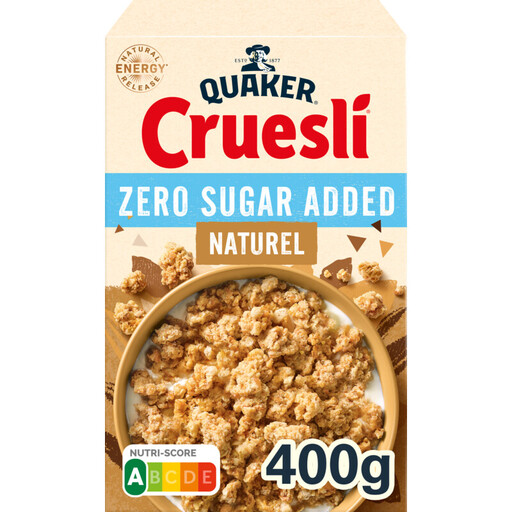 Image unavailable
A crunchy option if you want to avoid added sugar and sweeteners at brunch. Check the total sugars and allergen information on the latest pack; ‘no added sugar’ doesn’t mean strictly sugar-free.
Pack size: 400 g.
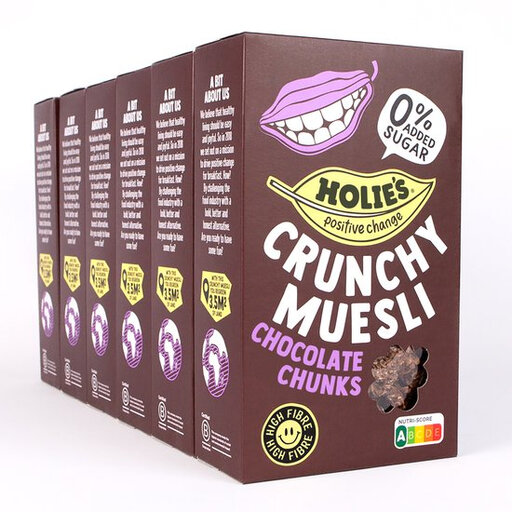 Image unavailable
A chocolate option to consider if you’re looking for crunchy muesli with no added sugar. Before buying, check the sugars per 100 g and the allergen information. The no-added-sugar claim doesn’t mean the muesli is sugar-free.
Multipack: 6 x 400 g.
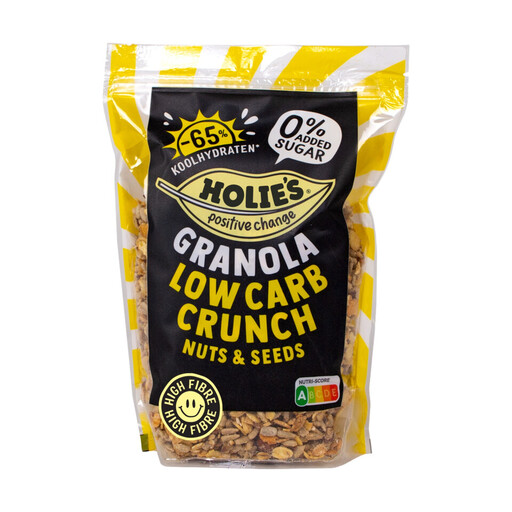 Image unavailable
A granola to compare if carbohydrates matter as well as added sugar when you’re choosing. The product description and ingredients information disagree about gluten, so if you’re serving guests who avoid gluten, don’t rely on the description without checking the latest pack.
Pack size: 350 g. Also compare total sugars, energy and fat per 100 g; ‘Low Carb’ doesn’t mean sugar-free.
No. Under EU rules, published in the Official Journal of the European Union, the sugar-free claim can only be used when a product contains no more than 0.5 g of sugars per 100 g. No added sugars doesn’t mean there are no naturally occurring sugars, so check ‘of which sugars’ per 100 g.
Only if the nutrition information for that specific granola lists no more than 0.5 g of sugars per 100 g. A 0% claim about added sugar doesn’t answer that question. Check the latest pack before describing the granola as sugar-free.
Check the ingredients and allergen information on every pack you’ve chosen before serving it to guests. For the muesli and granola discussed here, cereals containing gluten, nuts and soya are among the things to look out for. Don’t rely on the product name alone.