What should you look for when choosing?
First decide whether ‘sugar-free’ is a firm requirement or whether you mainly want to avoid added sugars. Then compare similar dry breakfast cereals per 100 g and choose a type that suits your morning routine.
| What to consider |
What to check when buying |
Who should consider this? |
| Strictly sugar-free |
Check ‘of which sugars’ per 100 g. Under Regulation (EC) No 1924/2006, the EU ‘sugar-free’ claim allows a maximum of 0.5 g of sugars per 100 g. |
If ‘sugar-free’ is a firm requirement for me, I don’t want to rely on the front of the pack. Around 40% of consumers prioritise this strict threshold. |
| Crunchy cereal with no added sugars |
Check the ingredients, total sugars per 100 g and allergens in the variety; naturally occurring sugars may be present. |
On a busy morning, I want crunchy muesli I can eat straight away, even if it isn’t strictly sugar-free. For around 30% of consumers, this combination of convenience and no added sugars matters most. |
| Warm oats and fibre |
Check the fibre and sugars in the dry product per 100 g, as well as the preparation instructions. Assess any additions to your bowl separately. |
I prefer warm porridge and have time to prepare it; the fibre content helps me compare products. For around 30% of consumers, a warm breakfast is their first choice. |
Crunchy breakfast cereal at Joybuy
These Quaker Cruesli varieties are options if you’re looking for a crunchy breakfast with no added sugars on a working day. The words ‘Zero Sugar’ in a product name don’t confirm that the variety meets the ‘sugar-free’ threshold; check the current nutrition table per 100 g to find out.
 No image available
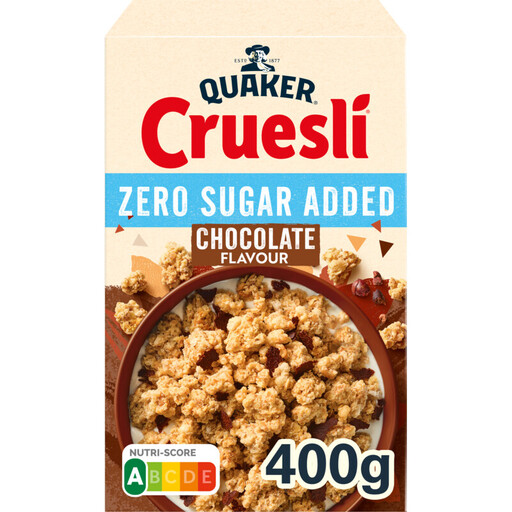
Quaker Cruesli Choco Zero Sugar 400 g
A crunchy option for a no-prep breakfast. If you want to choose a strictly sugar-free product, check the sugars per 100 g on the pack; if you have allergies, also check the information for milk, cereals and nuts.
View at Joybuy
 No image available
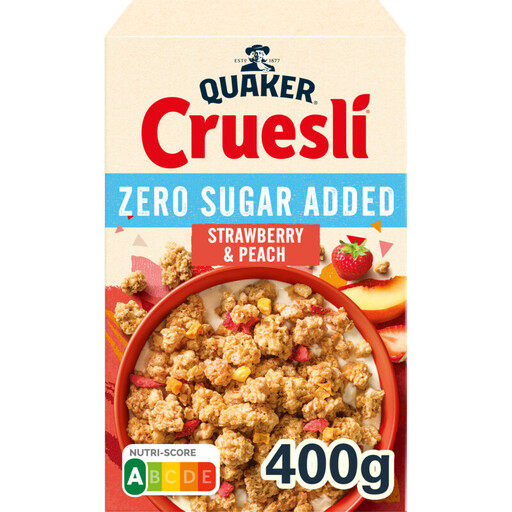
Quaker Cruesli Zero Sugar Added Strawberry & Peach 400 g
A crunchy strawberry and peach variety for anyone who doesn’t want a hot breakfast. According to Albert Heijn’s product information, this variety contains 4.4 g of sugars per 100 g, so it isn’t strictly sugar-free; check the current allergen information too.
View at Joybuy
 No image available
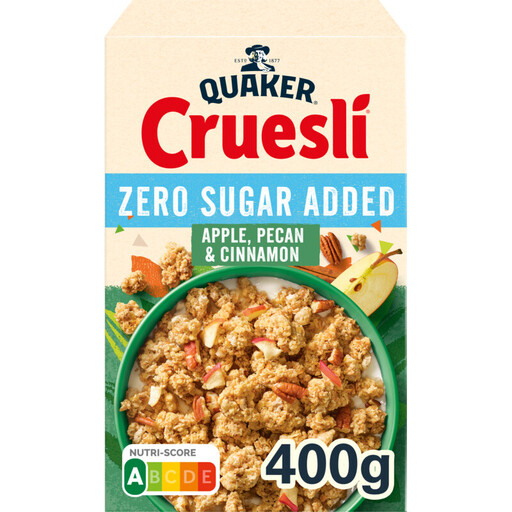
Quaker Cruesli Zero Sugar Added Apple, Pecan and Cinnamon 400 g
A crunchy apple, pecan and cinnamon variety for a no-prep breakfast. If you’re looking for strictly sugar-free cereal, check the sugars per 100 g, and if you have a nut allergy, read the current allergen information.
View at Joybuy
 No image available
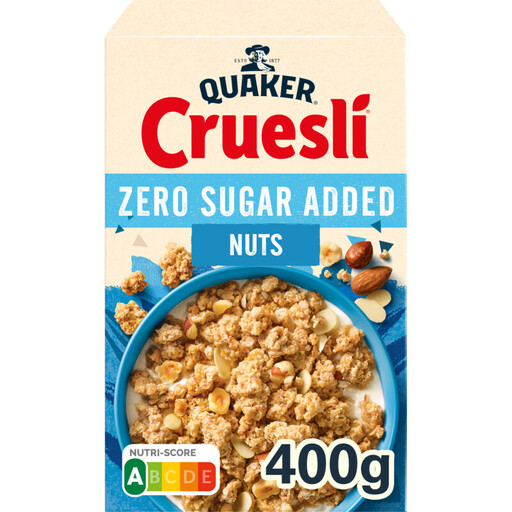
Quaker Cruesli Nuts Zero Sugar 400 g
A crunchy nut variety for anyone who wants ready-to-eat muesli. The product information lists naturally occurring sugars; check the value per 100 g before calling it sugar-free, and check the allergen information if you have a nut allergy.
View at Joybuy
 No image available
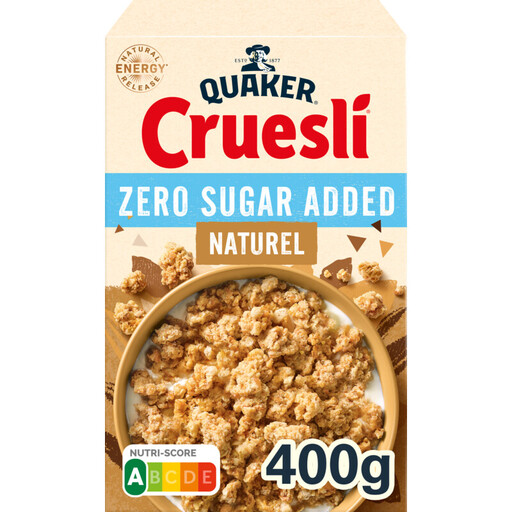
Quaker Zs Cruesli Natural 400 g
A crunchy option for a no-prep breakfast. The product information lists 3.8 g of sugars per 100 g, so despite its name, this variety isn’t strictly sugar-free. Check the current allergen information for cereals, milk and nuts.
View at Joybuy
Frequently asked questions
Is breakfast cereal with no added sugars also sugar-free?
No, not automatically: naturally occurring sugars are included in ‘of which sugars’. Under Regulation (EC) No 1924/2006, the EU ‘sugar-free’ claim for breakfast cereal allows a maximum of 0.5 g of sugars per 100 g.
How do I compare breakfast cereals with different serving sizes?
Compare similar products per 100 g first, as recommended by the Netherlands Nutrition Centre. Then consider your actual serving, as well as the ingredients and allergens in the variety you’ve chosen.
Is Brinta Oatmeal strictly sugar-free?
No. Joybuy’s product information lists 0.8 g of sugars per 100 g, which is above the EU limit of 0.5 g per 100 g. The ingredients list states 100% oat flakes.
When is Quaker Cruesli Zero Sugar Added a good fit for my breakfast?
A variety from this range may suit you if you’re looking for crunchy muesli with no added sugars and are happy to have naturally occurring sugars. Check the nutritional values and allergens for the specific variety: based on their stated sugar content, the strawberry and peach variety and Nuts & Seeds do not meet the ‘sugar-free’ threshold.
Do milk, yoghurt and fruit count when I assess my whole breakfast?
Yes. The nutrition table for dry breakfast cereal doesn’t automatically reflect the bowl you eat. Check milk, yoghurt, fruit and other additions separately if you want to assess the sugars in your whole breakfast.


