Who is this relevant to?

Consumers with a strict sugar-free requirement

For you, the amount of sugars per 100 g matters, not just the word ‘zero’. Under the EU conditions for the ‘sugar-free’ claim, a food must contain no more than 0.5 g of sugars per 100 g. The zero varieties we looked at, including those from Albert Heijn and PLUS, list 4.9 g per 100 g.

Consumers who want to avoid added sugars

You’re happy for breakfast cake to contain some sugars, but want to compare ingredients, fibre and sweeteners. Check the nutritional information for each variety, along with any warnings about excessive consumption. ‘No added sugars’ doesn’t tell you the whole story.

Consumers looking for a snack for an Italian night

You want something you can serve or take with you. Individually wrapped spiced cake can be convenient to share, but the packaging doesn’t make it sugar-free or Italian in origin.

What should you look for when choosing?

First decide whether you need a genuinely sugar-free product or simply want to avoid added sugars. Then consider the grains, sweeteners and packaging for the occasion.

What to consider What to check when buying Who it matters to
Genuinely sugar-free Compare ‘of which sugars’ per 100 g with the EU limit of no more than 0.5 g per 100 g for the ‘sugar-free’ claim. If sugar-free is a strict requirement for me, I don’t want to rely on ‘zero’ when the product contains more sugars. This strict requirement is the top priority for around 46% of consumers.
Ingredients and sweeteners Read the ingredients, fibre per 100 g and any warnings about sweeteners or polyols. I want to avoid added sugars, but also know which grain and sweeteners I’m buying. This is the main consideration for around 36% of consumers.
Portions and how you’ll serve it Check the packaging and, if needed, compare the nutritional information per portion as well as per 100 g. For an evening of nibbles, I want to be able to share a snack without losing track of the amount of sugars in each bar. Around 18% of consumers prioritise this practical consideration.

Common mistakes

  • Assuming ‘zero’ means ‘sugar-free’

    Albert Heijn and PLUS list 4.9 g of sugars per 100 g for the zero breakfast cakes we looked at. That’s above the EU limit of no more than 0.5 g per 100 g for the ‘sugar-free’ claim.

    If sugar-free is a strict requirement, check the ‘of which sugars’ figure per 100 g on the packaging.

  • Focusing only on added sugars

    A product with no added sugars can still contain sugars and polyols. Albert Heijn lists 4.9 g of sugars and 22 g of polyols per 100 g for AH Ontbijtkoek zero gesneden.

    Check the ingredients and any warnings on the packaging too, especially if you’re planning to serve several portions.

  • Overlooking rye and allergens

    A zero label says nothing about gluten or other allergens. The varieties we looked at include rye, among other ingredients; allergens and possible traces vary from product to product.

    If you need to avoid an ingredient, check the allergen information on the exact pack you’re buying.

  • Thinking of breakfast cake as an Italian-themed snack

    The product descriptions we looked at present breakfast cake and spiced cake as breakfast or snacks, not as Italian dishes.

    By all means serve it as an extra snack, and decide separately which nibbles will give your spread an Italian feel.

Brands to consider

Peijnenburg

Peijnenburg makes sliced plain and wholemeal breakfast cake with no added sugars.

  • Jumbo sells the wholemeal variety as wholemeal and with no added sugars.
  • Jumbo lists 4.9 g of sugars per 100 g for the plain variety and warns that xylitol is not suitable for animals. Check the details of the variety you choose.

Albert Heijn

The own-label range includes sliced breakfast cake labelled ‘zero’.

  • Albert Heijn lists 0 g of added sugars for AH Ontbijtkoek zero gesneden.
  • The same product information lists 4.9 g of sugars and 22 g of polyols per 100 g. Here, ‘zero’ does not mean sugar-free.

PLUS

PLUS sells a sliced Ontbijtkoek Zero.

  • PLUS lists 0 g of added sugars for this variety.
  • The product information also lists 4.9 g of sugars per 100 g. Check the ingredients and allergens on the packaging as well.

Snelle Jelle

Snelle Jelle sells Zero Kruidkoek as individual bars; spiced cake is not the same product as breakfast cake.

  • Jumbo sells the pack we looked at as four bars weighing 168 g in total, making them easy to share at an evening of nibbles.
  • According to the product information, the spiced cake contains naturally occurring sugars. Check the allergens and warnings too before serving the bars.

Koek & Bakker

ALDI describes Koek & Bakker Ontbijtkoek Zero as a pre-sliced 485 g variety with no added sugars.

  • The pre-sliced format can be handy if you want to serve slices.
  • If you have a strict sugar-free requirement, check the ‘of which sugars’ figure per 100 g on the packaging, rather than relying on ‘zero’.

Products at Joybuy

If you’re looking beyond the breakfast cake category for a snack labelled sugar-free for your Italian night, you could compare this Klene product. It isn’t breakfast cake, so check the nutritional information and ingredients on the packaging before choosing it.
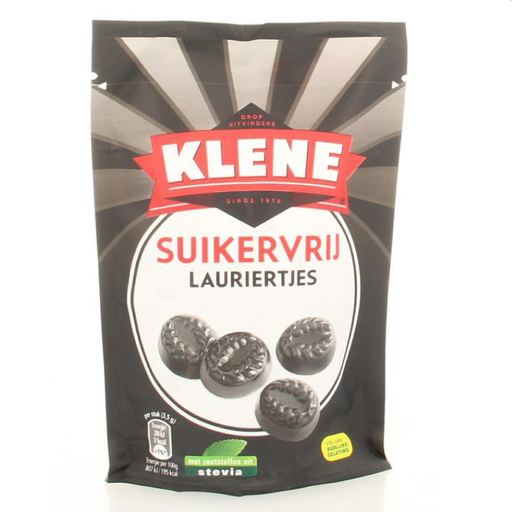
110 g pack of Klene Sugar-Free Lavender Biscuits

Klene Sugar-Free Lavender Biscuits, 110 g

An option to consider if you’re looking beyond breakfast cake and want to check the sugar-free label against the nutritional information for yourself. The pack contains 110 g; this is not breakfast cake. Also check that the ingredients and sweeteners suit your preferences.

View at Joybuy

Frequently asked questions

Is breakfast cake labelled ‘zero’ sugar-free?

Not necessarily. Under the EU conditions, a product can only be labelled ‘sugar-free’ if it contains no more than 0.5 g of sugars per 100 g. Albert Heijn and PLUS list 4.9 g of sugars per 100 g for the zero breakfast cakes we looked at, even though they list 0 g of added sugars.

What does ‘no added sugars’ mean on breakfast cake?

It doesn’t mean the breakfast cake contains no sugars. Always check the ‘of which sugars’ figure in the nutrition table as well; Jumbo lists 4.9 g of sugars per 100 g for the Peijnenburg plain variety we looked at.

What should I know about sweeteners and pets?

Read the ingredients and keep products containing xylitol out of reach of animals. Jumbo specifically states that xylitol is not suitable for animals on the Peijnenburg plain variety we looked at. Also check the pack you’re buying for any warnings about excessive consumption.

Is zero breakfast cake suitable for a gluten-free diet?

A zero label doesn’t make breakfast cake gluten-free. The varieties we looked at include rye, among other ingredients. For a gluten-free diet, check the ingredients and the gluten-free label on the exact product.

Does breakfast cake always contain iodine from baker’s salt?

No, that doesn’t follow from the Dutch regulations. The Netherlands Food and Consumer Product Safety Authority explains that iodine compounds may be present in bakery products through the addition of baker’s salt; this doesn’t mean that every breakfast cake contains that salt. Check the ingredients for the specific product.
