
Organisers responding to a specific sugar-free request
You want to be able to check before the coffee break that the biscuit you have chosen can genuinely be offered as sugar-free.


If you need a clearly sugar-free catering option, choose a biscuit whose claim you can check on the current packaging. According to the Netherlands Nutrition Centre, ‘sugar-free’ means no more than 0.5 g of sugars per 100 g. Also check the allergen information and any sweetener warnings. A standard biscuit to serve with coffee can be a separate option, but it is not a substitute for the sugar-free choice.
You want to be able to check before the coffee break that the biscuit you have chosen can genuinely be offered as sugar-free.
You’re looking for a practical way to serve biscuits while allowing guests to check the ingredients and allergens in their chosen option.
You want to be able to tell guests which allergens are present in each product, even when biscuits are served on platters or at a buffet.
Start with the sugar claim you need. Then decide how guests can check the allergen information when the biscuits are served, and whether a separate standard option would suit the coffee break.
| What to consider | What to check before buying | Who is it important to? |
|---|---|---|
| Sugar-free claim | Check the claim and the amount of sugars per 100 g on the current packaging. According to the Netherlands Nutrition Centre, the limit for sugar-free is no more than 0.5 g of sugars per 100 g. | If you’re catering for a specific sugar-free request, you don’t want to rely on a name such as ‘zero’. For around 36% of consumers, a verifiable sugar-free claim would come first. |
| Allergen information | Keep the product information available where the biscuits are served, even if you put them out on a platter without their packaging. | At a buffet, I want to be able to tell guests which allergens are in each biscuit. Clear allergen information would be the top priority for around 29% of consumers. |
| Sweeteners and nutritional information | Read the ingredients list and compare sugars, fibre, saturated fat and salt per 100 g. Also look for any warnings about polyols. | When I choose biscuits for a long conference day, I want to know more than what’s on the front of the pack. For around 21% of consumers, this broader product information would matter most. |
| Serving and coffee breaks | Decide whether individually wrapped portions are practical, and label sugar-free and standard biscuits separately. | With coffee, I want to offer a familiar biscuit without guests mistaking it for the sugar-free option. Easy serving and clear presentation would come first for around 14% of consumers. |
The terms are not interchangeable. According to the Netherlands Nutrition Centre, sugar-free means no more than 0.5 g of sugars per 100 g. A name such as ‘zero’ does not, on its own, tell you what the nutrition table says.
Check the current packaging for the exact variety you plan to order and serve.
The Netherlands Food and Consumer Product Safety Authority says consumers must be given information about allergens present in unpackaged food, including food served as part of catering.
Keep the packaging where the biscuits are served, or make the current allergen information for each product clearly available in another way.
A sugar-free claim doesn’t tell you how much fibre, saturated fat or salt a biscuit contains. The Netherlands Nutrition Centre also notes that products containing more than 10% added polyols carry a warning about the possible laxative effect of excessive consumption.
Compare the nutritional information per 100 g, and read the ingredients list and any warnings on the packaging you choose.
Céréal has biscuit varieties sold by Jumbo as ‘no sugars’, including a coconut variety and a speculoos and almond variety.
Albert Heijn lists AH Digestive 0% suiker as a separate biscuit product.
Albert Heijn lists Verkade San Francisco zero as a separate biscuit variety.
Lotus Bakeries presents Biscoff as a caramelised biscuit to enjoy with coffee: a standard option alongside a separately labelled sugar-free choice.
This Joybuy biscuit is suitable as a separately labelled standard option for the coffee break. Choose a separately checked biscuit as well if guests ask for a sugar-free option.
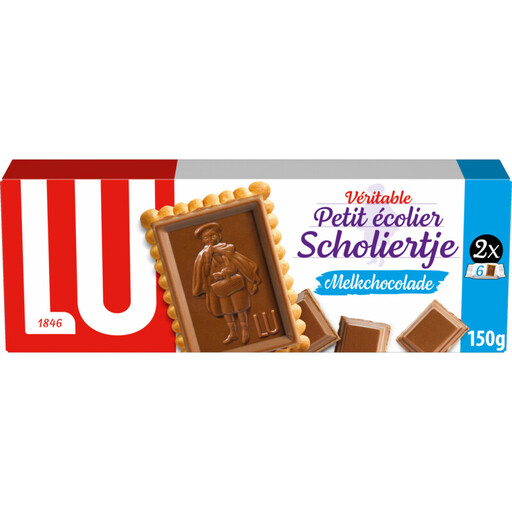 Image unavailable
A standard option to serve separately with coffee or tea, not as a response to a sugar-free request.
150 g pack. Check the current packaging for ingredients and allergens before serving.
According to the Netherlands Nutrition Centre, a sugar-free product contains no more than 0.5 g of sugars per 100 g. Check the current packaging: ‘no added sugars’ and a name containing ‘zero’ do not automatically mean the product carries a sugar-free claim.
Guests must be able to check which allergens are present in biscuits served without their packaging. The Netherlands Food and Consumer Product Safety Authority specifically includes catering as a situation where consumers must be given allergen information. Keep the information for each variety you choose available where the biscuits are served.
No. A sugar-free claim doesn’t assess the biscuit’s overall nutritional value. If they matter to your choice, compare the information per 100 g for fibre, saturated fat and salt, among other things.
Read the ingredients list and any warnings on the packaging. The Netherlands Nutrition Centre notes that products containing more than 10% added polyols carry a warning that excessive consumption may have a laxative effect.