
If you want to choose strictly sugar-free
You’re looking for a product labelled sugar-free for your coffee break. Check the sugars per 100 g; a label such as ‘reduced sugar’ doesn’t automatically meet that requirement.


Don’t assume traditional aniseed sprinkles are suitable for a strictly sugar-free coffee break: Albert Heijn and Jumbo’s online aniseed sprinkle categories show De Ruijter varieties without a ‘sugar-free’ label, while PLUS lists 79 g of sugars per 100 g for the blue and white variety. If you’d like something different with your coffee, check both the ‘sugar-free’ claim and the sugars per 100 g on the packaging. ‘Reduced sugar’ doesn’t mean the same thing.
You’re looking for a product labelled sugar-free for your coffee break. Check the sugars per 100 g; a label such as ‘reduced sugar’ doesn’t automatically meet that requirement.
You want to cut down on sugar, but aniseed sprinkles on rusk or bread are important to you. Compare the nutritional information per 100 g for the product you have in mind, and don’t assume that a reduced-sugar alternative is also sugar-free.
You don’t need a topping and are open to a different type of product. A mint may go well with coffee, but it won’t replace aniseed sprinkles on rusk, bread or yoghurt.
First, decide whether sugar-free is a must-have. Then choose whether you need a topping for rusk or bread, or would rather have something separate to enjoy with your coffee.
| What to consider | What to check before buying | Who it matters to |
|---|---|---|
| Strictly sugar-free | Check for the ‘sugar-free’ claim and the sugars per 100 g. Under EU Regulation (EC) No 1924/2006, solid foods may carry this claim only if they contain no more than 0.5 g of sugars per 100 g. | If I’m sprinkling something on my rusk, I want to be sure it meets my sugar-free requirement. This is the top priority for around 50% of consumers. |
| Less sugar, but still a topping | Compare the sugars per 100 g in the topping you’ve chosen and check that its form is suitable for rusk, bread or yoghurt. | I want to keep the topping ritual, but I don’t need to choose something strictly sugar-free. This combination comes first for around 30% of consumers. |
| Something with your coffee | If you choose a different type of product, check the nutritional information and any warnings on the packaging. | If I don’t need a topping, I can choose a separate product to enjoy with my coffee. This practical option matters most to around 20% of consumers. |
These are different claims. Under EU Regulation (EC) No 1924/2006, a solid food may only be labelled ‘sugar-free’ if it contains no more than 0.5 g of sugars per 100 g.
If sugar-free is essential for you, check the exact claim and the nutritional information per 100 g.
A familiar colour or presentation tells you nothing about the sugar content. PLUS lists sugar as the first ingredient in De Ruijter Blue and White Aniseed Sprinkles, with 79 g of sugars per 100 g.
Read the nutritional information for the variety you want to buy before deciding whether it suits your needs.
An online overview can help you find products, but it doesn’t confirm what’s on the shelf when you visit your shop.
Check the current product and read the packaging when you buy it, especially if a ‘sugar-free’ label is essential for you.
Albert Heijn and Jumbo feature De Ruijter varieties in their online aniseed sprinkle categories, including whole and crushed sprinkles.
Albert Heijn’s own-brand reduced-sugar chocolate sprinkles feature in its overview of sugar-conscious toppings.
Albert Heijn includes Céréal chocolate sprinkles with reduced sugars in its overview of sugar-conscious toppings.
These peppermint mints are options to enjoy with your coffee if you don’t need aniseed sprinkles as a topping. If you require a strictly sugar-free product, check the claim and the sugars per 100 g on the packaging; the product name alone isn’t enough.
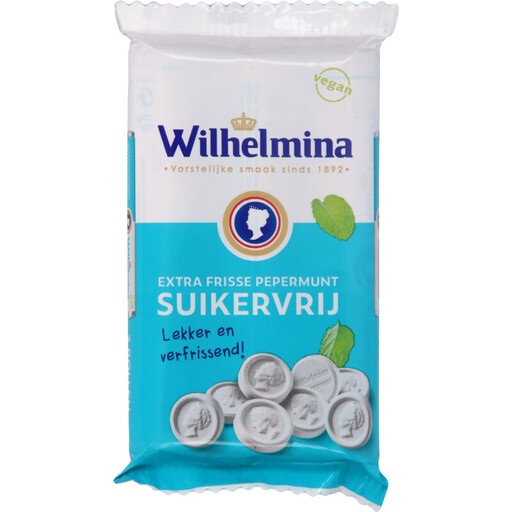 No image available
A mint to enjoy with your coffee, not an aniseed-flavoured topping for rusk. Check the sugars per 100 g and read the warnings on the packaging, including those about phenylalanine and excessive consumption.
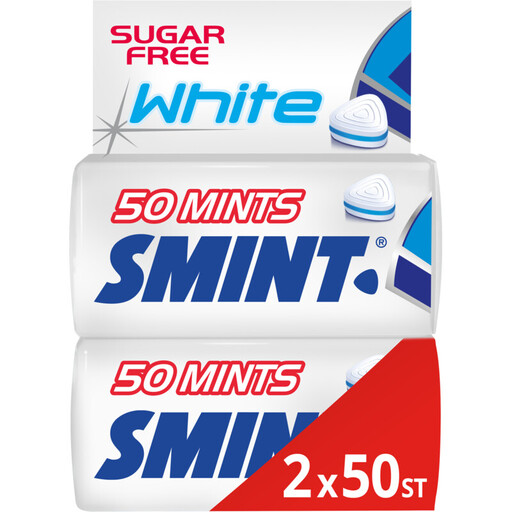 No image available
A mint to enjoy with your coffee if you’re not looking for aniseed sprinkles for bread or rusk. Check the sugars per 100 g, and read the instructions and warnings on the packaging, including those about phenylalanine and excessive consumption.
Under EU Regulation (EC) No 1924/2006, a solid food may be labelled sugar-free if it contains no more than 0.5 g of sugars per 100 g. For toppings, check both the claim and the nutritional information per 100 g; ‘reduced sugar’ is a different claim.
No, this variety isn’t suitable if you’re choosing a sugar-free product. PLUS lists sugar as an ingredient and 79 g of sugars per 100 g for De Ruijter Blue and White Aniseed Sprinkles.
Their online aniseed sprinkle categories show De Ruijter varieties without a ‘sugar-free’ label. If you’re planning to buy from either shop, check the current product and its packaging; a category overview doesn’t tell you what every shop has in stock at that moment.
Mints can be an alternative to enjoy with your coffee if you don’t need a topping. They won’t replace aniseed sprinkles on rusk, bread or yoghurt. If you require a strictly sugar-free product, check the claim, the sugars per 100 g and the warnings on the packaging for mints too.