
Sugar-conscious shoppers putting together a savoury sharing board
Looking for a savoury, crunchy base for Sinterklaas Eve, they compare crispbread mainly by the sugar figure shown per 100 g.


For a sugar-conscious Sinterklaas Eve, compare the ‘of which sugars’ figures per 100 g, while also considering fibre, salt and ingredients. The Jumbo and Albert Heijn product pages list 1.5 g of sugars per 100 g for Wasa Wholemeal, 2.4 g for Jumbo Wholemeal Crispbread and 3.4 g for AH Wholemeal Crispbread; this comparison covers these three varieties only. A lower sugar figure does not prove that a product can carry the claim ‘reduced sugars’, and standard rye or wheat varieties are not suitable for anyone who needs to eat strictly gluten-free.
Looking for a savoury, crunchy base for Sinterklaas Eve, they compare crispbread mainly by the sugar figure shown per 100 g.
Want to enjoy the same wholemeal variety at breakfast, lunch or as a snack, so they look at fibre, salt and ingredients as well as sugars.
Need to rule out standard rye or wheat varieties and check that an alternative is explicitly labelled gluten-free.
First compare the sugars per 100 g, then decide whether fibre, salt or an essential allergen check affects your choice. A nutritional value alone says nothing about whether a product can formally claim ‘reduced sugars’.
| What to look for | What to check when buying | Who it matters to |
|---|---|---|
| Sugars and claims | Compare ‘of which sugars’ per 100 g and read the ingredients list. If it says ‘reduced sugars’, check which similar product it is being compared with. | For a savoury Sinterklaas sharing board, I mainly want to compare sugar figures without mistaking a low figure for a formal claim. Around 42% of consumers give this sugar and claims check top priority. |
| Fibre and salt | Compare the fibre and salt figures per 100 g and check which grains are listed in the ingredients. | If I eat crispbread on other days too, I want to consider fibre and salt as well as sugars. This is the main consideration for around 33% of consumers. |
| Gluten and ingredients | If you follow a strict gluten-free diet, check for an explicit gluten-free label and read the allergen information. Don’t assume a particular iodine content based on the product category. | If I need to avoid gluten, the label determines whether a product is suitable; if iodine is relevant to me, I also check the ingredients. For around 25% of consumers, checking ingredients matters most. |
The figure on one label is not a comparison with a similar product. In its 2021 summary, the Netherlands Food and Consumer Product Safety Authority states that this claim requires at least 30% less sugar and an equal or lower energy value than a similar food.
Use the sugar figure per 100 g to compare products. Treat ‘reduced sugars’ as a product claim only when the packaging clearly states the claim and the comparison it is based on.
According to the Jumbo and Albert Heijn product pages, Wasa Wholemeal lists 20 g of fibre and 1.2 g of salt per 100 g, Jumbo Wholemeal Crispbread 10.9 g of fibre and 0.71 g of salt, and AH Wholemeal Crispbread 12 g of fibre and 0.7 g of salt. So, in this comparison, the variety with the lowest sugar figure does not also have the lowest salt figure.
Compare sugars, fibre and salt on the same per-100 g basis, and decide which differences matter for how you’ll use the product.
The fact that a product is crispbread doesn’t tell you which salt it contains. The Netherlands Nutrition Centre says that using baker’s salt in bread is not compulsory.
If iodine information matters to you, check the ingredients on the packaging or ask the manufacturer.
Rye and wheat are gluten-containing grains, according to the Netherlands Nutrition Centre. A wholemeal label doesn’t change that.
If you need to eat strictly gluten-free, choose only a product explicitly labelled gluten-free and check the allergen information on the packaging.
Wasa Wholemeal 260 g is a specific rye variety that you can compare with other crispbreads per 100 g.
AH Wholemeal Crispbread 375 g is an own-brand option to compare using the figures on the label.
Jumbo Wholemeal Crispbread is a wheat and rye variety with a stated serving size of 15 g.
Ryvita Original Crispbread is a rye product. For a comparison in the Netherlands, use the nutritional information for the variety you’re actually buying.
These products include crispbread and crackers that make a crunchy base for Sinterklaas Eve. Compare sugars, fibre, salt and ingredients on each pack; ‘Light’ or another name variation does not, on its own, confirm a ‘reduced sugars’ claim.
 Image unavailable
A wholemeal variety to consider as a savoury base for Sinterklaas Eve. Compare the sugars per 100 g and check the allergen information when you buy it.
 Image unavailable
A wholegrain option for anyone who wants to consider fibre and salt as well as the sugar figure. Read the nutritional information per 100 g and check the allergens on the packaging.
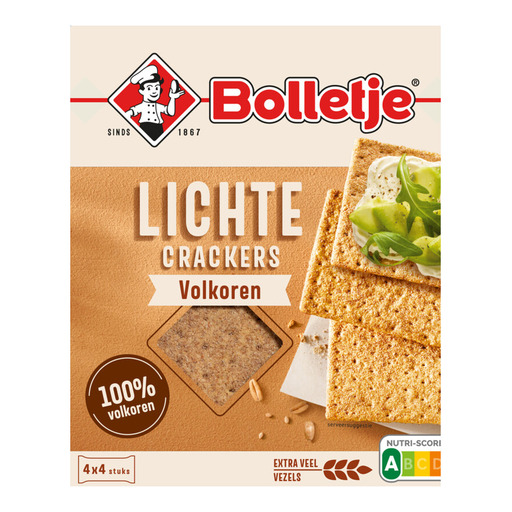 Image unavailable
A cracker option if you’d like to compare products beyond crispbread varieties too. Don’t take ‘Light’ as proof of lower sugars; the nutritional information and any specific claim on the packaging are what matter.
 Image unavailable
A cracker product for anyone who wants to compare sugars, fibre and salt together. Use the nutritional values for this specific pack; those for Wasa Wholemeal don’t automatically apply to High-Fiber too.
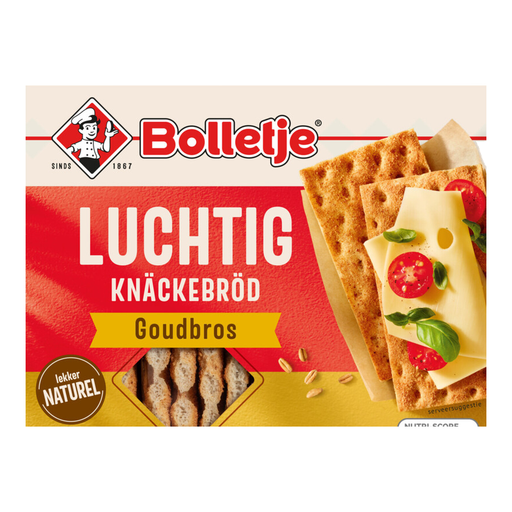 Image unavailable
A crispbread variety to compare by sugar figure, without assuming that ‘Light’ means it makes a claim about sugars. Check the ingredients too if you’re specifically looking for a wholemeal base.
No. A low figure per 100 g is not, by itself, a formal comparative claim. According to the Netherlands Food and Consumer Product Safety Authority’s 2021 summary, ‘reduced sugars’ requires at least 30% less sugar and an equal or lower energy value than a similar food.
No. Don’t assume crispbread automatically contains iodised baker’s salt. The Netherlands Nutrition Centre says baker’s salt is not compulsory in bread; check the ingredients for a specific crispbread or ask the manufacturer.
Not if it contains rye or wheat: according to the Netherlands Nutrition Centre, these are gluten-containing grains. Choose a product explicitly labelled gluten-free and check the allergen information on the packaging.
Seal the pack carefully after opening and store the product in a dry place. Albert Heijn recommends keeping its crispbread in a sealed tin; follow the storage instructions on your product’s packaging.