
Office buyers comparing sugar content
When stocking biscuits for everyone to share, they want to understand what ‘zero’, ‘no added sugars’ and ‘less sugar’ mean on a specific pack.


If you’re looking for office biscuits with the lowest stated sugar content, compare the ‘of which sugars’ figures for products with no added sugars. If convenient portions to share are your priority and you’re considering a ‘less sugar’ claim, check what the product is compared with and how much sugar is in one portion. For whichever option you choose, check the ingredients and allergens too: a sugar claim doesn’t tell you everything about its nutritional value.
When stocking biscuits for everyone to share, they want to understand what ‘zero’, ‘no added sugars’ and ‘less sugar’ mean on a specific pack.
For coffee breaks and meetings, the number of biscuits, portion size and sugar content per serving matter.
When choosing biscuits for everyone to share, they check sweeteners and polyols, as well as any allergens relevant to those who will be eating them.
First decide whether a low stated sugar content or easy sharing is your priority. Then compare the nutritional information for the specific biscuit or spiced cake, and check the ingredients for your team.
| What to consider | What to check when buying | Who it matters to |
|---|---|---|
| Sugars and claims | Compare ‘of which sugars’ per 100 g. For ‘less sugar’ claims, also look up the stated reference product. | For a coffee break, I want to know how much sugar the biscuit contains rather than relying on ‘zero’ alone; around 42% of consumers would put this comparison first. |
| Portion and packaging | Check the weight of each biscuit, the sugar content per serving and whether the biscuits are individually wrapped. | If I’m handing out biscuits at a meeting, I want to know in advance what each person will get; ease of sharing would be the main consideration for around 33% of consumers. |
| Ingredients and allergens | Read the current ingredients and allergen information. Where relevant, look out for polyols and any warning about excessive consumption. | When choosing a supply for colleagues with different needs, I want to be able to check the ingredients for each option; for around 25% of consumers, this would be the most important consideration. |
Jumbo says Snelle Jelle Kruidkoek Minder Suiker contains 30% less sugar than the plain version, but also lists 24 g of sugars per 100 g. So the reduction claim and the final sugar content answer different questions.
First compare the ‘of which sugars’ figure per 100 g, then check the amount per planned serving.
A low sugar content doesn’t tell you how much energy a biscuit contains. Albert Heijn lists 465 kcal per 100 g for AH Digestive 0% sugar.
Check the other nutritional values as well as sugars, and consider the size of the biscuit you plan to share.
According to the Voedingscentrum, consuming large amounts of polyols can cause digestive problems. The biscuits reviewed also differ in ingredients such as wheat, milk, soya and almond.
Before buying biscuits for everyone to share, check the ingredients, allergens and any warning on the pack of the exact product you’ve chosen.
Albert Heijn says that product ingredients, nutritional values and allergen information can change.
Check the current packaging before offering the biscuits to your team.
AH Digestive 0% sugar is an example of a biscuit with no added sugars.
Speculoos stukjes amandel zonder suikers is an example of a biscuit with a low stated sugar content.
San Francisco Zero shows the difference between a claim about added sugars and the total sugar content.
Kruidkoek Minder Suiker is a spiced cake for anyone looking for a portion with an explicit sugar-reduction claim, rather than a virtually sugar-free biscuit.
ALDI offers both pre-sliced spiced cake with no added sugars and Koekhappers with a less-sugar option.
These Joybuy products may suit you if you’re choosing biscuit bars or spiced cake labelled ‘less sugar’. For each product, compare the current sugar content and portion size; the name alone doesn’t tell you how low the sugar content is.
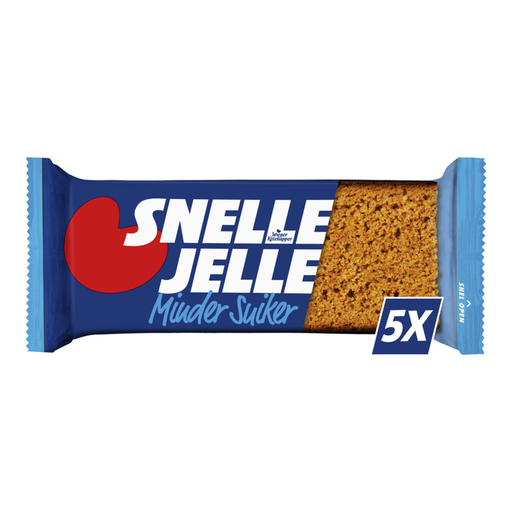 Image unavailable
A spiced cake option for sharing during an office break. Before choosing it for your team, check the current packaging for the sugar content per portion, as well as the ingredients and allergens.
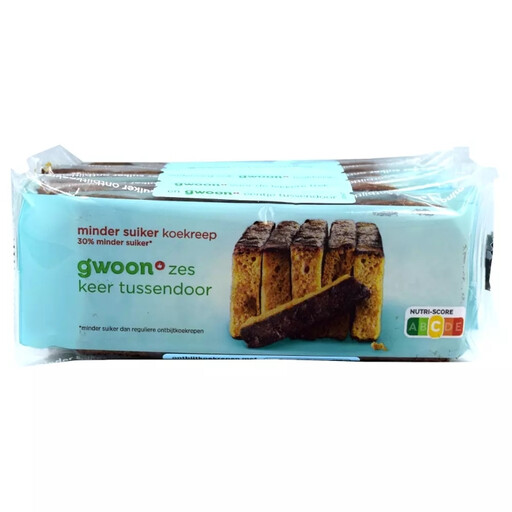 Image unavailable
A pack of biscuit bars for the office cupboard. Check what ‘Less Sugar’ is compared with, and read the current packaging for the sugar content per portion and the allergens before handing them out.
No: a claim about added sugar is different from the ‘of which sugars’ figure. Albert Heijn lists Verkade San Francisco Zero as containing 0% added sugar, but 1.7 g of sugars per 100 g. So check both figures for the product you choose.
A lower sugar content doesn’t tell you everything about a biscuit’s nutritional value. For an office supply, compare the energy, fat, fibre and portion size on the label too.
The warning may be related to polyols in the product. According to the Voedingscentrum, consuming large amounts of polyols can cause digestive problems. If you’re buying biscuits for everyone to share, check the ingredients and warning on the packaging of the specific product.
For each product you choose, check the portion size, nutritional information, ingredients and allergens. Check the current packaging before handing the biscuits out too, as Albert Heijn says product information can change.